Power Artificial Intelligence: How AI Is Reshaping — and Straining — the Energy System
Key Takeaways
AI data centers already consume around 4–5% of U.S. electricity as of 2023–2024, and projections suggest this could roughly triple by 2028 if current build-out continues
Most of AI’s power demand now comes from inference (user queries) rather than one-off model training runs, with future AI agents and video models expected to be far more energy-intensive than today’s chatbots
AI creates a feedback loop between “power for AI” and “AI for power” - serving as both a major new energy load and a critical optimization tool for smart grids, trading, and virtual power plants
The U.S. currently leads in advanced AI chips while China dominates manufacturing of solar panels, batteries, and other clean energy hardware needed to power AI sustainably
Staying informed on AI and energy developments doesn’t require daily inbox overload - curated, weekly briefings like KeepSanity AI filter for only the major structural changes that actually matter
Introduction: When Artificial Intelligence Meets the Power Grid
Between 2022 and 2025, AI models like ChatGPT, Gemini, and Claude transformed from research curiosities into heavy industrial loads driving multibillion-dollar power projects across the U.S., Europe, and Asia. What started as a conversation about clever chatbots has become a conversation about power plants, transmission lines, and grid reliability.
The term “power artificial intelligence” carries two intertwined meanings. First, there’s the rising electricity required to power AI systems - the data centers packed with graphics processing units running trillions of calculations per second. Second, there’s how artificial intelligence is being used to run modern power systems themselves, from smart grids to electricity markets to virtual power plants that aggregate thousands of home batteries.
The numbers tell the story clearly. U.S. data centers consumed approximately 176 TWh of electricity in 2023, accounting for 4.4% of national consumption. By 2024, that figure climbed to 183 TWh. AI-specific servers alone consumed an estimated 53-76 TWh in 2024, with forecasts suggesting 165-326 TWh by 2028 - a tripling under current trajectories.
At KeepSanity AI, we focus on exactly these kinds of structural shifts. Instead of daily emails padded with minor updates and sponsored noise, we deliver one weekly briefing covering only the major AI developments that actually happened. When it comes to AI’s impact on energy systems, that’s the signal worth tracking - not every data center MOU or minor efficiency announcement.
This article explores why AI uses so much energy, the environmental and geopolitical implications of that demand, and how AI is being deployed inside the energy sector itself. Let’s cut through the noise.

Why AI’s Energy Consumption Is Exploding
The generative AI boom after late 2022 triggered an arms race in computing power. Hyperscalers like Microsoft, Google, Amazon, Meta, and Oracle began building massive “AI factories” packed with Nvidia H100, H200, and B200 GPUs - facilities that operate 24/7 and draw hundreds of megawatts continuously.
Here’s what’s driving the explosion:
The shift to inference: Early debate focused on training runs (GPT-4-class models trained across tens of thousands of GPUs for weeks), but by 2024-2025, inference - billions of daily chat, image, and video requests - accounts for an estimated 80-90% of ongoing AI electricity use
Higher power density: Traditional servers used 7-10 kW per rack, but AI-optimized racks with GPUs now demand 30-100+ kW, enabling hyperscale facilities to exceed 100 MW routinely
Scale beyond comprehension: By mid-2020s, U.S. AI data center electricity could reach the equivalent of powering tens of millions of homes; a single large advanced data center draws hundreds of megawatts, comparable to a mid-size power plant
Projections from independent analysts suggest global AI-focused data centers may need on the order of tens of gigawatts of continuous power by 2027-2030. To put that in perspective: that rivals the total capacity of entire U.S. states like California.
Inside these facilities, energy flows to several key areas:
Component | Share of Power Use | Notes |
|---|---|---|
Servers (GPUs/accelerators) | 40-60% | GPUs running matrix multiplications at 3,000-5,000+ watts per server |
Cooling systems | 7-30% | Varies by efficiency; top operators achieve PUE of 1.08-1.09 |
Networking | 5-10% | High-speed interconnects between thousands of GPUs |
Storage and infrastructure | 5-10% | Data pipelines and supporting systems |
Training vs. Inference: Where the Power Really Goes
Understanding the difference between “training” and “inference” is essential for grasping AI’s power profile. Training means building the model - running algorithms across massive datasets to establish the neural network’s parameters. Inference means answering user prompts - the millions of ChatGPT queries, image generations, and video creations happening every hour.
The industry’s power profile has shifted dramatically toward inference as user traffic exploded in 2023-2024. Consider this: a single frontier model training run might consume energy on the order of tens to hundreds of megawatt-hours. GPT-3 required an estimated 1.29 GWh to train. GPT-4 escalated to over 50 GWh - roughly 0.1% of New York City’s annual electricity consumption.
But that’s a one-time cost. Ongoing daily inference across billions of interactions can exceed those training numbers many times over each month.
Current research estimates reveal the scale:
Small text models (7-8B parameters like Llama 3.1 8B): ~100+ joules per response
Massive models (hundreds of billions to ~1T parameters): thousands of joules per response
A single ChatGPT query: ~2.9 watt-hours (nearly 10x a Google search’s 0.3 Wh)
AI video generation: can demand 100x more energy than text-based tasks per output
Image and video generation are particularly intensive. While they may involve fewer parameters than giant language models, they require more computation per output - diffusion steps for images, frame sequences for video. High-quality video represents one of the most energy-intensive AI workloads currently deployed.
The implication is clear: decisions at the product level - default model size, context length, and multimodal features - have direct, multiplicative effects on how much power an AI service draws from the grid.
Why Measuring AI’s Power Use Is So Difficult
Despite frequent headlines about AI energy consumption, the industry still lacks standardized, transparent reporting on per-query and per-model energy consumption. This is especially true for closed models like GPT-4, Gemini Ultra, and Claude Opus, where internal architectures remain proprietary.
Several factors complicate measurement:
Model architecture: Different designs have vastly different computational requirements
Batch size and utilization: How efficiently GPUs are used during inference
Prompt and output length: Longer interactions consume more energy
Data center location: Affects grid mix and cooling requirements
Cooling technology: Air vs. liquid cooling changes overhead significantly
Networking and storage overhead: Often excluded from simplified estimates
Researchers currently estimate energy use by benchmarking open-source models, monitoring GPU utilization, and adding overhead multipliers for power distribution and cooling. It’s imprecise, but it’s often the best available method.
Emerging initiatives like model efficiency scorecards and voluntary “AI energy labels” represent steps toward transparency. But what the industry really needs is credible, third-party metrics that regulators, utilities, and customers can rely on.
Rather than chasing rumor-based numbers on social media, consider following specialized, low-noise AI briefings to track when major players begin publishing standardized energy disclosures.
The Environmental and Grid Impact of Power-Hungry AI
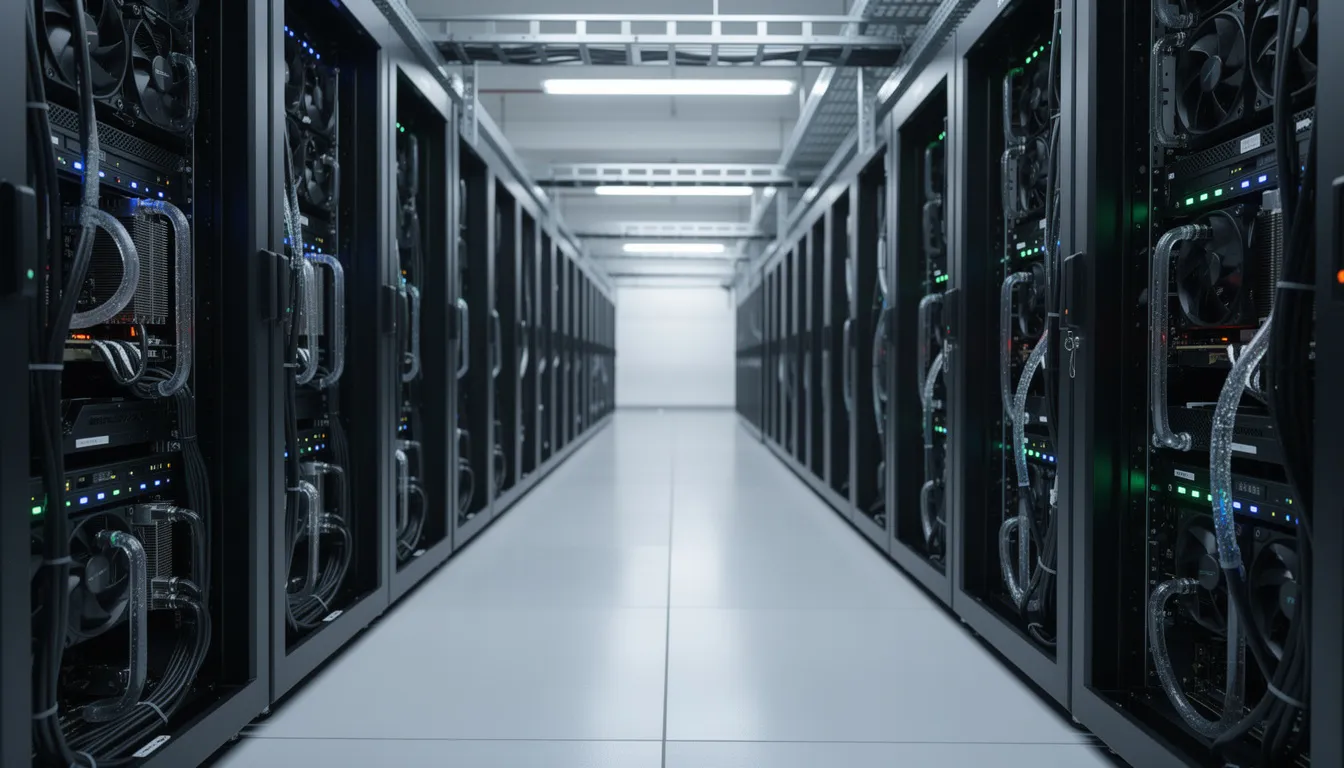
AI-driven data center clusters often locate in regions with cheap or available power. That sounds economically rational, but it frequently means higher-than-average fossil fuel shares and therefore more carbon-intensive electricity. The climate impacts extend far beyond simple kilowatt-hour counts.
In 2024, the U.S. national grid still supplied roughly 60% of electricity from fossil fuels, around 20% from nuclear, and around 20% from renewables. This limits how “clean” new AI demand can be in the near term, regardless of corporate sustainability claims.
Large data centers don’t just use electricity. They also:
Consume water for cooling, especially in hot, dry regions
Strain local transmission networks that weren’t designed for concentrated industrial loads
Accelerate e-waste through rapid GPU upgrade cycles (3-5 year lifecycles)
Utilities and regulators are now grappling with multi-decade critical infrastructure decisions - new natural gas plants, nuclear reactors, large transmission lines - under significant uncertainty about how fast AI demand will grow and where it will cluster.
Planning mistakes can show up in consumer power bills. Long-term power-purchase agreements for AI clusters can shift costs and risks onto residential and small-business customers if not carefully structured by the federal government and state regulators.
Carbon, Water, and E-Waste: The Hidden Costs
“AI power use” encompasses far more than kilowatt-hours. The full picture includes carbon intensity, local water scarcity, and hardware supply chains.
Carbon dioxide emissions: Running large AI clusters on grids dominated by coal or gas leads to greenhouse gas emissions significantly above the average U.S. grid mix. A hyperscaler data center can match the annual electricity consumption of 100,000 households - and if that power comes from fossil-heavy sources, the climate change implications are substantial.
Water consumption: Many data centers use evaporative cooling, which can require millions of gallons of water per day during peak operation. This poses particular challenges in arid regions or where agriculture already stresses water basins. The growing concern over water use has pushed some operators toward direct-to-chip liquid cooling, but adoption remains uneven.
E-waste: GPUs and accelerators have relatively short economic lifecycles, often just 3-5 years before they’re replaced by more efficient models. This creates streams of specialized electronic waste and increased demand for rare earth elements, copper, and high-grade silicon. The supply chain pollution from mining and manufacturing these components adds another layer to AI’s environmental footprint.
Sustainability-oriented readers should watch for concrete measures:
Data center siting in cooler climates to reduce cooling energy demand
Adoption of direct-to-chip liquid cooling for efficiency gains
Hardware lifecycle reporting and responsible recycling programs
Transparent Scope 2 emission accounting with third-party verification
Grid Stress, Reliability, and “AI Peaks”
AI data centers are largely “always-on” loads, but usage can still spike around product releases, major events, or rapid growth in specific AI applications like video generation or autonomous agents. These are the new “AI peaks” that grid operators must plan for.
Clusters of high-density AI facilities in key regions like Virginia, Ohio, Texas, and Georgia have forced utilities to revise load forecasts upward dramatically. In some cases, utilities are proposing new transmission lines and power generation capacity that would have seemed unnecessary just a few years ago.
The flexibility question is complicated:
Load Type | Flexibility | Latency Tolerance |
|---|---|---|
AI model training | Higher | Can be scheduled during off-peak |
Batch inference | Moderate | Jobs can be queued across regions |
Real-time inference | Low | User-facing, requires immediate response |
While AI demand might be flexible at the margin (training jobs can be queued or shifted across regions), most commercial AI workloads today are designed for low latency. That limits how much they can be turned down during grid stress events through traditional demand response programs.
Some tech companies are pursuing alternatives:
On-site or dedicated nuclear power (Microsoft’s Three Mile Island deal)
Large-scale battery installations for backup and peak shaving
Long-term clean power contracts to secure reliable, lower-carbon supply
The tension is real: if AI demand grows faster than grids can be cleaned up, the near-term climate impacts can worsen even as AI is marketed as a tool for climate and energy optimization.
Global Power Politics: Chips vs. Clean Energy Hardware
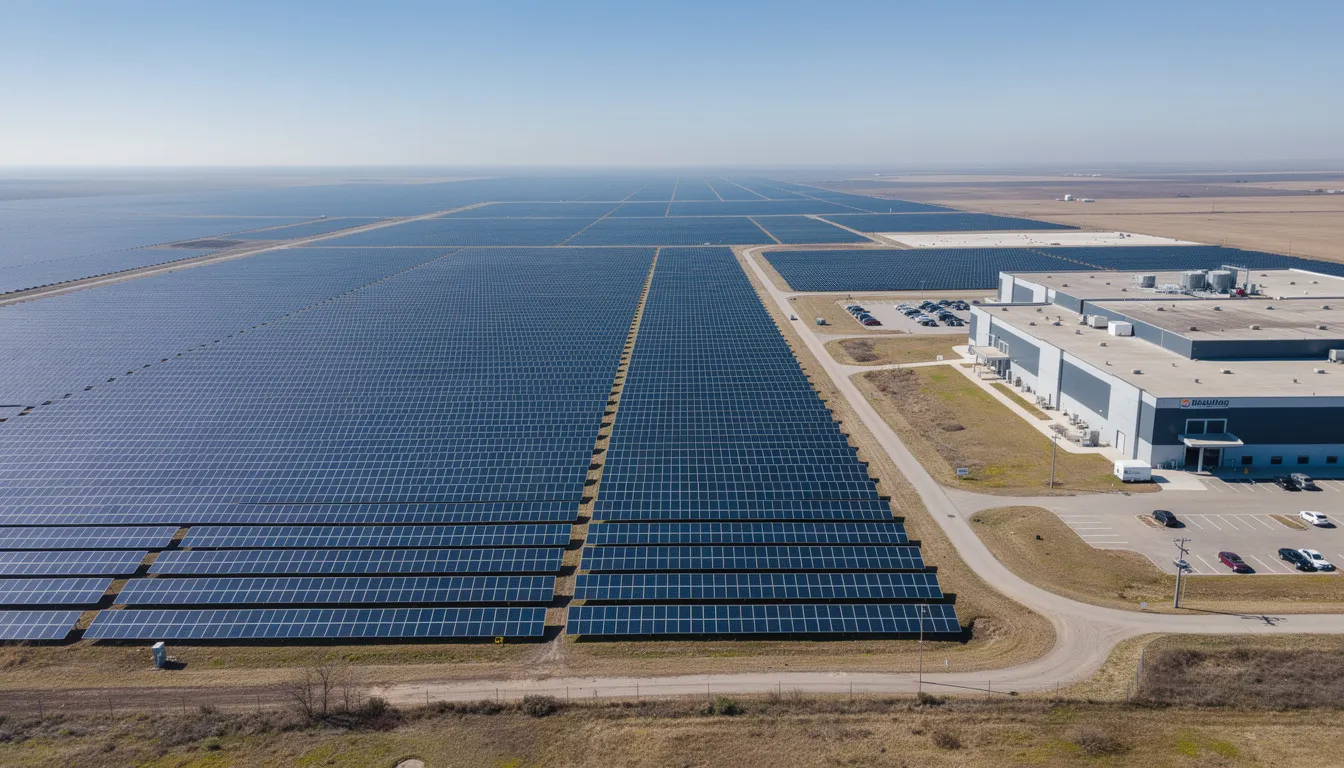
AI and energy have become deeply geopolitical. The U.S. dominates advanced AI chips and cloud platforms - Nvidia’s advanced GPUs power the vast majority of frontier AI development. Meanwhile, China leads manufacturing of solar panels, batteries, and other clean energy technologies needed to power AI sustainably.
This creates strategic interdependence with significant implications:
AI-rich regions (U.S., parts of Europe) lack sufficient clean energy manufacturing capacity and risk relying on imports
Hardware-rich regions (China) may lack access to top AI chips due to export controls
New opportunities emerge for regions that can bridge both sides of this divide
Examples of cross-border investments and tensions are multiplying:
U.S. restrictions on exporting advanced GPUs to China
Debates over allowing Chinese firms to invest in U.S. battery and solar manufacturing
U.S. tariffs on Chinese solar panels and batteries
Joint ventures for grid technology that attempt to navigate security concerns
Key regions like the Middle East and Southeast Asia are emerging as battlegrounds where both U.S. and Chinese companies finance energy infrastructure and new data centers to anchor AI and cloud services. The expansion of AI infrastructure increasingly intersects with energy geopolitics.
Following these policy and trade developments matters for anyone tracking AI’s future. Curated AI newsletters that filter for high-impact news can help track these long-horizon shifts without daily information overload.
China’s Role in Powering Global AI
China’s dominance in clean energy manufacturing is staggering:
Solar PV: 80%+ global manufacturing share
Battery cells: 70%+ global manufacturing share
Wind components: Leading manufacturer and installer
EVs: World’s largest market and export base
This dominance was enabled by decades of industrial policy, which has driven down global costs for clean energy technologies. The technology that makes solar power affordable today largely comes from Chinese factories.
Chinese companies are building and financing solar farms, offshore wind projects, and transmission lines in regions like the Middle East, Africa, and Southeast Asia. These investments are often paired with data center or cloud ambitions, creating integrated energy-AI development projects.
U.S. and European data center developers may indirectly rely on Chinese-made solar panels, inverters, and batteries to decarbonize AI workloads - even as Western governments impose tariffs and content rules. This creates uncomfortable dependencies for the AI industry’s sustainability ambitions.
Proposals for joint ventures or licensing arrangements attempt to thread the needle: Chinese firms contribute manufacturing know-how while Western entities retain control over sensitive components and grid-adjacent infrastructure. But the path forward remains contested.
Policy decisions in the next five years - about tariffs, subsidies, and security reviews - will heavily shape how quickly AI data centers can be paired with abundant renewables instead of new fossil plants.
How AI Is Powering the Energy System Itself
Let’s transition from “power for AI” to “AI for power.” The same machine learning techniques driving chatbots and image generators are being used to optimize power plants, manage smart grids, and trade electricity. AI is both the problem and part of the solution.
The basic idea: AI systems take in massive streams of data - weather forecasts, grid status, market prices, consumption patterns - and output recommendations or automated control actions that reduce costs, improve reliability, or integrate more renewables.
An important clarification: many of these deployments pre-date the 2022-2023 generative AI boom. They rely more on classical machine learning, time-series forecasting, and optimization algorithms rather than giant large language models. The AI tools powering energy systems are often more specialized and more energy efficient than frontier chatbots.
Three main application domains are reshaping the energy sector:
Smart grids and sector coupling
Electricity trading and markets
Virtual power plants and consumer-side intelligence
The design challenge is ensuring that “AI for power” saves more energy than it consumes. So far, the evidence suggests well-designed energy AI applications can deliver substantial net benefits - but this requires deliberate focus on energy efficiency in the AI systems themselves.
Smart Grids and Sector Coupling
A “smart grid” is an electricity system with pervasive sensing, communication, and automated control that can handle high shares of variable renewables like solar and wind. Traditional grids were designed for predictable, one-way power flow from large plants to consumers. Smart grids handle the complexity of millions of distributed sources and flexible loads.
AI algorithms process data from millions of endpoints in near real time:
Rooftop PV inverters reporting generation
Wind farms forecasting output
Electric-vehicle chargers negotiating charging schedules
Smart meters tracking consumption patterns
Industrial loads signaling flexibility
The goal is keeping supply and demand in balance despite the variability of solar and wind generation.
Sector coupling takes this further, linking electricity with heating and transport:
Heat pumps can pre-heat homes before electricity prices spike
EV fleets can charge overnight when wind generation is high
Hydrogen production can absorb surplus renewable generation
Industrial processes can shift to off-peak hours
Concrete examples of AI in grid operations:
EV charging optimization: AI scheduling overnight charging during high wind generation periods
Storm preparation: Automatically adjusting heat pump operation before severe weather
Congestion management: Re-routing power flows to avoid overloaded lines during heat waves
Anomaly detection: Machine learning spotting equipment failures, cyber-attacks, or unusual load patterns before they trigger blackouts
Grid operators increasingly rely on these AI-driven systems to maintain stability as renewable penetration increases. The research and development in this space is accelerating across both the energy and computer science communities.
Electricity Trading and Market Optimization
Many liberalized power markets in Europe and North America rely on complex day-ahead and intraday auctions. AI-based forecasting and bidding strategies can materially affect both revenues and system stability.
AI models trained on historical prices, weather data, plant outages, and consumption patterns produce highly granular forecasts of electricity demand and renewable output. These forecasts improve scheduling of conventional generators and storage, reducing waste and costs.
Better forecasts deliver concrete benefits:
Reduced expensive “reserve” capacity needed to guard against forecast errors
Lower curtailment of renewable generation
More efficient use of flexible resources like batteries and gas peakers
Improved ability to integrate a large number of variable renewable sources
In markets like Germany and the UK, where wind and solar shares are rising rapidly, AI-driven forecasting has helped keep control-reserve requirements in check despite increased variability.
Energy traders use reinforcement learning and other AI techniques to design bidding strategies that respond dynamically to:
Price signals
Transmission constraints
Competitor behavior
Real-time grid conditions
A word of caution: poorly supervised trading bots could amplify volatility or exploit market design weaknesses. Regulatory oversight and transparency remain essential as AI’s role in electricity markets expands. The innovation happening in this space requires parallel development of appropriate guardrails.
Virtual Power Plants and the Role of Consumers
Virtual power plants (VPPs) are software-coordinated clusters of distributed assets - rooftop solar, home batteries, smart thermostats, EV chargers - that can be controlled like a single flexible power plant. They represent a fundamentally different approach to grid management.
AI sits at the center of VPPs:
Forecasting local generation and demand
Clustering households into controllable groups
Sending real-time control signals while maintaining user comfort
Balancing contractual obligations with grid needs
Consider a concrete scenario: during a regional heat wave, a VPP might pre-cool hundreds of thousands of homes in the morning, then briefly reduce air-conditioning loads during peak afternoon hours. This can avoid the need to start an expensive, polluting peaker plant - delivering both cost savings and emission reductions.
At the consumer level, AI-driven energy assistants can analyze smart meter data, tariffs, and appliance usage to suggest or automatically implement cost-saving behaviors:
Shifting laundry to off-peak periods
Optimizing EV charging around time-of-use rates
Pre-heating or pre-cooling based on price forecasts
Coordinating with rooftop solar generation
These applications raise legitimate privacy and security questions. Fine-grained consumption data can reveal household routines - when people wake up, leave for work, go on vacation. Addressing these concerns requires:
Thoughtful regulation of data access and retention
Data-minimization principles in system design
Robust cybersecurity for connected devices
Clear consumer control over participation
The growth of VPPs represents one of the most promising intersections of AI and energy systems, but getting the governance right matters for consumer trust and adoption.
Making AI’s Power Future More Sustainable
Neither AI nor electrification is going away. The task is to align AI design, hardware, and energy systems to minimize environmental harm while capturing benefits. This requires action across multiple fronts.
Design-side strategies:
Preferring smaller, domain-specific efficient models where possible
Aggressive quantization and sparsity to reduce computational requirements
Product choices that default users to energy-efficient settings
Reserving frontier capabilities for tasks that genuinely require them
Hardware innovation:
Specialized accelerators designed for inference efficiency
Neuromorphic chips that mimic brain-like processing
Optical computing architectures promising 10x+ efficiency gains
Advances in chip manufacturing that deliver more operations per watt each generation
Infrastructure and policy levers:
Siting new data centers in regions with abundant renewables or nuclear
Aligning compute-intensive jobs with hours of excess renewable generation
Structuring tariffs that reward flexible AI loads
Planning for long-term grid expansion to meet AI demand
Organizations should track not only costs and latency but also the energy impact and carbon intensity of AI workloads. Meaningful metrics beat vague sustainability claims every time.
The Role of Research, Regulators, and Independent Watchdogs
Universities, independent institutes, and nonprofits play a crucial role in developing robust methodologies for measuring AI’s power use and carbon impact. Neutral analyses from credible sources help cut through corporate marketing claims.
Regulators should consider basic transparency requirements for very large AI data centers, similar to how other critical infrastructure reports emissions, water use, and risk-management plans. The ability to verify sustainability claims depends on standardized reporting.
Interdisciplinary work connecting computer science, power-systems engineering, climate science, and economics is essential. Siloed narratives - whether from AI enthusiasts or climate advocates - often miss important nuances and tradeoffs.
Media and newsletters focused on depth over volume can help professionals stay informed about the most consequential studies and policy changes without drowning in low-value headlines. Weekly, ad-free digests that curate for signal over noise offer a sustainable way to track this rapidly evolving space.
The decisions made between 2024 and 2030 about how we power AI, and how we let AI power our grids, will shape both digital and physical infrastructure for decades. Getting this right requires informed engagement from policymakers, industry leaders, researchers, and the public.
FAQ
This section addresses practical questions about AI’s power use that aren’t fully covered in the main article. Answers focus on concrete, actionable information.
Does my personal use of AI tools meaningfully affect overall electricity demand?
A typical individual’s daily AI use - dozens of chat prompts, a handful of images, maybe an occasional short video - consumes on the order of a few kilowatt-hours per week. That’s similar to running common household devices like a laptop or a few hours of air conditioning. System-level impacts are driven more by aggregate usage across millions of users, product defaults set by AI companies, and large enterprise workloads than by any single user’s behavior. Your personal choices matter at the margins, but the real leverage points are at the product design and infrastructure levels.
Are companies actually moving data centers to cleaner power sources, or is it mostly marketing?
Major cloud and AI providers have signed large renewable and nuclear contracts, and some new facilities are being sited near low-carbon generation. Google and Meta report power usage effectiveness (PUE) figures under 1.1, indicating relatively efficient operations. However, a significant share of current AI demand still runs on fossil-heavy grids, particularly in regions like parts of the U.S. Southeast and Midwest. Progress is uneven across regions, and credible, third-party-verified reporting is essential to distinguish real change from greenwashing. Watch for Scope 2 emission disclosures with location-based accounting, not just market-based claims.
Will improvements in AI hardware and model efficiency be enough to solve the power problem?
Efficiency is improving quickly - new chips and model designs deliver more operations per watt with each generation. But demand for AI services is also growing rapidly, often faster than efficiency gains can offset. This is a classic Jevons paradox scenario: efficiency improvements can actually increase total consumption by making AI more accessible and useful. Managing AI’s energy footprint will require both technical efficiency gains and deliberate choices about where, when, and how intensively AI is deployed. Technology alone won’t solve a challenge that’s fundamentally about how we choose to use these capabilities.
How soon could AI start helping to stabilize my local grid or lower my electricity bill?
In some regions - parts of Europe, California, Texas, and Australia - AI-driven demand response, virtual power plants, and smart meter analytics are already operating at scale. Consumers in these areas can sign up for programs that optimize EV charging, control smart thermostats, or coordinate home battery dispatch. In other regions, these services remain in pilot phases or aren’t yet available. Check with your utility or electricity retailer for programs offering smart thermostat rebates, time-of-use rates, or EV charging optimization. The availability varies significantly by location and utility.
What’s the most efficient way for my organization to start using AI without driving up our energy use?
Start with targeted, high-ROI applications built on right-sized models rather than defaulting to the largest available options. Document search, code assistance, and forecasting often work well with smaller, specialized models. Track usage metrics from the beginning, enable server-side efficiency settings where available, and periodically review whether tasks can be shifted to smaller or more specialized models without losing business value. Consider the tradeoff between running models on-premises versus using cloud providers who may have better infrastructure efficiency. The goal is matching model capability to actual business needs, not chasing frontier capabilities for every use case.