Machine Learning Applications
Key Takeaways
Machine learning in 2026 underpins search, social media, finance, healthcare, robotics, and generative AI-from Netflix recommendations driving 80% of views to fraud detection processing millions of transactions per second at Visa and Mastercard.
Most people already use machine learning daily through recommendation feeds, spam filters blocking 99.9% of unwanted email, voice assistants like Siri and Alexa, and tools like ChatGPT, DALL·E, and Microsoft Copilot.
Different learning paradigms map naturally to different application types: supervised learning powers fraud detection and medical diagnosis, unsupervised learning handles customer clustering and anomaly detection, and reinforcement learning enables robotics and autonomous control.
The most valuable applications combine ML with domain-specific data (hospital EHRs, bank transactions, satellite imagery), and data quality is often the true bottleneck rather than algorithm sophistication.
For staying on top of new ML applications and breakthroughs without drowning in daily noise, curated weekly AI news sources like KeepSanity AI filter signal from hype-covering everything from Agentic AI to LLMOps in scannable categories.
Introduction to Machine Learning Applications
Every morning, millions of people unlock their phones with a glance. Their email inbox has already filtered out hundreds of spam messages. A streaming service queues up content they’ll probably enjoy, while a banking app silently flags a suspicious transaction before they even notice it. Behind each of these moments, machine learning quietly runs the show.
Machine learning is a subfield of artificial intelligence where models learn patterns from data instead of following hard-coded rules. Between roughly 2012 and 2026, it shifted from research labs to mainstream infrastructure-powering everything from voice assistants to medical diagnostics, from dynamic pricing to autonomous vehicles. The 2012 ImageNet competition marked a turning point when deep convolutional neural networks slashed image classification error rates from 25% to under 15%, sparking a renaissance that continues today.
This article focuses on concrete, real-world applications rather than mathematical theory. You’ll find examples grounded in well-known companies: Google, Meta, Tesla, Amazon, OpenAI, NVIDIA, major hospitals, and global banks. The goal is to cut through the hype and highlight the ML use cases that materially affect business, science, and society-not every minor feature release or incremental research paper.
We’ll cover the major categories of applications: computer vision and image recognition, natural language processing and translation, personalization and recommendations, finance and fraud detection, healthcare and life sciences, autonomous systems and robotics, enterprise analytics and cybersecurity, and the explosion of generative AI that’s reshaping creative workflows.

What Is Machine Learning (and Why It Matters for Applications)?
Machine learning refers to data-driven algorithms that infer patterns to make predictions, classifications, or decisions. Rather than a programmer writing explicit rules, the system learns from historical data and training examples to generalize to new situations.
Main Types of Machine Learning
Machine learning algorithms are primarily categorized into three types: supervised learning, unsupervised learning, and reinforcement learning.
Supervised learning algorithms learn from labeled training data to predict outcomes for new data. In this approach, the model is provided with input-output pairs, and it learns to map inputs to the correct outputs.
Unsupervised learning algorithms identify patterns in data without labeled responses. These models work with input data that has no explicit output labels, discovering hidden structures or groupings within the data.
Reinforcement learning algorithms learn to make decisions by receiving rewards or penalties based on their actions in an environment. The model, called an agent, interacts with its environment and learns optimal behaviors through trial and error, guided by feedback signals.
Application Types for Each Paradigm
The main learning paradigms map to different application types:
Supervised learning: Models learn from labeled data to predict output variables. Powers fraud detection, medical diagnosis, credit scoring, and spam filtering.
Unsupervised learning: Models find hidden patterns in unlabeled data. Used for customer clustering, anomaly detection, and dimensionality reduction.
Reinforcement learning: Agents learn optimal actions through trial and error. Drives robotics, game-playing AI, and autonomous vehicle decision-making.
Deep learning: Neural networks with many layers that excel at unstructured data. Enables computer vision, speech recognition, and generative models.
Modern large-scale ML became widely practical after 2012 due to three converging factors: big labeled data sets (ImageNet had 14 million images), GPU/TPU hardware that accelerated matrix operations, and open-source toolchains. TensorFlow launched in 2015, PyTorch in 2016, and Scikit-learn matured into the go-to library for classical machine learning methods.
By 2030, industry reports project AI and machine learning to add up to $13 trillion in global economic value according to McKinsey estimates. This drives enormous demand for data scientists, ML engineers, and domain specialists with ML literacy across every sector.
The rest of this article uses concrete 2018–2026 examples-ImageNet vision breakthroughs, GPT-style models, Tesla Autopilot, Netflix recommendations, and more-to make concepts tangible. Whether you’re a business leader evaluating ML investments or a curious professional wanting to understand the landscape, these real-world applications illustrate what’s actually working today.
Everyday Consumer Applications of Machine Learning
Many of the most visible applications of machine learning are consumer-facing, running behind the scenes in apps, platforms, and devices used by billions daily. From the moment you unlock your phone to the videos queued in your feed, ML shapes the digital experience.
Key Consumer Domains
This section covers the key consumer domains:
Image and facial recognition
Recommendation systems (shopping, streaming, social)
Language translation and sentiment analysis
Email filtering, automation, and productivity
AI personal assistants and chatbots
These examples are deliberately relatable-TikTok’s For You feed, Gmail’s Smart Reply, Siri voice commands, Instagram filters. The goal is understanding, not technical depth.
Image and Facial Recognition
Modern image recognition leapt forward after deep convolutional neural networks won the 2012 ImageNet competition, slashing error rates and making today’s photo tagging and AR filters possible. This breakthrough showed that artificial neural networks could learn visual features automatically from training data rather than relying on hand-crafted rules.
Smartphone applications include:
Feature | Platform | How it works |
|---|---|---|
Face ID | iPhone (since 2017) | Neural networks analyze facial landmarks with 1 in 1 million false acceptance rate |
Photo grouping | Google Photos, Apple Photos | Clustering algorithms group images by person, place, or event |
AR filters | Snapchat, Instagram | Lightweight models track 52+ facial landmarks in real-time |
Social media uses span automatic face suggestions for tagging on Facebook and Instagram, content moderation to detect nudity or violence with over 90% accuracy in real-time, and AR effects that transform faces into everything from animals to historical figures.
Industrial and public-sector applications include quality inspection in factories (spotting defects on automotive parts faster than human inspectors), license-plate recognition in traffic systems achieving 95%+ accuracy, and airport security using ML-based matching against watchlists. Privacy and bias concerns remain significant-research has shown facial recognition errors can be 34% higher on darker-skinned faces due to imbalanced training data, prompting GDPR regulations requiring consent and bias audits.
In healthcare, deep learning models now flag diabetic retinopathy from retinal images. IDx-DR received FDA clearance in 2018 with 87% sensitivity, representing a milestone where ML-based medical imaging moved from research to clinical practice.
Recommendation Systems (Shopping, Streaming, Social)
Recommendation engines use machine learning models to predict which items, movies, posts, or songs a user is most likely to engage with next. These systems have become the backbone of digital commerce and entertainment.
Concrete examples across platforms:
Amazon: “Customers who bought this also bought” uses collaborative filtering and embeddings from user interactions, reportedly driving 35% of sales
Netflix: Personalized home screens via matrix factorization and deep learning on watch time, contributing to 80% of viewed content being recommended rather than searched
YouTube: “Up Next” queue learns from dwell time, skips, and viewing history
Spotify: Discover Weekly playlists built from listening patterns, skips, and saves
At a high level, these models learn from data points like watch time, clicks, search queries, dwell time, skips, ratings, and even scrolling speed. The machine learning algorithms identify patterns across millions of users to surface content that similar viewers enjoyed.
The business impact is substantial. Netflix has disclosed that poor recommendations cost millions in churn, making their recommendation engine a competitive moat worth billions in retained subscriptions.
These same techniques power news feeds on X, Facebook, LinkedIn, and TikTok. This raises societal debates: algorithmic curation has been shown to amplify misinformation during elections, prompting calls for transparency under proposed regulations. The tradeoff between engagement optimization and information quality remains an active policy discussion.
Language Translation and Sentiment Analysis
Neural machine translation stands as a major ML success story. Around 2016, Google Translate shifted from phrase-based methods to sequence-to-sequence neural models with attention mechanisms, improving fluency by roughly 60% and making natural language processing practical at global scale.
Key tools and providers:
Google Translate (100+ languages)
DeepL (known for nuanced European language handling)
Amazon Translate
Microsoft Translator
On-device translation in WhatsApp and Chrome
These now support near real-time machine translation of full webpages, chat messages, and voice conversations, breaking down language barriers for international business and travel.
Sentiment analysis uses classification algorithms to understand opinion polarity:
Use case | Application |
|---|---|
Brand monitoring | Tracking Twitter/X and app store reviews |
Political campaigns | Measuring public opinion shifts in real-time |
Customer service | Triaging angry vs. neutral support tickets |
Product development | Prioritizing fixes based on negative feedback patterns |
Real-world example: A retailer using weekly sentiment scores from reviews and social media can correlate negative spikes with specific product issues. Companies report 15-20% sales lifts after prioritizing fixes identified through this data analysis.
Limitations persist: Sarcasm detection sees error rates up to 30%, low-resource languages lack sufficient training data, and domain-specific jargon can confuse even state-of-the-art models in 2026.
Email Filtering, Automation, and Productivity
Spam filtering was one of the earliest mass-deployed ML applications. Gmail’s Bayesian classifiers in the mid-2000s evolved to deep models now blocking 99.9% of spam on billions of daily messages.
Modern inbox ML extends far beyond spam:
Feature | Function | Impact |
|---|---|---|
Priority Inbox (Gmail) | Ranks important emails first based on user behavior | Reduces time to critical messages |
Focused Inbox (Outlook) | Separates essential from promotional content | Fewer distractions |
Automatic categorization | Sorts promotions, social, and primary mail | Organized inbox without manual effort |
Predictive features like Gmail’s Smart Compose and Smart Reply (introduced 2017-2018) use transformer-based sequence models to suggest entire phrases or responses. These can reduce typing by 10-20%, turning quick replies into one-tap actions.
Enterprise email security vendors use ML to detect phishing via behavioral anomalies-unusual sender patterns, domain spoofing, and message characteristics that deviate from normal communication. These models train on anonymized aggregates to comply with privacy standards while protecting against business email compromise attacks.
AI Personal Assistants and Chatbots
AI assistants have evolved dramatically from their origins. Apple’s Siri launched in 2011, Amazon Alexa in 2014, and Google Assistant in 2016. The introduction of large language models like ChatGPT, Gemini, and Microsoft Copilot from 2022-2023 transformed what these systems can accomplish.
Key ML components working together:
Speech recognition (wav2vec models): Converting voice to text
Natural language understanding (BERT derivatives): Detecting user intent
Dialogue management: Maintaining conversation context
Text-to-speech: Generating natural responses
Real-world applications span:
Setting reminders and calendar events
Controlling smart home devices (lights, thermostats, locks)
Drafting emails and documents
Summarizing long PDFs and meeting transcripts
Answering questions from company knowledge bases
Coding assistance via GitHub Copilot (which studies show boosts developer productivity by 55%)
Customer-service chatbots now handle common queries (order status, password resets, FAQs) for airlines, banks, and e-commerce sites. This frees human agents for complex cases while enabling 24/7 support.
Enterprise integration example: Companies integrating GPT-style models into internal helpdesks report cutting average response times by 40%. However, these deployments require human oversight-models can still produce confident but incorrect answers, making review processes essential for quality control.

Financial and Business Applications of Machine Learning
Finance was an early adopter of machine learning because of the sector’s rich historical data and direct link between predictive analytics accuracy and profit or risk reduction. Financial institutions have been building statistical learning models for decades, but modern ML has dramatically expanded what’s possible.
Key Financial and Business Application Areas
This section covers:
Fraud detection and anomaly detection
Algorithmic trading and portfolio management
Credit scoring, lending, and insurance
Revenue optimization, forecasting, and customer analytics
The examples combine concrete institutional cases (JPMorgan, Mastercard, PayPal) with explanations of core concepts like time-series forecasting, regression analysis, and predictive modeling.
Regulatory and ethical considerations loom large in finance. Fairness in lending decisions, explainability requirements under laws like the EU’s GDPR, and robust model governance are non-negotiable for banks and insurers operating under strict oversight.
Fraud Detection and Anomaly Detection
Card networks and banks process millions of transactions per second globally, using supervised and unsupervised machine learning techniques to flag suspicious patterns in real-time. The scale is staggering: Visa alone handles over 65,000 transaction messages per second.
The threat is growing. US digital fraud attempts rose 122% between 2019 and 2022, making advanced ML methods essential for keeping pace with increasingly sophisticated attackers.
How financial institutions deploy fraud detection:
Company | Approach | Key features |
|---|---|---|
Visa/Mastercard | AI-based fraud engines | Real-time scoring of every transaction |
PayPal | Transaction risk scoring | Multi-layered model ensemble |
Neobanks | Behavioral biometrics | Typing speed, device fingerprint, location patterns |
At a high level, anomaly detection models learn normal behavior for each customer from historical data. When new transactions deviate strongly from that profile-an unusual location, atypical purchase amount, or suspicious timing-alerts fire for review.
Balancing security with user experience is critical. Overly strict ML models cause false declines and customer churn. Many systems include feedback loops from user reports and chargeback data to continuously retrain and reduce false positives by up to 50%. The goal: catch more real fraud while blocking fewer legitimate transactions.
Algorithmic Trading and Portfolio Management
Algorithmic trading uses machine learning models to decide when to buy or sell financial instruments, often at millisecond timescales in high-frequency trading environments.
Data inputs for trading ML models:
Time-series price data and order books
Macroeconomic indicators (interest rates, GDP, employment)
Alternative data: satellite imagery (counting cars in parking lots), shipping trends, social sentiment
News and earnings announcements
Large hedge funds like Renaissance Technologies, Two Sigma, and Citadel have invested heavily in ML research. Their specific approaches are proprietary, but the general pattern involves regression models and deep neural networks finding patterns in input variables that predict short-term price movements.
Beyond high-frequency trading, robo-advisors use ML-based risk profiling and portfolio optimization to recommend asset allocations to retail investors. Platforms like Betterment and Wealthfront use reinforcement learning techniques to automatically rebalance portfolios based on goals, risk tolerance, and market conditions.
Cautionary note: Overfitting to historical data is a persistent problem. Models trained on past market regimes can fail dramatically when conditions change-as many did during the COVID-19 market shock in March 2020. Stress testing and robust risk controls remain essential.
Credit Scoring, Lending, and Insurance
Traditional credit scoring relied on linear regression models and a limited set of input variables. Modern ML can incorporate richer behavioral data while still satisfying regulatory constraints.
Fintech lending innovation:
Upstart and similar lenders use ML models incorporating 1,600+ variables to assess creditworthiness. Their reported results:
27% reduction in default rates
27% increase in approvals for underserved groups
More accurate risk assessment beyond traditional FICO scores
Insurers use ML for underwriting (predicting claim risk), fraud detection, and pricing policies in auto, health, and property insurance. Telematics data from connected cars and IoT devices feed models that personalize premiums based on actual driving behavior.
Fairness and bias concerns are paramount. ML models may unintentionally encode historical discrimination-for example, patterns in lending to minority communities. This has prompted:
Rise of explainable AI techniques (LIME, SHAP) for interpreting model decisions
Fairness audits before deployment
Regulatory scrutiny from bodies like the US CFPB
Under current regulations, lenders must provide transparent adverse action reasons when denying applications. A model that simply outputs “denied” without explanation violates compliance requirements.
Revenue Optimization, Forecasting, and Customer Analytics
Retailers, subscription platforms, and SaaS businesses use ML to forecast demand, optimize pricing, and predict customer churn from behavioral signals.
Common applications:
Domain | Application | Example |
|---|---|---|
Dynamic pricing | Adjusting prices based on demand forecasting | Uber surge pricing, airline tickets |
Capacity planning | Predicting resource needs | Cloud services scaling |
Inventory optimization | Matching stock to predicted demand | Walmart, Amazon supply chain |
Churn prediction | Identifying at-risk customers | SaaS platforms like Salesforce |
Customer lifetime value models estimate how much revenue a customer will generate over time, guiding marketing spend and retention efforts. These models typically use regression models and classification algorithms on data collected from purchase history, engagement patterns, and demographic features.
Tools like Salesforce Einstein, Adobe Experience Cloud, and Google Analytics embed ML to help teams without deep data science expertise apply these machine learning approaches through no-code interfaces.
Mini case study: A subscription streaming service uses churn prediction models scoring users weekly. Those flagged as high-risk receive targeted retention campaigns-personalized recommendations, discount offers, or re-engagement emails. Results: 15-20% reduction in monthly churn among the targeted cohort.
Healthcare and Life Sciences Applications
Healthcare represents one of the most promising and sensitive ML domains. Improvements in prediction or diagnosis can directly translate to saved lives, but errors carry high stakes. The field demands rigorous validation, regulatory approval, and clinicians-in-the-loop rather than fully autonomous decision-making.
Key Application Areas in Healthcare and Life Sciences
Medical imaging and diagnostics
Electronic health records and risk prediction
Personalized medicine, genomics, and drug discovery
Public health surveillance and wearables
Major challenges include data quality and labeling costs, privacy regulations like HIPAA and GDPR, and ensuring that ML augments rather than replaces clinical judgment.
By 2030, multi-modal models combining imaging, genomics, and clinical notes are expected to create more holistic patient risk profiles, moving healthcare toward truly personalized interventions.
Medical Imaging and Diagnostics
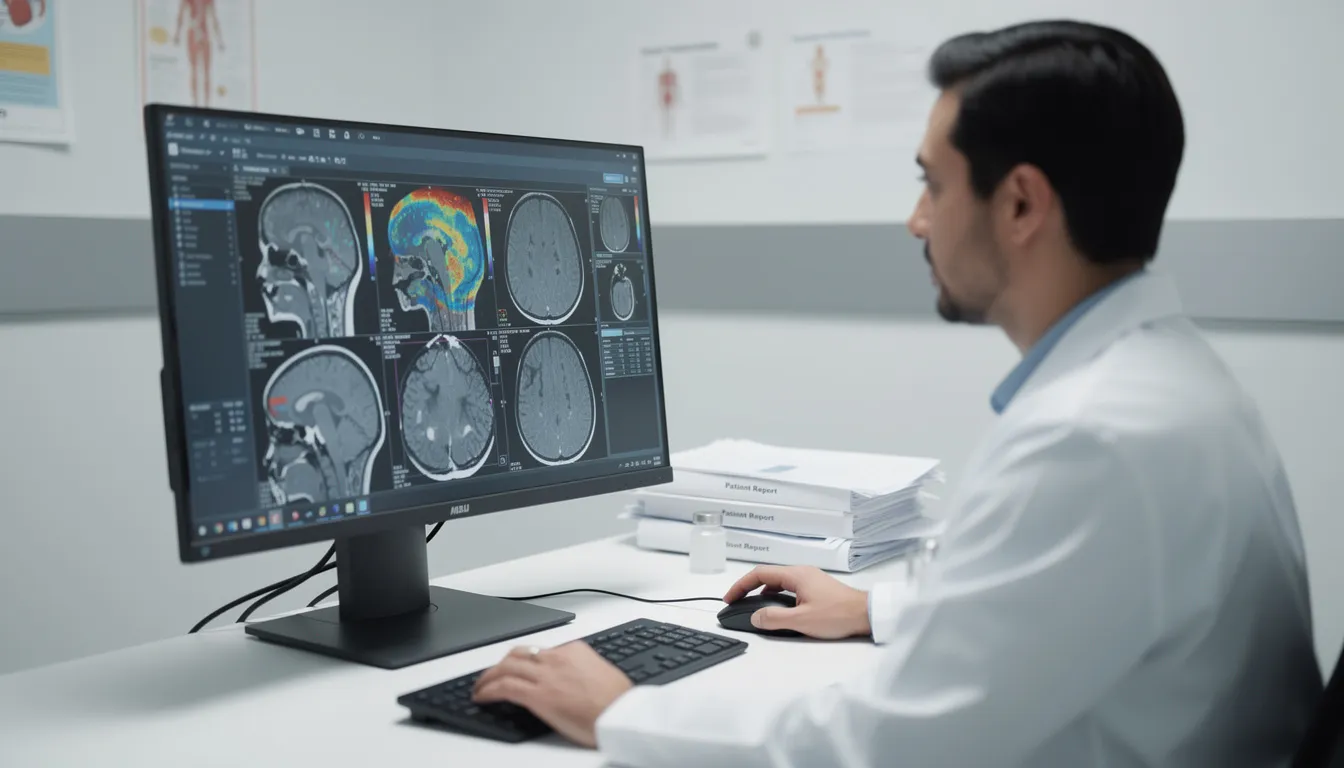
Machine learning models, especially convolutional networks, have achieved radiologist-level performance on some diagnostic tasks. This represents one of the clearest success stories for deep neural networks in high-stakes applications.
Notable examples:
Application | Model performance | Status |
|---|---|---|
Diabetic retinopathy detection | 87% sensitivity (IDx-DR) | FDA cleared 2018 |
Breast cancer screening | 5.7% reduction in false positives | Google Health research |
Lung nodule detection | Radiologist-equivalent accuracy | Multiple commercial tools |
Skin lesion classification | Dermatologist-level on some conditions | Mobile apps with clinical validation |
Dermatology apps classify skin lesions from smartphone photos, though these are adjunct tools rather than replacements for medical professionals. The regulatory pathway requires demonstrating safety and efficacy before clinical deployment.
In pathology, ML helps analyze whole-slide images to count cells, identify tumor regions, or grade cancers. This increases consistency across pathologists and reduces manual workload, allowing experts to focus on complex cases.
The FDA began clearing AI-powered diagnostic support tools around 2017-2018, with the pace accelerating each year. By 2026, hundreds of ML-based medical devices have received regulatory approval across imaging, cardiology, and other specialties.
Electronic Health Records, Risk Prediction, and Hospital Operations
Hospitals have digitized vast amounts of data in EHR systems like Epic and Cerner. Lab results, medications, vital signs, and clinician notes feed ML models that predict patient risk and optimize operations.
Clinical prediction applications:
Sepsis prediction: Models achieve 85% accuracy detecting onset hours before clinical manifestation, enabling earlier interventions
Readmission risk: 30-day readmission prediction helps target discharge planning resources
ICU deterioration: Early warning systems flag patients whose vitals suggest worsening condition
Operational uses include forecasting emergency department wait times, optimizing staff schedules, and predicting bed occupancy to reduce bottlenecks.
ML models can scan clinician notes and coded diagnoses to identify patients at high risk of heart failure or complications, supporting targeted follow-up and care coordination.
Important pitfalls:
Biased or incomplete data leads to unreliable predictions
Documentation artifacts can create false patterns
Alert fatigue occurs when models generate too many false alarms (up to 80% in some implementations)
Careful deployment, continuous evaluation, and clinician involvement in design remain essential for effective healthcare ML.
Personalized Medicine, Genomics, and Drug Discovery
Machine learning is increasingly used to tailor treatments to individuals based on genetic, proteomic, and clinical data-often called precision or personalized medicine.
Applications in personalized treatment:
Predicting which cancer patients will respond to specific targeted therapies based on tumor genomics
Identifying patients at high risk for adverse drug reactions from their genetic profile
Optimizing drug dosing based on individual metabolism patterns
Drug discovery transformation:
ML’s role in drug discovery has accelerated dramatically:
Stage | ML application | Impact |
|---|---|---|
Target identification | Analyzing biological pathways | Faster hypothesis generation |
Compound screening | Virtual screening of billions of molecules | 1000x speedup over lab screening |
Protein structure | AlphaFold2 predicting 3D structures (2020-2021) | Unlocking previously unsolvable problems |
Clinical trial design | Patient stratification and endpoint prediction | Better trial efficiency |
Pharma companies partner with AI startups to shorten early-stage discovery timelines by up to 50% compared with purely manual approaches.
Challenges remain: integrating heterogeneous biomedical data sources, ensuring interpretability of complex models for regulatory review, and validating ML-driven hypotheses through rigorous clinical trials.
Public Health, Epidemiology, and Wearables
The COVID-19 pandemic demonstrated both the potential and limitations of ML for disease surveillance and forecasting. Models using mobility data, search queries, and clinical reports helped monitor outbreaks and predict hospital demand.
Public health applications:
Forecasting seasonal influenza spread using time-series and spatial data
Predicting vaccine uptake patterns to optimize distribution
Monitoring syndromic surveillance signals from emergency department visits
Wearable device ML capabilities:
Device | ML capability | Accuracy/Impact |
|---|---|---|
Apple Watch | Atrial fibrillation detection from PPG signals | 98% accuracy in studies |
Fitbit | Sleep stage classification | Research-grade correlation |
Oura Ring | Activity and recovery tracking | Early illness detection signals |
Garmin | Stress and performance metrics | Continuous values monitoring |
These devices use feature learning and classification algorithms to transform raw sensor data into actionable health insights.
Privacy and consent issues around sharing wearable and location data for public health research are actively debated. Emerging frameworks for anonymization, differential privacy, and secure aggregation aim to enable research while protecting individual privacy.
By 2030, continuous device data combined with ML may support more proactive, preventive medicine-detecting health changes before symptoms appear.
Autonomous Systems and Robotics
Reinforcement learning, supervised learning, and computer vision combine to allow machines to perceive, decide, and act in the physical world. This represents some of the most ambitious machine learning applications-systems that must function reliably in unpredictable physical environments.
Key Application Areas in Autonomous Systems and Robotics
Self-driving cars and advanced driver assistance
Drones, delivery robots, and logistics
Industrial robotics and smart manufacturing
Smart home and IoT devices
Fully general autonomy remains a research challenge in 2026. However, narrow, structured environments like warehouses, farms, and mines already see large-scale deployment of ML-powered robots.
Safety, reliability, and regulation are central themes. Regulatory approvals, safety driver requirements, and standards for collaborative robots shape what can actually be deployed versus what remains experimental.
Self-Driving Cars and Advanced Driver Assistance
Modern vehicles increasingly incorporate ML-based systems at various autonomy levels. Before reaching full self-driving, cars deploy a range of advanced driver assistance features:
Adaptive cruise control
Lane-keeping assistance
Automatic emergency braking
Automated parking assist
Major players and deployments:
Company | System | Status (2026) |
|---|---|---|
Tesla | Autopilot/Full Self-Driving | Billions of miles logged, highway-focused |
Waymo | Robotaxi service | 50,000+ weekly rides in Phoenix |
Cruise | Urban autonomous vehicles | San Francisco pilot operations |
Baidu Apollo | Chinese market robotaxis | Multiple city deployments |
The sensor suite typically includes cameras, radar, and in some systems lidar. Machine learning models perform perception tasks-object detection, lane segmentation, and pedestrian recognition-processing data in real-time to build a model of the environment.
Most deployments remain constrained by geofencing (specific approved areas), weather limitations, and regulatory requirements. Safety drivers or remote monitors often remain in the loop, ready to intervene.
Edge cases like construction zones, unusual road layouts, and unexpected obstacles remain challenging. Progress relies on massive simulation (billions of virtual miles) plus real-world data collection to continuously improve model performance.
Drones, Delivery Robots, and Logistics
ML powers navigation, obstacle avoidance, and route optimization for aerial drones and ground-based delivery robots.
Aerial drone applications:
Agriculture: Crop monitoring, precision spraying, health assessment
Inspection: Wind turbines, power lines, bridges, rooftops
Delivery: Medical supplies, packages, emergency equipment
Real-world examples:
Amazon Prime Air: Testing package delivery via autonomous drones
Zipline: Operating medical supply delivery in Rwanda, Ghana, and expanding globally-delivering blood products and vaccines to remote clinics
Starship Technologies: Ground robots delivering food and packages on university campuses and in cities
Models train on sensor data (vision, lidar, GPS) to interpret environments and adjust trajectories. Reinforcement learning in simulation allows testing millions of scenarios before limited real-world deployment.
Warehouse logistics has seen massive ML adoption. Amazon’s Kiva robots move shelves at 4x human speed, coordinating with workers and each other to optimize fulfillment center operations.
Regulatory challenges for drone flights over populated areas include airspace coordination, fail-safe mechanisms, and privacy considerations when cameras are involved.
Emerging applications include autonomous ships for freight transport and port operations using ML for navigation and scheduling.
Industrial Robotics and Smart Manufacturing
Traditional industrial robots followed rigid programming-exactly the same motion, every time. Modern ML-enhanced robots can adapt to variation in parts, tasks, and environments, supporting Industry 4.0 initiatives.
Key applications:
Application | Technology | Benefit |
|---|---|---|
Visual inspection | CNN-based defect detection | Faster and more consistent than human inspectors |
Predictive maintenance | Anomaly detection on sensor data | 30-50% reduction in unplanned downtime |
Adaptive grasping | Reinforcement learning for varied objects | Handling irregular items without reprogramming |
Collaborative robots | ML for safety and motion planning | Working safely alongside humans |
Collaborative robots (“cobots”) from manufacturers like Universal Robots use ML for safety monitoring, adjusting movements in real-time when humans enter their workspace.
Sensor data streams from machines-vibration, temperature, current draw-feed ML models that detect anomalies before breakdowns. Predictive maintenance reduces downtime in factories, oil rigs, and power plants, with ROI often measured in millions of dollars annually.
Example: An automotive manufacturer deploying ML-based visual inspection on their assembly line reduced defect escape rates by 40% while maintaining line speed, cutting warranty costs significantly.
Smart Home and IoT Devices
Smart thermostats, lighting systems, and appliances use ML to learn user preferences and optimize operations.
Common smart home ML applications:
Google Nest: Learns heating/cooling schedules, predicts occupancy, optimizes energy use
Smart security: Distinguishes family members from strangers, pets from intruders, reducing false alarms
Robot vacuums: Maps home layouts, learns optimal cleaning paths, avoids obstacles
Smart speakers: Learns preferred music, news sources, and routines
Many IoT devices now run embedded ML locally on chips-called TinyML. This reduces the need to send raw data to the cloud, improving latency and privacy for tasks like keyword spotting (“Hey Siri”) and local image processing.
Security and interoperability concerns matter. Compromised IoT devices can be abused for botnets or surveillance. Secure ML deployment and regular firmware updates are crucial for maintaining device integrity across connected home ecosystems.
Enterprise Analytics, Cybersecurity, and Smart Cities
Machine learning serves as a core engine for large-scale data analysis across enterprises, city infrastructure, and digital security systems. These applications transform logs, sensor readings, and transactions into actionable forecasts, alerts, and optimization decisions.
Key Areas in Enterprise Analytics, Cybersecurity, and Smart Cities
Predictive analytics and business intelligence
Cybersecurity and threat detection
Smart cities, transportation, and infrastructure
Agriculture, environment, and sustainability
The focus is on applied use cases where ML creates measurable business value-whether that’s catching intrusions before they cause damage or optimizing traffic flow to reduce commute times.
Predictive Analytics and Business Intelligence
Predictive analytics uses machine learning models on historical and real-time data to forecast outcomes. These capabilities have moved from specialized data science teams to mainstream business intelligence tools.
Integration into BI platforms:
Modern tools like Power BI, Tableau, and Looker now embed AutoML features. Analysts can build and deploy models without writing code or managing infrastructure.
Common applications:
Industry | Prediction target | Business impact |
|---|---|---|
Retail | Demand forecasting | Inventory optimization, reduced stockouts |
Manufacturing | Equipment failure | Preventive maintenance scheduling |
Education | Student dropout risk | Targeted intervention and support |
Logistics | Delivery time estimation | Customer communication, route planning |
Models integrate directly into dashboards and workflow tools, ensuring predictions inform decisions rather than gathering dust in data science notebooks.
Limitations to consider:
Changing market conditions can invalidate historical patterns
Data leakage during model training creates artificially optimistic results
Continuous monitoring and retraining are essential to maintain accuracy over time
Cybersecurity and Threat Detection
Cybersecurity teams use ML to analyze massive volumes of logs, network flows, and endpoint telemetry to spot unusual activity indicative of threats.
Common approaches:
User and Entity Behavior Analytics (UEBA): Baseline normal behavior, flag deviations
Network intrusion detection: Classify traffic patterns as normal or malicious
Phishing detection: Analyze email characteristics in corporate gateways
Endpoint detection: Identify malware based on behavioral signatures
Detection examples:
ML can detect patterns like:
Lateral movement across systems (attacker spreading after initial compromise)
Anomalous data exfiltration (unusually large file transfers)
Unusual login patterns (new location, strange hours, impossible travel)
Security teams report achieving 95%+ precision on some detection tasks when combining ML with contextual rules and human analysis.
Arms race reality: Attackers also experiment with ML for evasion and phishing, creating sophisticated campaigns that bypass traditional filters. Defenders must continuously update models and feature sets.
Combining ML with human threat hunters and rule-based systems forms a more robust defense-in-depth strategy than any single approach.
Smart Cities, Transportation, and Infrastructure
Cities deploy ML to optimize operations across transportation, utilities, and public services.
Transportation applications:
Adaptive traffic signals: Adjust timing in real-time based on current flow, reducing congestion by 20% in pilot deployments
Transit demand prediction: Optimize bus and train frequency based on predicted ridership
Parking guidance: Direct drivers to available spaces based on sensor data
Pedestrian and cyclist counting: Plan infrastructure improvements based on actual usage
Utility applications:
System | ML application | Impact |
|---|---|---|
Electricity grid | Demand forecasting, renewable integration | Balancing supply and demand |
Water systems | Leak detection from sensor patterns | Reduced water loss |
Infrastructure maintenance | Predictive models for bridges, roads | Prioritized repair scheduling |
Pilot projects partner municipalities with tech companies and universities to build ML-driven dashboards for city operations and emergency response.
Privacy governance is essential for city-scale ML deployments. Anonymization of mobility data and clear policies against surveillance overreach protect citizen rights while enabling useful analytics.
Agriculture, Environment, and Sustainability
ML contributes to sustainable agriculture and environmental protection through analysis of satellite, drone, and ground-sensor data.
Agricultural applications:
Crop yield prediction: Forecasting harvest volumes from satellite imagery with 90% accuracy
Disease detection: Smartphone apps identifying plant diseases from photos
Precision agriculture: Targeted spraying only where needed, reducing chemical use by 30-50%
Irrigation optimization: Soil moisture modeling to minimize water waste
Environmental monitoring:
Application | Data source | Impact |
|---|---|---|
Deforestation detection | Satellite imagery | Near real-time alerts for enforcement |
Illegal fishing tracking | Vessel transponder data | Maritime law enforcement |
Air quality forecasting | Sensor networks | Public health advisories |
Wildfire risk modeling | Weather, vegetation data | Evacuation planning |
Energy sector ML includes predicting wind and solar generation, optimizing battery storage dispatch, and balancing grid loads to integrate more renewable sources.
Conservation example: A wildlife protection organization uses ML models to classify animal calls from acoustic sensors, detecting endangered species presence and guiding ranger patrols to areas needing protection.
Generative AI and Creative Applications
Generative AI represents one of the most visible ML trends since 2022. Models that create text, images, code, audio, and video on demand from natural language prompts have captured public imagination and transformed creative workflows.
Well-known tools include ChatGPT, DALL·E, Midjourney, Stable Diffusion, Google Imagen, and Microsoft Copilot. These saw explosive adoption from 2023-2026 across individuals and organizations of all sizes.
While generative models amplify productivity and creativity, they raise novel challenges around misinformation, deepfakes, copyright, and safety controls. A practical approach treats generative AI as a powerful but fallible assistant whose outputs require human review before external publication.
Text and Code Generation
Large language models (LLMs) trained on vast text corpora can draft emails, reports, blog posts, legal summaries, and technical documentation from short prompts in seconds.
Developer-focused tools:
Tool | Function | Reported impact |
|---|---|---|
GitHub Copilot | Code completion, test generation, debugging | 55% productivity boost in studies |
Replit AI | In-browser code assistance | Faster prototyping for learners |
IDE integrations | Contextual suggestions across languages | Reduced boilerplate coding |
Business applications:
Generating first drafts of marketing copy
Creating internal knowledge base articles
Building project plans and status reports
Drafting customer support responses for human refinement
Enterprises increasingly fine-tune or ground LLMs on their own documentation to build domain-specific assistants that answer company-specific questions accurately.
Common pitfalls:
Hallucinated facts presented with high confidence (10-20% of outputs may contain errors)
Outdated knowledge cutoff issues
Need for guardrails, human review, and clear disclosure when content is AI-assisted
Image, Audio, and Video Generation
Diffusion models and related architectures generate high-resolution images and artwork. DALL·E, Midjourney, and Stable Diffusion became mainstream from 2022 onward.
Visual generation use cases:
Design concept exploration and mood boards
Advertising creative variations
Game development asset creation
Storyboarding for film and video
Audio applications:
Text-to-speech with natural-sounding voices
Music generation for content creators
Voice cloning for localization (with strict ethical guidelines)
Synthetic training data for speech recognition
Video generation is improving rapidly. Early tools produce short clips for marketing, education, and entertainment, though limitations remain on resolution, coherence, and realistic motion.
Deepfake and misinformation risks are significant. Real-world episodes of synthetic political or celebrity videos have caused confusion and harm. Emerging responses include:
Digital watermarking of AI-generated content
Detection tools identifying synthetic media
Platform policies requiring disclosure
Regulatory proposals for mandatory labeling
Creative Workflows, Productivity, and Human–AI Collaboration
Generative ML is increasingly embedded into standard software as “copilot” features that assist rather than replace creators.
Integration examples:
Google Workspace: Smart Compose, document summarization
Microsoft 365: Copilot across Word, Excel, PowerPoint
Adobe Creative Cloud: Generative fill, content-aware features
Notion: AI writing assistance
Figma: Design suggestions and automation
Practical use cases:
Task | AI role | Human role |
|---|---|---|
Brainstorming | Generate 20 headline options | Select and refine best options |
First drafts | Produce initial text | Edit, fact-check, add expertise |
Creative variations | Generate multiple versions | Choose direction, ensure brand fit |
Tedious tasks | Resize, format, summarize | Final approval and distribution |
Organizations build custom internal tools combining LLMs with proprietary data, enabling staff to query reports, summarize meetings, or generate project updates automatically.
Job displacement vs. augmentation: Most near-term changes involve workflow evolution and skill requirements rather than instant automation of entire roles. Professionals who learn to work effectively with AI tools become more productive, not obsolete.
For tracking fast-moving generative AI capabilities, curated AI trend summaries help professionals stay informed without drowning in daily announcement noise.
Risks, Verification, and Responsible Use of Generative Models
Key risks to manage:
Risk | Example | Mitigation |
|---|---|---|
Plausible but incorrect text | Hallucinated facts, fake citations | Human verification, grounding in sources |
Biased or toxic outputs | Offensive content, stereotypes | Content filters, RLHF training |
Training data issues | Copyright infringement, personal data | Data curation, opt-out mechanisms |
Harmful content generation | Disinformation, malware code | Use restrictions, monitoring |
Mitigation strategies in practice:
Content filters blocking harmful outputs
Reinforcement learning from human feedback (RLHF) for alignment
Enterprise policies restricting use on sensitive data
Internal review processes before external publication
Logging prompts and responses for audit
Legal and regulatory developments through mid-2020s include early AI Acts in the EU, copyright lawsuits over training data, and proposed requirements for labeling AI-generated content.
Best practices for organizations:
Keep humans in the loop for verification
Log interactions for compliance and audit
Restrict model access to appropriate roles
Conduct regular risk assessments
Stay current on evolving regulations
Responsible use is a competitive advantage: teams that adopt generative AI thoughtfully gain productivity while avoiding reputational and compliance pitfalls.

How Organizations Deploy Machine Learning in Practice
Moving from an ML idea to a running production application requires more than algorithms. Success depends on data engineering, operations, culture, and governance. Many projects fail for non-technical reasons-unclear objectives, poor data quality, or lack of organizational buy-in.
Practical Realities of ML Deployment
Data pipelines, infrastructure, and tools
Model development, evaluation, and MLOps
Teams, skills, and cross-functional collaboration
Governance, ethics, and regulation
Understanding these factors helps decision-makers and practitioners prioritize efforts and avoid common pitfalls.
Data Pipelines, Infrastructure, and Tools
ML applications require reliable data pipelines to collect, clean, label, and store data from databases, logs, sensors, and third-party sources.
Common technology stack (2018-2026):
Layer | Popular options |
|---|---|
Cloud platforms | AWS, Azure, Google Cloud |
Data warehouses | Snowflake, BigQuery, Redshift |
ML frameworks | TensorFlow, PyTorch, Scikit-learn |
Orchestration | Airflow, Prefect, Dagster |
Feature stores | Feast, Tecton, Databricks Feature Store |
Data quality processes include:
Handling missing data and outliers
Feature engineering to create informative input variables
Version control for both data and code
Reproducible datasets for experiment tracking
Organizations adopt feature stores and data catalogs to share and reuse curated features across multiple ML applications, reducing duplicate work and ensuring consistency.
Latency and scale requirements strongly influence infrastructure design. Fraud detection needs millisecond responses on streaming data. Weekly demand forecasting can run as batch jobs overnight.
Model Development, Evaluation, and MLOps
The ML lifecycle involves multiple iterations:
Problem framing: Define what you’re predicting and why it matters
Baseline model: Start simple to establish a benchmark
Feature engineering: Improve input representations
Model training: Fit parameters on training data
Validation: Evaluate on held-out data to assess generalization
A/B testing: Compare to existing systems in production
Deployment: Serve predictions at scale
Monitoring: Track performance and data drift
MLOps extends DevOps with ML-specific capabilities:
Automated training pipelines
Model version management
Continuous delivery of models
Monitoring for model drift and degradation
Rollback mechanisms when issues arise
Key practices:
Practice | Purpose |
|---|---|
Train/validation/test splits | Prevent overfitting, assess generalization |
Cross-validation | Robust performance estimates |
Appropriate metrics | Match evaluation to business goals |
Data leakage prevention | Ensure fair evaluation |
Production monitoring tracks prediction quality, input data distributions, and system health. When drift or failures are detected, automated systems can trigger retraining or rollback.
Tools widely adopted by 2026 include MLflow for experiment tracking, Kubeflow for orchestration, and cloud-native solutions like SageMaker Pipelines.
Teams, Skills, and Cross-Functional Collaboration
Impactful ML applications require cross-functional teams with diverse skills:
Role | Primary focus |
|---|---|
Data scientists | Modeling, experimentation, analysis |
ML engineers | Deployment, performance, scale |
Data engineers | Pipelines, data quality, infrastructure |
Product managers | Requirements, prioritization, user needs |
Domain experts | Problem definition, validation, context |
Legal/compliance | Risk assessment, regulatory requirements |
Upskilling existing staff through online courses, internal training, and curated AI trend resources is often more realistic than hiring large numbers of senior ML experts in a tight talent market.
Success factors:
Align ML projects with clear business or mission goals
Define success metrics upfront
Ensure leadership support for experimentation
Accept that most ML experiments don’t reach production
Organizations debate centralized vs. federated ML teams. A center of excellence provides consistency and shared infrastructure. Embedded data scientists in business units ensure close domain alignment. Many organizations adopt hybrid models.
Governance, Ethics, and Regulation
As ML applications increasingly make or influence high-stakes decisions, governance frameworks become essential.
Regulatory drivers:
Privacy laws: GDPR (Europe), CCPA (California)
Sector-specific guidance: Healthcare (FDA), Finance (OCC, CFPB)
Emerging AI-specific regulations: EU AI Act, proposed US frameworks
Governance practices:
Practice | Description |
|---|---|
Model documentation | “Model cards” describing purpose, training, limitations |
Bias audits | Testing for discriminatory outcomes across groups |
Periodic reviews | Regular assessment of deployed model performance |
Impact assessments | Evaluating potential harms before deployment |
Oversight committees | Governance bodies for high-risk systems |
Clear incident-response plans are essential for when ML systems behave unexpectedly. This includes rollback mechanisms, communication strategies, and investigation processes.
Staying current on AI policy and standards is challenging due to rapid change. Curated, noise-filtered AI news sources help compliance and strategy teams track developments efficiently-one reason teams at organizations like Adobe subscribe to focused weekly summaries rather than attempting to follow every daily update.
Challenges, Limitations, and Future Directions
While ML applications have advanced remarkably, real-world deployments face persistent challenges. Understanding these limitations is essential for responsible adoption and realistic expectations about what ML can and cannot do today.
Key Areas of Concern
Data quality, bias, and generalization
Robustness, security, and adversarial attacks
Compute, efficiency, and environmental impact
Trends shaping ML toward 2030
ML will become more pervasive and powerful, but success depends on careful design, governance, and continuous learning by practitioners and leaders.
Data Quality, Bias, and Generalization
Many ML application failures trace back to poor or unrepresentative training data.
Common data problems:
Issue | Example | Consequence |
|---|---|---|
Imbalanced training data | Facial recognition trained mostly on lighter-skinned faces | 34% higher error rates on darker-skinned individuals |
Missing segments | Medical models lacking elderly patient data | Poor performance on underrepresented populations |
Mislabeled records | Crowdsourced labels with errors | Noise in training reduces model quality |
Outdated patterns | Pre-pandemic behavior models | Failure when applied to changed circumstances |
Distribution shift occurs when models trained on one time period, geography, or user base degrade when deployed elsewhere. The COVID-19 pandemic illustrated this dramatically-models trained on 2019 behavior failed in 2020.
Mitigation strategies:
Better data collection and labeling processes
Bias detection tools and fairness metrics
Domain adaptation techniques
Ongoing evaluation on diverse test sets
Transfer learning for data-scarce domains
Semi supervised learning to leverage unlabeled data
Some domains inherently lack large labeled data sets, making expert-in-the-loop labeling and synthetic data generation important techniques.
Robustness, Security, and Adversarial Attacks
ML models can be surprisingly vulnerable to attack.
Attack types:
Attack | Description | Example |
|---|---|---|
Adversarial examples | Small input perturbations causing misclassification | 5-pixel changes fooling image classifiers |
Model theft | Querying APIs to replicate proprietary models | Competitor extraction |
Data poisoning | Corrupting training data | Inserting backdoors |
Prompt injection | Manipulating LLM inputs | Bypassing safety filters |
High-stakes applications-autonomous driving, medical diagnosis, financial decisions-require rigorous testing against adversarial and edge cases.
Defense approaches:
Robust training with adversarial examples
Certified defenses with provable bounds
Anomaly detection on input data
Secure deployment environments
Access control and monitoring
Organizations should treat ML security as integral to both cybersecurity and ML engineering, not an afterthought.
Compute, Efficiency, and Environmental Impact
The largest ML models require massive compute resources and energy.
Growth in compute demands:
Compute for training frontier models has grown exponentially since 2012. Training GPT-4 equivalents requires on the order of 10^25 FLOPs-consuming energy equivalent to 1,000 households for a year.
Efficiency techniques:
Technique | Purpose |
|---|---|
Model pruning | Remove unnecessary parameters |
Quantization | Reduce numerical precision |
Knowledge distillation | Train smaller models from larger ones |
Architecture search | Find efficient network designs |
Extreme gradient boosting | Efficient alternatives for tabular data |
TinyML and edge computing enable ML on devices with minimal power consumption, reducing reliance on data centers for many everyday applications.
Sustainability considerations are increasingly part of ML project evaluation, driving interest in energy-efficient chips and greener data center operations.
Trends Shaping ML Applications Toward 2030
Emerging developments:
Multimodal models: Understanding text, images, audio, and video together in unified systems
Foundation models: Large pre-trained models fine-tuned for specific industries (legal, medical, financial)
Federated learning: Training on decentralized data without centralizing raw records, addressing privacy concerns
Physical-world autonomy: Continued progress in robotics, autonomous vehicles, and embodied AI
Intelligent systems integration: ML becoming indistinguishable from “software” for end users
Standards bodies, regulators, and professional communities are shaping norms around transparency, safety, and acceptable risk levels for different application domains.
Professionals and organizations who track major ML developments regularly-in a focused, curated way-will be better positioned to adopt new capabilities responsibly and competitively. That’s the core insight behind KeepSanity AI’s approach: one weekly email covering what actually matters, so you can stay informed without sacrificing your sanity.

Conclusion
Machine learning now permeates consumer apps, finance, healthcare, industry, public infrastructure, and creative workflows. Often invisible, these systems shape experiences from morning phone unlocks to evening streaming recommendations, from fraud-blocked transactions to medical diagnoses that catch disease earlier.
The most effective machine learning applications combine strong data foundations, appropriate machine learning algorithms (whether simple linear regression or complex deep neural networks), robust deployment processes, and thoughtful governance. Technical sophistication matters less than clear problem framing, quality data collected systematically, and organizational commitment to iterate and improve.
Whether you’re technical or non-technical, view ML not as a mysterious black box but as a set of tools whose value depends on careful implementation. Start by identifying a few high-impact use cases in your domain. Invest in foundational data work-clean, well-labeled, representative data sets. Set up lightweight governance early in any ML initiative rather than retrofitting it after problems emerge.
The ML and AI landscape changes quickly. New architectures, tools, and regulations emerge constantly. Leveraging concise, weekly AI news and analysis helps maintain a clear picture of what new applications are genuinely important versus passing hype. That’s exactly why professionals at companies like Adobe and Bards.ai subscribe to KeepSanity AI-getting signal without the noise, staying informed without the daily inbox pile-up.
Lower your shoulders. The noise is gone. Here is your signal.
FAQ
How is machine learning different from traditional rule-based software?
Traditional software follows explicit, hand-written rules-“if X then Y” logic that programmers define precisely. Machine learning systems infer rules automatically from data examples and training examples, allowing them to handle fuzzier, more complex patterns like speech recognition, handwriting, or fraud detection that would be nearly impossible to code manually.
ML systems continue to improve as they see more data, learning from observed values to refine their predictions. Rule-based systems typically require manual updates when conditions change.
In practice, many applications combine both approaches: ML for pattern recognition and ranking complex inputs, with rules and business logic handling constraints, compliance requirements, and edge cases that need deterministic behavior.
Do all companies need deep learning and large language models to benefit from ML?
No. Many impactful applications still rely on simpler models-logistic regression for classification, gradient boosting and extreme gradient boosting for tabular data, basic clustering with k means clustering. These approaches are easier to interpret, faster to deploy, and simpler to maintain.
Deep learning and LLMs shine for unstructured data tasks: images, audio, long text, and complex sequences. But structured business problems-churn prediction, credit risk scoring, demand forecasting-often work excellently with classical statistical learning methods.
Start with the simplest model that meets performance and interpretability needs. A linear model or decision trees might solve your problem. Scale up to deep models only when clearly justified by the problem, the available data, and the business value of incremental improvement.
How can smaller organizations or startups get started with machine learning if they lack big data?
Begin with narrow, well-defined use cases: lead scoring, simple sales forecasting, customer segmentation, or content tagging. These can work with existing transactional data from your CRM, email, or product analytics.
Pre-trained models and APIs from cloud providers (AWS, Google Cloud, Azure) and open-source communities let teams leverage powerful ML-for vision, translation, speech, text analysis-without training from scratch. This dramatically reduces the data and compute requirements.
Focus on data quality over quantity, clear success metrics, and incremental pilots. You don’t need a massive data science team to start. Use curated AI news and learning resources to stay informed without overcommitting to trendy but unnecessary complexity.
What are the main risks of deploying ML applications in regulated industries?
Key risks include:
Lack of transparency: Regulators and customers may demand explanations for automated decisions
Potential bias: Models may discriminate against protected groups, creating legal and ethical exposure
Privacy violations: Training on sensitive data without proper consent or security
Model drift: Performance degradation over time as real world data diverges from training conditions
Accountability gaps: Unclear responsibility when automated systems cause harm
Regulators may require documentation of model behavior, justification for adverse decisions (like denied credit), human oversight in high-stakes cases, and robust processes for monitoring and updating models.
Organizations in finance, healthcare, and public services should involve legal, compliance, and ethics experts from the earliest stages of any ML project-not after the model is built.
How can professionals keep up with rapid advances in machine learning without being overwhelmed?
Follow a small number of high-signal sources rather than chasing every headline. Select one or two key conferences (NeurIPS, ICML for research; applied AI summits for business), a focused research digest, and a carefully curated newsletter.
Build a lightweight personal learning system: dedicate a fixed weekly time slot to scan updates. Bookmark deeper resources for later reading. Focus on developments that clearly relate to your domain rather than every technical breakthrough.
Services designed specifically to filter noise and highlight only major AI and ML news-organized by category-dramatically reduce information overload while keeping professionals informed. That’s the philosophy behind KeepSanity AI: one email per week with only the major news that actually happened, covering business updates, model releases, tools, research, and community developments in scannable categories. No daily filler, zero ads, just signal.