The Future of Robots: 2026–2035 Outlook for Work, Home, and Society
The next decade will transform robots from isolated experiments into everyday infrastructure. Manufacturing floors, hospital corridors, warehouse aisles, and even living rooms will feature machines that work alongside humans, handle dangerous tasks, and adapt to new challenges in real time. This isn’t science fiction. It’s already underway.
Introduction: Who Should Care and Why
This article is designed for business leaders, engineers, policymakers, and curious individuals who want to understand how robotics will reshape the world between 2026 and 2035. The future of robots matters because their integration will impact every aspect of work, home, and society-transforming industries, redefining job roles, influencing regulations, and changing daily life. Whether you’re making strategic decisions for your company, developing new technologies, shaping public policy, or simply interested in how your home and workplace will evolve, understanding these trends is essential for staying ahead and making informed choices.
Key Takeaways
Between 2026 and 2035, robots will shift from isolated pilot programs to everyday infrastructure in factories, homes, hospitals, and cities, with the global robotics market projected to grow from USD 130 billion to over USD 518 billion.
Artificial intelligence breakthroughs-foundation models, vision-language models, and generative AI-are the primary drivers turning robots from rigid, pre-programmed machines into adaptable coworkers and helpers.
Humanoid robots like Tesla Optimus Gen 2, Boston Dynamics’ Electric Atlas, and Agility Robotics’ Digit are moving from YouTube demos to paid deployments, especially in logistics and light manufacturing.
The biggest constraints aren’t sci-fi “robot uprisings” but practical challenges: safety certification, regulation, job transitions, data privacy, and public trust.
Tracking only the most important robotics developments without daily hype is crucial-KeepSanity AI provides a weekly curated digest that surfaces signal over noise.
What Is the Future of Robots Between Now and 2035?
The near future of robotics-spanning 2026 to 2035-marks a decade of “visible” robots. Warehouse AMRs (autonomous mobile robots), surgery assistants, cleaning robots, early household humanoids, and smart-city systems will become familiar sights rather than headline-grabbing novelties. The global robotics technology market, valued at over USD 130.29 billion in 2025, is forecasted to reach USD 518 billion by 2035, expanding at a compound annual growth rate of 14.8%.
Robots will remain tools and collaborators, focused on repetitive tasks, dirty work, and dangerous tasks rather than replacing all human workers or “taking over the world.” The robot revolution is less about dominance and more about augmentation-machines handling what humans prefer not to do or cannot do safely.
Concrete 2024–2026 milestones signal this shift:
Tesla Optimus Gen 2 debuted in late 2023, targeting factory floor work first
Boston Dynamics’ Electric Atlas was announced in 2024, shifting from hydraulic to electric actuators for better efficiency and safety
Agility Robotics’ Digit began paid pilot programs with Amazon in 2023–2024
The biggest change compared to the 2010s is AI integration. Today’s robots increasingly use large vision-language models and reinforcement learning to adapt to unstructured environments-homes, cluttered warehouses, outdoor spaces-rather than requiring predefined paths and perfectly controlled settings.
You don’t need to track daily announcements to stay informed. Weekly digests like KeepSanity AI surface only the robotics developments that actually matter, filtering out marketing noise and minor updates.
Core Robotics Domains Shaping the Next Decade
The future of robotics isn’t one story-it’s several parallel transformations happening across industries. Here are the key domains where robotic systems are growing fastest:
Manufacturing
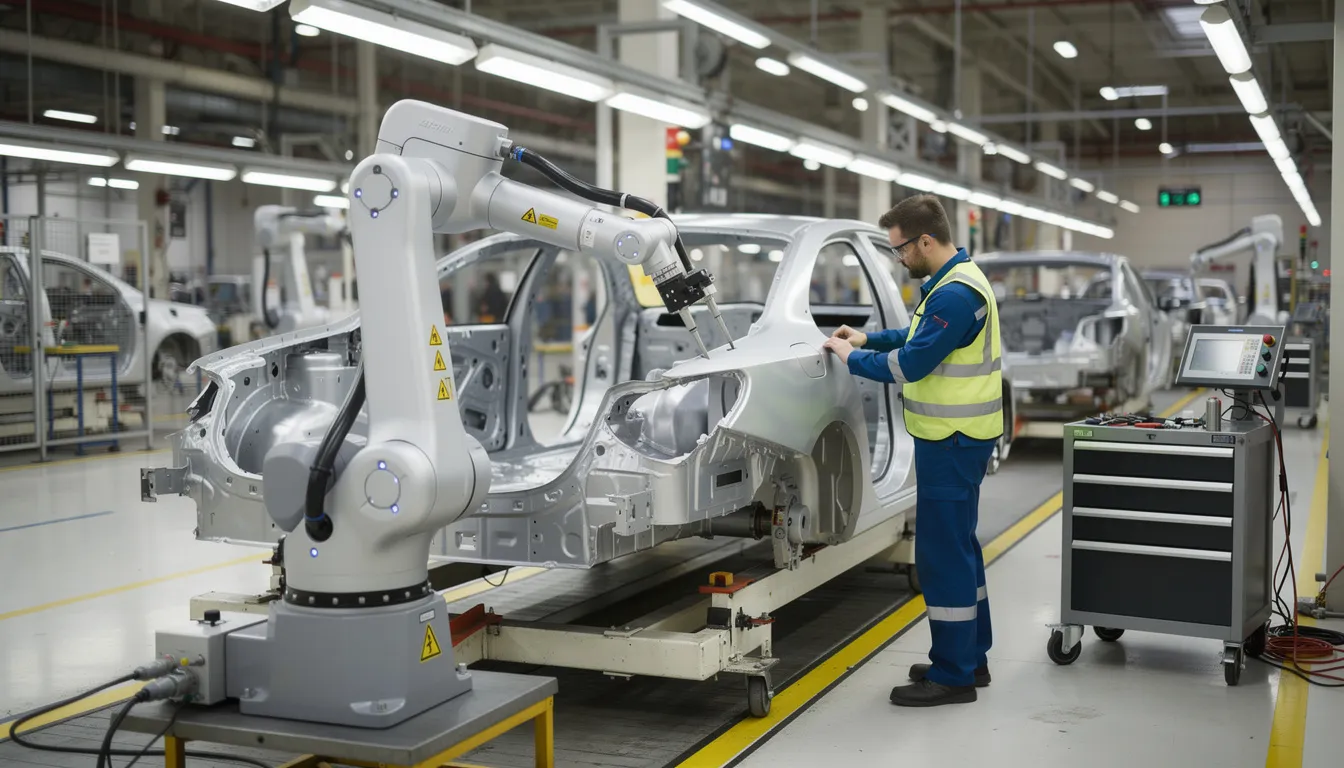
Fully automated or highly automated production lines will become normal by 2030. Collaborative robots, or cobots, are designed to work directly with humans instead of behind safety cages, assisting with repetitive and precision tasks. Traditional industrial robots are projected to hold 54.3% of market share by 2035, with a record 517,385 new installations worldwide in 2021 alone-up 31% year-over-year.
Healthcare
Surgical robots like the da Vinci system (FDA cleared in 2000) continue advancing toward minimally invasive procedures. Beyond operating rooms, rehabilitation exoskeletons and elder-care assistants are expanding in Japan, Europe, and the US. Demographic pressure is the driver-tens of millions of additional caregivers will be needed by 2030 as populations age.
Logistics and Warehouses
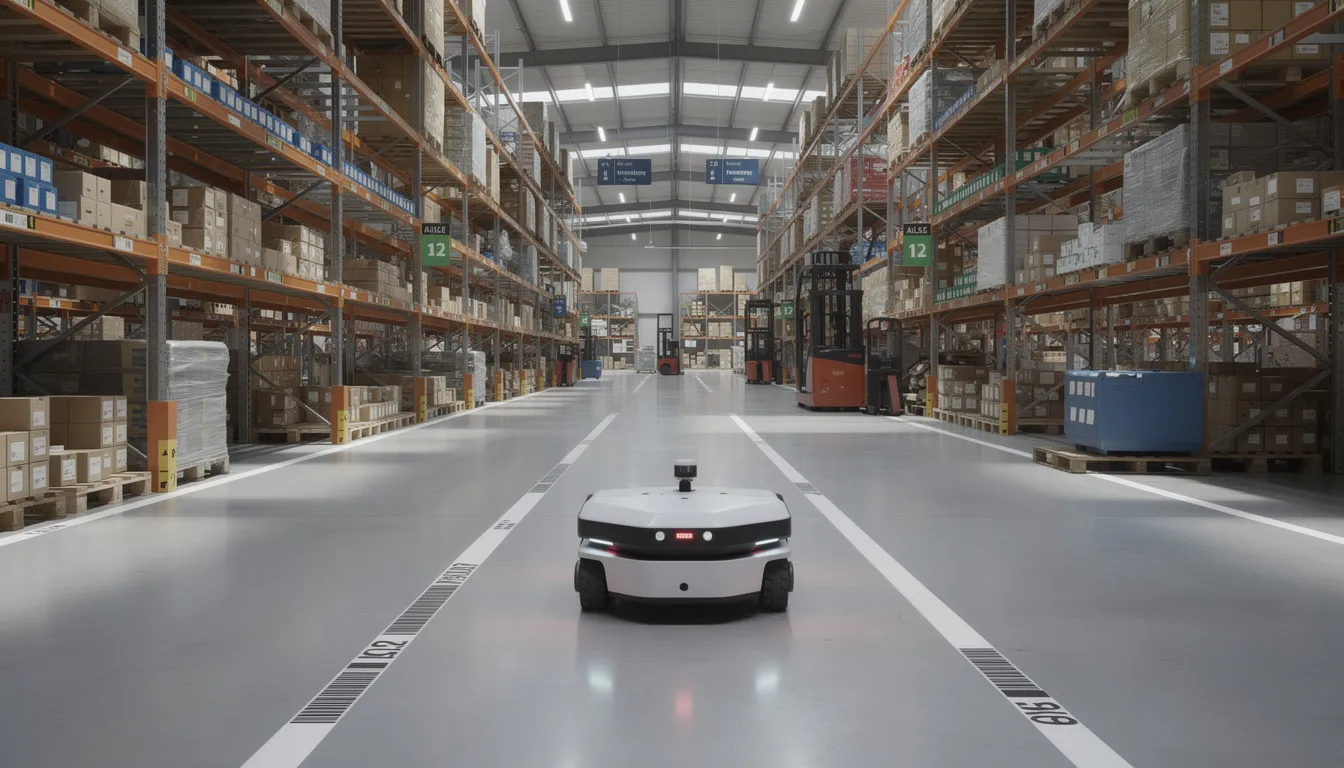
Fleets of autonomous mobile robots at Amazon, Ocado, and Alibaba handle picking, sorting, and last-meter transport. Packaging robots alone are projected to grow from USD 9.24 billion in 2026 to USD 23.64 billion by 2035 at an 11% CAGR.
Homes and Personal Life
The progression from Roomba (2002) to multi-function household robots continues. Early home-ready humanoids like 1X NEO have preorders open for 2026 deployment. The vacuum cleaner robot was just the beginning.
Environment, Infrastructure, and Space
Ocean-cleaning drones, inspection robots on wind turbines, and autonomous rovers for lunar and Martian missions represent concrete examples of robots tackling tasks in hazardous environments. Space exploration increasingly relies on robotic systems that can operate where humans cannot.
Seven Predictions for the Future of Robots (2026 and Beyond)
These predictions are specific and time-bound, tying to real trends and pilot programs already running in 2024–2025. They’re framed for pragmatic readers-engineering leaders, product people, investors-who want signal over hype.
Prediction 1: Collaborative Robots Become Standard Factory Co-Workers by 2028
Cobots, pioneered commercially around 2012 by Universal Robots, will evolve into default equipment on new production lines by 2028, especially in automotive, electronics, and CNC machining.
Concrete deployments are already happening:
Standard Bots’ RO1 targets small and mid-sized manufacturers
Universal Robots’ arms are being deployed for tending, assembly, and inspection
Force-sensing and vision-based stop zones allow human robot interaction without heavy safety cages
Easier programming removes much of the barrier for SMEs that previously couldn’t afford robotic integration. No-code interfaces, hand-guiding, and low-code apps mean a technician can teach a robot new tasks in hours rather than weeks.
The safety features enabling this shift include:
Feature | Benefit |
|---|---|
Force sensing | Robot stops when contact exceeds safe thresholds |
Vision-based zones | Camera systems detect human presence and adjust behavior |
Speed limiting | Robots slow down when humans enter shared workspace |
Collaborative modes | Multiple safety levels based on proximity |
These advances cut floor-space requirements and cost while enabling humans and machines to share work cells safely. |
Prediction 2: AI-Powered Autonomous Robots Run Large Warehouses by 2030
Fleets of AMRs and robotic arms in fulfillment centers will shift from semi-structured paths to fully AI-managed, real-time optimized workflows by 2030. Amazon and JD.com are already piloting these approaches.
The technology stack enabling this includes:
3D computer vision for identifying and locating items
SLAM (simultaneous localization and mapping) for navigation without fixed infrastructure
Large models for decision making that reschedule tasks and reroute around congestion on the fly
These autonomous systems will detect faults with minimal human oversight, similar to “self-healing” supply chains. Expected outcomes include doubling of pick rates and 20–40% lower injury rates compared to traditional warehouses.
Material handling becomes increasingly autonomous-robots don’t just move items, they optimize the entire flow based on real-time demand, inventory levels, and workforce availability.
KeepSanity AI regularly curates major warehouse-automation announcements so readers aren’t buried in every small pilot update.
Prediction 3: Healthcare Robotics Moves From Operating Rooms Into Everyday Care
Today’s focus on high-end surgical robots will expand dramatically by 2030. Healthcare robots will spread into hospital logistics, elder care, and home rehabilitation.
Current deployments and near-term expansions:
Application | Example | Status |
|---|---|---|
Surgical | da Vinci system | FDA cleared 2000, widely deployed |
Elder care | Nursing-assist robots | Active in Japanese care homes |
Rehabilitation | Robotic exoskeletons | EU and US approved for physical therapy |
Logistics | Medication delivery robots | Piloting in major hospital systems |
Aging populations in Japan, Europe, and the US create urgent demand. Estimates suggest tens of millions of additional caregivers will be needed by 2030-a gap robots can partially fill by handling logistics, rehabilitation exercises, and routine monitoring while medical staff focus on patient care. |
Privacy and empathy concerns are real. Robots will support nurses and doctors, not replace human relationships. Regulatory frameworks like HIPAA and GDPR considerations for sensor-rich care robots require careful navigation.
Prediction 4: Household and Service Robots Become Common Middle-Class Appliances
The trajectory from single-purpose devices to multi-function home robots is clear. By the early 2030s, robots handling chores like tidying, dish loading, and basic meal prep will enter middle-class households.
Comparison: 2002 Roomba vs. Projected 2032 Home Robot
Aspect | Roomba (2002) | Projected 2032 Robot |
|---|---|---|
Tasks | Vacuuming only | Multiple chores (tidying, dishes, laundry assist) |
Price | $200–500 | $10,000–20,000 |
Navigation | Random/simple patterns | AI-driven mapping and planning |
Human abilities replication | None | Basic manipulation, object recognition |
Autonomy | Fully autonomous for single task | Supervised autonomy for complex tasks |
Concrete products and timelines: |
1X’s NEO targets consumer deployment around 2026
Tesla Optimus prototypes aim for domestic work capability
Robotics-as-a-Service (RaaS) subscription models make robots affordable without large upfront costs
Cultural acceptance and trust-especially around cameras and microphones in private spaces-will be as important as technical capability for everyday life integration.

Prediction 5: Humanoid Robots Enter Real Workforces, Not Just YouTube Videos
Between 2026 and 2030, humanoid robot platforms will be used in controlled but real jobs: palletizing, tote carrying, line feeding, and basic facility logistics.
Key Humanoid Platforms to Watch
Platform | Developer | Target Use | Status |
|---|---|---|---|
Optimus Gen 2 | Tesla | Factory work | Announced late 2023, internal testing |
Electric Atlas | Boston Dynamics | Industrial applications | Hyundai deployments planned |
Digit | Agility Robotics | Logistics | Amazon pilots 2023–2024 |
Apollo | Apptronik | Manufacturing | Development and demos |
Figure 03 | Figure AI | General purpose | Investment and testing phase |
Phoenix | Sanctuary AI | Cognitive robotics | Research and pilots |
The main advantage of humanoids: they can use tools and infrastructure built for humans-stairs, doors, standard equipment-instead of requiring fully redesigned environments. This matters for industrial applications where retrofitting entire facilities is prohibitively expensive.
Balance the excitement with realism. Battery life currently limits operation to 1–2 hours for most platforms. Manipulation dexterity lags behind human abilities. Safety certification takes time. Early deployments will be carefully supervised, with 5–20kg payloads and 20–30+ degrees of freedom becoming standard specs.
Prediction 6: Robots Become Key Climate, Infrastructure, and Disaster-Response Tools
Environmental monitoring robots are already active in the field:
Underwater drones measuring pollution levels and ocean temperatures
Ground robots checking methane leaks at industrial sites
Aerial drones mapping forests for conservation and fire prevention
Disaster-response roles are expanding. Search-and-rescue robots enter collapsed buildings where human rescuers face extreme danger. Quadrupeds like Boston Dynamics’ Spot inspect unsafe sites after earthquakes, fires, or industrial accidents. Drones deliver medical supplies during floods or when roads are impassable.
By 2030, many governments and emergency agencies will have dedicated robotic response units and standardized protocols. Robots inspecting wind farms, solar installations, and offshore platforms improve uptime and safety while contributing to climate goals.
Innovation in this space moves quickly. KeepSanity AI’s robotics coverage helps policymakers and engineers quickly see which tools are moving from research to procurement without tracking every academic paper.
Prediction 7: Education and Workforces Re-skill for a Robotic, AI-Augmented Economy
The World Economic Forum forecasts that tens of millions of workers will need re-skilling due to advanced automation by 2030. This isn’t just a challenge-it’s an opportunity.
Schools and bootcamps are adding robotics, machine learning, and mechatronics modules. Students learn to design, operate, and maintain robots instead of competing with them. Programmable arms for STEM education and educational humanoids teaching coding and social interaction skills are entering classrooms.
New careers emerging:
Robot wranglers managing floor operations
Fleet-operations engineers optimizing multi-robot systems
Prompt engineers for robotic LLMs
Safety auditors for cyber-physical systems
Human robot interaction specialists
Tasks at high risk of automation vs. tasks likely to grow:
High Risk | Likely to Grow |
|---|---|
Simple assembly line work | Robot supervision and optimization |
Basic forklift operation | System integration and maintenance |
Routine data entry | Creative problem solving |
Repetitive quality checks | Complex decision making |
Standard packaging | Interpersonal care and service |
The workforce transition requires proactive policy-reskilling programs, corporate responsibility, and updated education curricula. |
Key Technologies Driving the Future of Robots
Hardware alone doesn’t define the future of robotics. Breakthroughs in AI, sensors, batteries, and networking unlock new robot capabilities and determine how quickly technology advances translate into real-world deployment.
Artificial Intelligence and Foundation Models
Large language and vision-language models (GPT-4 class systems and beyond) enable robots to interpret natural language instructions, plan complex tasks, and generalize to new situations without explicit programming. Generative AI allows robots to adapt to environments they’ve never seen before. This is the clearest shift from 2010s-era robots that required pre-defined paths for every action.
Perception and Sensing
Advances in depth cameras, tactile sensors, radar, and multi-modal fusion let robots handle cluttered, dynamic environments-homes, streets, unstructured warehouses. Computer vision now handles tasks that were research problems five years ago. Precision in object recognition and manipulation continues improving.
Actuators, Materials, and Batteries
Electric actuators (like those in Electric Atlas) replace hydraulic systems for better efficiency and safety. Soft robotics enables safer contact with humans and delicate objects. Battery density improvements gradually extend run-time, though battery life remains a constraint for mobile platforms.
Cloud Robotics and Digital Twins
Robots connect to cloud compute for heavy planning tasks, share learned skills across fleets, and get tested first in virtual twins of factories or cities. A skill learned by one robot can be deployed to thousands overnight. New technologies in connectivity (5G edge computing) reduce latency and enable real-time control.
Benefits and Risks: How Robots Will Change Work and Daily Life
The same trends that boost productivity and safety can also create disruption in jobs, privacy, and security. Understanding both sides is essential for business leaders, policymakers, and individuals preparing for a robotic future.
Benefits: Productivity, Safety, and New Possibilities
24/7 Operations
Robots run continuously without breaks, increasing output and consistency in manufacturing, logistics, and food production. Automotive assembly lines already demonstrate this. Micro-fulfillment centers operate through the night.
Safety Gains
Robots take over hazardous tasks: welding, toxic inspections, high-rise cleaning, bomb disposal, and work in hazardous environments where human exposure creates unacceptable risk.
Quality-of-Life Improvements
Exoskeletons assist people with disabilities and enable more independent living for older adults. Robots handling everyday tasks free up time for meaningful activities.
Example: Hospital Logistics Automation
Several hospital systems have deployed robots handling medication delivery and linen transport. Nurses report spending more time on direct patient care rather than walking miles each shift. This represents both economic growth in healthcare automation and immediate quality improvement.
Macro Benefits
Higher productivity can translate into lower costs for goods and services when managed responsibly and gains are distributed across the workforce.
Risks: Job Displacement, Ethics, and Security Challenges
Job Impacts
Certain repetitive tasks-simple assembly, forklift operation, basic data entry-face significant automation pressure. Job displacement is real for some roles, even as technical and supervisory positions grow. Estimates suggest 1.1–3.5 million units of demand for robots in high-risk task automation alone.
Ethical Issues
Surveillance via cameras and microphones raises privacy concerns. Bias in AI decision making (for example, in security robots) can replicate or amplify existing inequities. Unequal access to productivity gains may widen wealth gaps.
Safety and Cybersecurity Risks
Hacked delivery drones, compromised factory robots, or malfunctioning autonomous vehicles can cause real-world harm. As robotic systems become more connected, attack surfaces expand.
Regulatory Gaps
Updated regulation, standards, and liability frameworks must keep pace with increasingly autonomous systems by the late 2020s. The environment for robot deployment varies dramatically by country and industry.
Proactive reskilling policies and corporate responsibility matter more than passive hope that markets will “sort it out.”
Humanoid Robots: Symbol and Workhorse of the Coming Era
The humanoid robot has become the most visible symbol of future robots. Tesla, Boston Dynamics, Agility Robotics, Figure, Sanctuary AI, 1X, and NEURA are all betting on human-like forms. Why?
Humanoids can navigate environments built for humans. They can use standard tools, climb stairs, open doors, and work alongside human workers without massive infrastructure changes. This matters for industrial applications and urban environments where retrofitting is expensive or impossible.
2026 will likely be remembered as a milestone year where many robots-specifically humanoids-exit demos and begin pilot programs in industrial or commercial settings.
From Optimus to Digit: Leading Humanoid Platforms to Watch
Tesla Optimus Gen 2
Announced late 2023, Optimus targets factory work first before potential consumer applications. Tesla’s manufacturing scale could drive costs down dramatically if the platform proves viable.
Boston Dynamics Electric Atlas
The industrial successor to earlier hydraulic Atlas designs, Electric Atlas features electric actuators for better efficiency and safer operation. Planned deployments with Hyundai signal serious industrial intent.
Agility Robotics Digit
Already piloted with Amazon in 2023–2024, Digit focuses on logistics tasks-moving totes, handling material, navigating warehouse environments. This is real paid deployment, not just demos.
1X NEO
Targeting consumer and light-commercial use, NEO has preorders open for 2026. It represents the push toward robots in everyday life rather than purely industrial settings.
Typical specs across platforms: 5–20kg payloads, 1–2 hour battery life, 20–30+ degrees of freedom. Business models vary-outright purchase, Robotics-as-a-Service leasing, or integration into broader automation packages.
Looking ahead: second-generation humanoids (post-2030) will incorporate lessons from early deployments. Expect longer battery life, better dexterity, and clearer paths to ROI as the technology matures.
Why Humanoids Are Hard – and Why Companies Still Try
Engineering challenges are substantial:
Balance requires sophisticated control systems
Dexterous hands remain far behind human abilities for fine manipulation
Power consumption limits operational time
Fall robustness is essential but difficult
Safety around humans demands extensive certification
Task-specific robots-fixed industrial arms, mobile platforms-are cheaper and simpler for many jobs. A robot arm doesn’t need to balance. A wheeled AMR doesn’t need legs.
But the long-term potential of a successfully mass-produced general-purpose humanoid is transformative. A robot that can do many tasks in human environments without redesign could reshape economics fundamentally. Companies are willing to invest heavily now despite uncertainty.
Expect both spectacular demos and quiet cancellations. Some current hype will fail. KeepSanity AI’s mission is filtering out hype cycles to surface only the humanoid developments showing real traction and deployment.
How to Prepare for a Robotic Future (as an Individual or Organization)
Preparation beats prediction. Here’s practical guidance for both professionals and curious readers.
For Individuals:
Build basic AI and robotics literacy-understand how machines work at a conceptual level
Get comfortable working alongside automation; seek roles that involve robot oversight
Focus on skills that complement robots: creativity, complex problem solving, interpersonal work, and control over ambiguous situations
The ability to collaborate with robotic systems becomes a career asset
For Businesses:
Start with small, ROI-driven pilot programs in clearly defined workflows (one packaging line, a single hospital ward) rather than huge, risky overhauls
Prioritize data: well-instrumented processes and clean data make AI-driven robotics far more effective
Evaluate Robotics-as-a-Service models to reduce upfront capital requirements
Build internal expertise before scaling
Data Quality Matters
Robots powered by machine learning need training data. Processes with good sensors and documentation are dramatically easier to automate than chaotic, undocumented workflows. Investing in data infrastructure pays dividends.
KeepSanity AI serves as a weekly “radar” helping teams see which robotics trends, vendors, or regulations deserve attention-without drowning in daily noise.
FAQ: Common Questions About the Future of Robots
Will robots take most jobs by 2030?
Robots and AI will automate many tasks within jobs, especially repetitive tasks and physically demanding ones, but they’re unlikely to eliminate most occupations entirely by 2030. Most roles will change rather than vanish. Significant demand exists for technicians, engineers, and positions requiring human judgment and empathy.
Focus on skills that complement automation: problem solving, interdisciplinary knowledge, communication, and oversight of complex systems. Policy choices-retraining programs, social safety nets-will strongly influence how painful or smooth this transition becomes. Warehouse and call-center transformations over the last decade offer templates for what’s coming.
When will affordable home robots that do “everything” become real?
Truly general-purpose home robots that can cook, clean, do laundry, and manage households autonomously are still likely a 2030s or later phenomenon-not a 2026 product.
Between now and the early 2030s, expect more capable single-purpose and limited multi-purpose service robots: vacuums, lawn mowers, simple tidying assistants, security patrols. Humanoid projects targeting homes (Tesla Optimus, 1X NEO) will likely start in narrow, supervised roles and gradually expand capabilities.
Cost, safety certification, and user acceptance matter as much as raw technical capability. Treat flashy demos as early previews, not immediate consumer products.
Are autonomous cars, drones, and delivery robots really safe?
Safety records are mixed. Some autonomous systems have lower accident rates per mile than humans in controlled test areas. Others have caused high-profile incidents.
Safety depends on rigorous testing, transparent reporting, strong regulation, and clear rules about where and when autonomous robots can operate. Many cities remain in pilot phases for robotaxis and sidewalk delivery bots, adapting traffic laws and insurance frameworks.
Expect a patchwork of adoption: some regions will have widespread autonomous services by 2030, others will move more slowly. Serious safety studies and regulatory moves-the kind KeepSanity AI highlights-matter more than viral clips for judging real-world risk.
Could future robots become conscious or self-aware?
Current robots and AI systems, including the most advanced humanoids and language models, are not conscious or self-aware. They process data and patterns without subjective experience.
There’s no scientific consensus on what would be required to build a conscious machine or whether current approaches could ever achieve this. The pressing issues for the next 10–20 years are ethical use, safety, economic impact, and governance of non-conscious but powerful systems.
Don’t conflate sophisticated behavior or natural-language output with genuine understanding or feelings. Debates about robot rights and personhood, while interesting, are ahead of current engineering reality.
How can I stay informed about robotics without getting overwhelmed?
Limit reliance on daily feeds and social media, which often amplify minor news and marketing hype. Subscribe to a weekly, curated digest like KeepSanity AI that filters for genuinely significant model releases, policy changes, major deployments, and impactful research.
Pick a small set of trusted sources-technical blogs, standards bodies, a few newsletters-instead of trying to follow everything. A simple routine works well: skim high-level summaries once a week, then deep-dive only into developments affecting your industry or interests.
The goal is lowering information anxiety while remaining prepared for how robots and AI will reshape work and society. The industry’s future is rapidly evolving, but you don’t need to track every announcement to stay ahead.