Artificial Intelligence Coursera: Best Courses, Paths, and How to Stay Truly Up to Date
Key Takeaways
Coursera hosts top artificial intelligence courses from Stanford, DeepLearning.AI, Google, IBM, Microsoft, and AWS, spanning both technical and non-technical tracks suited for all experience levels.
The most valuable 2025 skills include generative ai, prompt engineering, large language models, machine learning operations, and responsible ai-with specific course recommendations for each path.
Combining Coursera learning with a weekly, noise-free AI newsletter like KeepSanity helps you stay current without daily inbox overload or FOMO burnout.
This article compares beginner, intermediate, and advanced Coursera AI paths and explains how to choose based on your background and available time.
The focus here is signal over noise for long-term AI learning-not daily filler content designed to impress sponsors.
Introduction: Who Should Learn AI on Coursera and Why
Are you a beginner, a working professional, or a career-switcher looking to break into artificial intelligence? This guide to artificial intelligence Coursera is designed for you. Whether you’re just starting out, seeking to upskill for your current role, or aiming to transition into an AI-focused career, this article covers the best Coursera AI courses, learning paths, and how to stay up to date-so you immediately know you’re in the right place.
Summary: Why Choose Coursera for AI Learning?
Coursera offers a variety of flexible, beginner-friendly AI courses, many of which are free to audit. These courses cover a wide range of topics, provide hands-on experience, and are designed for various audiences, including aspiring AI engineers and data scientists. Completing a Coursera AI course can enhance your career opportunities and build expertise in AI and machine learning.
Scope and Benefits
This article will help you:
Identify the best Coursera AI courses and certificates for your goals and experience level.
Understand structured learning paths for beginners, professionals, and career-switchers.
Learn how to stay current with the latest AI trends and tools, without information overload.
See why learning AI on Coursera matters for both career advancement and personal growth.
Coursera partners with top universities and leading tech companies to deliver high-quality AI training. Many courses are available for free if you choose to audit them, and most offer hands-on labs and projects to build real-world skills. Whether you want to become an AI engineer, data scientist, or simply understand how AI is transforming industries, Coursera’s industry-recognized programs provide a practical, accessible path to expertise.
AI Fundamentals on Coursera: Core Concepts and Generative AI Basics
This section covers foundational Coursera courses that explain what artificial intelligence is, common AI terminology, and how generative AI fits into the broader ecosystem. If you’re starting from scratch, these are your entry points.
Classic AI Foundations
Classic AI foundations trace back to the 1950s Dartmouth Conference, starting with rule-based search and logic systems. Today’s AI builds on probabilistic machine learning and deep learning-multi-layered neural networks that power systems like ChatGPT’s transformer architecture. These transformers process sequences via self-attention mechanisms to generate coherent text, enabling everything from chatbots to code assistants.
Modern AI Tools
Coursera offers a variety of AI courses that are flexible and beginner-friendly, many of which are available for free if you choose to audit them. These courses are designed for various audiences, including aspiring AI engineers and data scientists, and are delivered in partnership with top universities and companies. You’ll gain hands-on experience through labs and projects, building practical skills that are recognized by employers.
Key Introductory Courses
Course | Provider | Duration | Level | Focus |
|---|---|---|---|---|
Introduction to Artificial Intelligence (AI) | IBM | 1-4 weeks | Beginner | AI history, core concepts, real-world applications |
AI For Everyone | Andrew Ng / DeepLearning.AI | 6-10 hours | Non-technical | Business impact, workflows, AI project planning |
“Introduction to Artificial Intelligence (AI)” by IBM covers AI’s historical evolution from early logic systems to modern probabilistic machine learning and deep learning that underpin systems like ChatGPT. Learners explore core AI concepts through videos, quizzes, and case studies.
“AI For Everyone” by Andrew Ng breaks down hierarchies that often confuse newcomers. The course explains how AI is the broadest umbrella encompassing machine learning (algorithms learning patterns from data without explicit programming), deep learning (multi-layered neural networks excelling in unstructured data), and generative AI (models like GPT-4 synthesizing novel content). With a 4.8/5 rating from over 1 million reviews, this course has trained millions globally.
Understanding the AI Hierarchy
Here’s how these concepts relate to each other in plain language:
Concept | Definition |
|---|---|
AI | AI systems simulate human cognition, process language, and recognize patterns using neural networks. |
Machine Learning | Machine learning is a subset of AI that focuses on the development of algorithms that allow computers to learn from and make predictions based on data. |
Deep Learning | Deep learning is a specialized area of machine learning that uses neural networks with many layers to analyze various factors of data. |
Generative AI | Generative AI is a growing field within AI that focuses on creating new content or data that resembles existing data. |
These courses include hands-on demos with AI tools like ChatGPT and Gemini, and even simple Python notebooks for experimentation-accessible for absolute beginners who have never coded before.
Hands-On Learning
You’ll find that Coursera’s AI courses are not just theoretical. Many include practical labs, projects, and real-world case studies, allowing you to apply what you learn immediately. This hands-on approach is ideal for building a portfolio and gaining experience that employers value.
With these foundational concepts in mind, let's explore the best Coursera AI courses and certificates available in 2025.

Best Coursera Artificial Intelligence Courses and Certificates in 2025
This section curates the standout Coursera AI programs for 2025, organized by audience and skill level. The list mixes short non-technical AI courses, hands-on developer tracks, and longer professional certificates with capstone projects and employer-recognized credentials.
Each recommendation outlines what the course covers, who it’s for, how long it takes, and why it matters in today’s job market-where AI specialist positions are projected to grow 97% according to World Economic Forum projections.
Learners can stack these courses: start with a broad overview, then move to focused certificates like IBM AI Developer or Microsoft AI & ML, then top up with niche topics like prompt engineering or retrieval augmented generation.
Introductory and Non-Technical Courses
For managers, consultants, product owners, and curious professionals who want to understand AI without writing code:
AI For Everyone - Andrew Ng (8 hours, Non-technical)
Focused on business impact, workflows, and responsible use rather than algorithms
Concrete outcomes: writing AI project briefs, evaluating AI vendor claims, designing AI-powered processes in marketing, HR, and customer support
Ideal for anyone afraid of math or programming-intentionally avoids heavy technical content
Google AI Essentials (Under 10 hours, Non-technical)
Focuses on business logic, productivity with Gemini in Google Workspace, and risk mitigation
Covers how to boost productivity using AI in business and work environments
Prioritizes AI strategy over code
Both courses are largely non-technical and help learners gain insights into how AI reshapes business strategies without requiring programming background.
Developer-Focused Certificates
For readers comfortable with basic Python who want to build, train, and deploy models:
IBM AI Developer Professional Certificate (3-6 months, Intermediate)
Comprehensive scope across five courses teaching scalable AI infrastructure design
Core algorithms: supervised and unsupervised learning
Libraries: SciPy, Scikit-learn, Keras, PyTorch, TensorFlow
Applications: computer vision (object recognition), natural language processing (sentiment analysis), recommender systems
Capstone projects: deployable chatbots and image classifiers for GitHub portfolios
IBM AI Engineering Professional Certificate (6 months, Intermediate-Advanced)
Python-heavy with end-to-end ML pipelines
Deep dive into neural networks, backpropagation, and model optimization
Hands-on labs using cloud-hosted Jupyter notebooks
Microsoft AI & ML Engineering Professional Certificate (3-6 months, Intermediate)
Emphasizes machine learning operations (MLOps) for production pipelines
Model deployment on Microsoft Azure
Generative adversarial networks (GANs) for synthetic data generation
Reinforcement learning for optimization tasks
Responsible AI practices including bias mitigation
Includes hands-on labs preprocessing data, training models, and evaluating via metrics like precision-recall curves
These certificates are designed for software developers transitioning to AI roles and can be showcased on LinkedIn for junior ML or AI engineer positions.

Generative AI and Prompt Engineering
For knowledge workers (marketers, analysts, writers, product managers) who want leverage without becoming full-time ML engineers:
DeepLearning.AI Generative AI Specializations (1-3 months, Beginner to Advanced)
Prompt engineering basics: chain-of-thought prompting to enhance LLM reasoning
Multimodal inputs combining text and images
Advanced agentic workflows using LangChain
Building RAG systems over proprietary documents with vector databases like Pinecone
Working with embeddings from hugging face Transformers
Specific skills covered:
Prompt patterns for large language models
Basic use of APIs from OpenAI, Anthropic, or Google
Building a simple retrieval augmented generation system
Prototyping domain-specific chatbots
Generating marketing assets with generative AI models
These courses address practical insights for marketers generating content or analysts building RAG systems-especially generative AI applications that have become essential since 2023.
Business and Strategy-Oriented Programs
For product leaders, startup founders, strategy consultants, and MBA-level professionals:
AI For Business Specialization
Customer segmentation and churn prediction
Supply chain optimization and pricing strategy
Marketing analytics with 10-15% ROI lifts in case studies
AI governance and organizational change management
Coverage includes case studies from real firms that adopted AI in 2020-2024, helping learners apply AI concepts to their own organization. These programs focus on reshaping business operations through AI rather than building models from scratch.
After reviewing the top courses and certificates, it's important to understand the core technologies that underpin these programs.
Core AI Technologies on Coursera: Machine Learning, Deep Learning, and LLMs
This section traces the learning path from classical machine learning to deep learning to generative artificial intelligence. Andrew Ng’s original “Machine Learning” courses laid the groundwork; today’s curricula build toward LLM-centric applications.
Learners progress through three stages:
Classical ML: Regression, decision trees, random forests, support vector machines
Deep Learning: CNNs for images, RNNs/LSTMs for sequences, transformers for language
Large-Scale Generative Models: LLMs like GPT-4, Claude 3, LLaMA, and Mistral
From Classical ML to Deep Learning
Machine Learning Specialization by Andrew Ng (1-3 months, Beginner)
Linear regression for trend prediction
Decision trees and random forests for classification (e.g., spam detection achieving 95% accuracy)
Support vector machines
Evaluation techniques: train/test splits (80/20 ratio), cross-validation, regularization (L1/L2 penalties)
DeepLearning.AI Deep Learning Specialization (3-6 months, Intermediate)
Neural networks with backpropagation (gradient descent optimizing loss functions)
CNNs for image tasks (e.g., MNIST digit recognition achieving 99% accuracy)
RNNs and LSTMs for sequences (speech-to-text applications)
Transformers revolutionizing NLP
Example assignments include implementing logistic regression, training a spam classifier, and building an image recognizer for digits. Courses use cloud-hosted environments with GPUs, sidestepping local hardware limitations-though training times scale exponentially with model size.
Modern NLP, Transformers, and Large Language Models
Today’s Coursera courses cover transformers, attention mechanisms, and the large language models that power ChatGPT-like systems. DeepLearning.AI courses dissect transformers’ scaled dot-product attention, weighting token relevance in matrices.
Key topics in modern NLP tracks:
Building question-answering systems via RAG (retrieving relevant chunks using cosine similarity on embeddings)
Text summarization (extractive and abstractive methods)
Customer support agents orchestrating APIs from OpenAI or Cohere
Working with open-source models like LLaMA and Mistral
Projects incorporate real datasets from healthcare (EHR analysis), finance (fraud detection via anomaly detection), and e-commerce. Vector databases, embeddings, and retrieval augmented generation are now core building blocks in these curricula.
With a solid grasp of these core technologies, you’re ready to see how AI is applied in real-world domains like robotics, business, and industry.
AI Agents, Robotics, and Real-World Applications
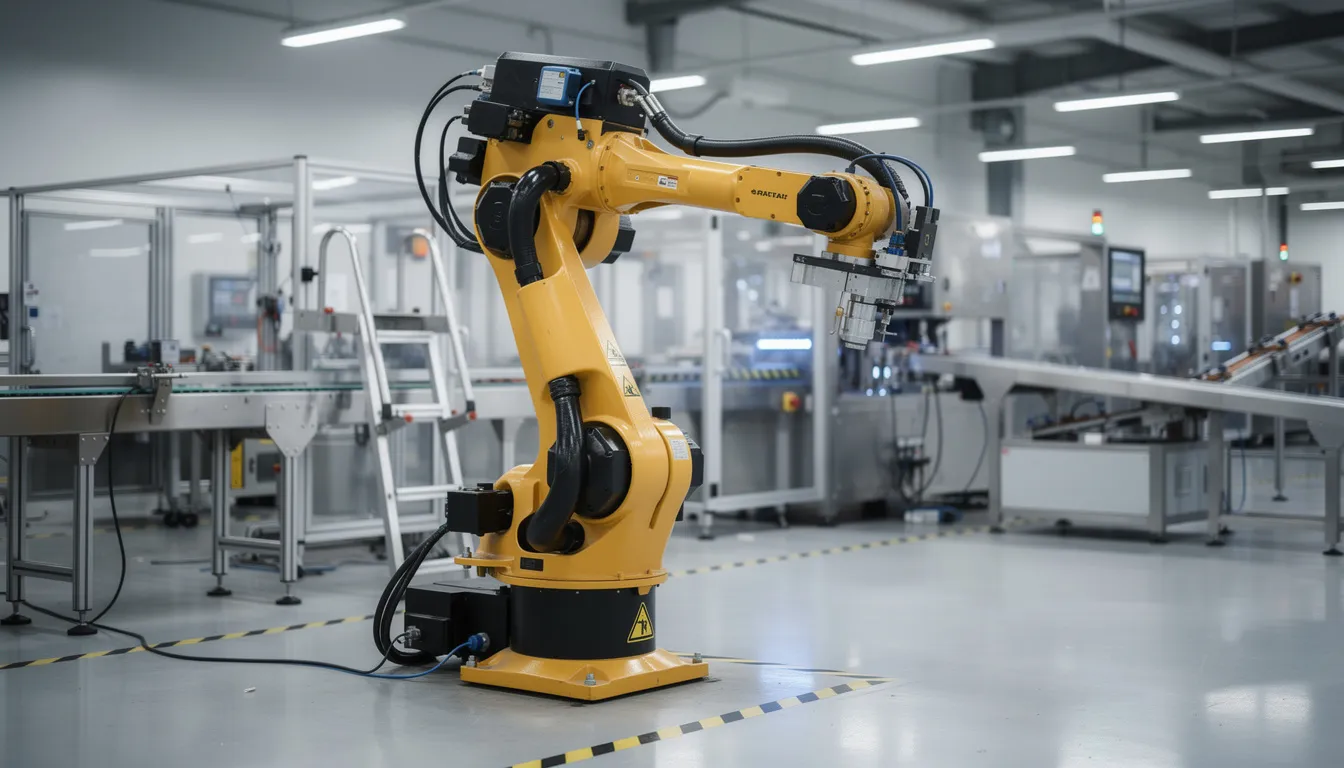
Coursera AI content has expanded from theory into applied domains like robotics, autonomous driving, and multi-agent systems. AWS offerings and integrated modules in IBM/Microsoft certificates cover reinforcement learning (Q-learning, policy gradients) powering warehouse robots, delivery drones, and multi-agent coordination.
Practical Use Cases Covered
Domain | Application | Technology |
|---|---|---|
Logistics | Warehouse picking optimization | Deep reinforcement learning, computer vision |
Manufacturing | Predictive maintenance | Time-series LSTMs, anomaly detection |
Customer Service | AI assistants for ticket triage | LLM orchestration, agentic workflows |
Marketing | Content generation chains | LLMs + image models |
Development | Code generation tools | GitHub Copilot-like systems |
Case studies show industrial automation reducing downtime by 30% via predictive maintenance. These topics connect directly to everyday work in 2024-2025-using AI agents to monitor dashboards, autonomously generate reports, or triage customer tickets.
AI in Business Workflows and Industry Verticals
Coursera courses include sector-specific applications taught through case studies:
Finance: Fraud detection using autoencoders (AUC-ROC scores >0.95)
Retail: Recommendations via collaborative filtering boosting conversion 20-35%
Healthcare: Diagnostic CNNs achieving radiologist-level accuracy on chest X-rays
Manufacturing: Time-series forecasting with LSTMs for equipment failure prediction
Courses encourage learners to translate these studies into proof-of-concept projects for their own organization. Data challenges discussed include quality issues (missing values, class imbalances addressed via SMOTE oversampling), privacy concerns (federated learning), and integration with legacy ERP systems.
For real-time updates on which verticals are moving fastest, a weekly summary like KeepSanity filters the noise and highlights only major shifts.
With a clear understanding of real-world applications, it’s crucial to consider the ethical and responsible use of AI in your learning journey.
Ethical and Responsible AI Courses on Coursera
Ethics and governance became central after high-profile discussions about bias, hallucinations, copyright, and AI-generated misinformation from 2020-2024. Coursera now offers dedicated courses addressing these ethical considerations surrounding AI.
Relevant Coursera Offerings:
“Artificial Intelligence: Ethics & Societal Challenges”
Responsible AI modules within IBM, Google, and Microsoft certificates
Main Ethical Themes Covered
Theme | Description | Example Application |
|---|---|---|
Fairness | Demographic parity metrics | Credit scoring bias analysis |
Transparency | SHAP/LIME explainability | Model decision explanations |
Accountability | Audit trails and human oversight | High-stakes medical decisions |
Safety | Adversarial robustness | Deepfake detection |
Compliance | EU AI Act, regulatory frameworks | Conformity assessments |
Generative AI-specific concerns include hallucinated facts, deepfakes, misuse in political campaigns, and the need for rigorous evaluation. Courses assess learners through reflective essays, case-study analyses (like analyzing disparate impact ratios in hiring algorithms), and final projects designing responsible AI workflows.
Governance, Risk, and Compliance in AI Projects
This subsection shows how Coursera courses introduce AI governance frameworks, risk registers, model cards, data documentation, and human-in-the-loop review processes.
Concrete examples explored:
Credit scoring algorithms and disparate impact
Hiring systems and demographic bias
Medical triage tools under regulatory scrutiny (EU AI Act high-risk classifications)
These topics matter not only for AI engineers but also for product managers, legal teams, compliance officers, and leadership implementing AI across various industries. To navigate ethical and societal discussions surrounding AI as they evolve, curated newsletters like KeepSanity help keep knowledge current beyond static course content and shape responsible innovation in your organization.
With a strong ethical foundation, you can confidently pursue AI certifications and career advancement.
Certificates, Career Outcomes, and How to Choose Your Coursera AI Path
A Coursera certificate or Professional Certificate represents structured learning with assessments, peer reviews, and often capstone projects. In 2025’s job market, employers view these as credible signals-IBM AI Developer certificates boast high completion rates with 4.7+ ratings across thousands of reviews.
Certificates are shareable via LinkedIn with URLs and skill badges (e.g., “Built scalable ML pipelines with PyTorch”), enhancing resumes for junior AI engineer roles paying $120K+ median. However, certificates are signal, not magic tickets-building a small portfolio on GitHub matters more than badges alone.
Stacking Strategy by Profile
Profile | Recommended Path | Time Investment |
|---|---|---|
Non-technical leaders | AI For Everyone → AI For Business Specialization | 20-40 hours |
Career-switchers (coding background) | Microsoft/IBM Professional Certificates | 3-6 months at 5-10 hrs/week |
Data scientists advancing to ML | Andrew Ng’s ML Specialization → Deep Learning | 6-12 months |
Students preparing for internships | Google AI Essentials → IBM AI Developer | 4-6 months |
Cost considerations: Coursera Plus ($59/month or $399/year) proves cost-effective for multi-course plans. Five or more certificates can save 50%+ versus individual $49-79 pricing. Compared to degrees (4 years, $50K+ for MS in AI), Coursera offers modular access sufficient for applied roles when paired with projects.
Adding Coursera AI Certificates to LinkedIn and Resumes
Step-by-step advice for showcasing achievements:
Add certificate URLs directly to LinkedIn’s Licenses & Certifications section
Write concise descriptions highlighting 3-5 concrete essential AI skills per course
Frame projects in business terms: “Reduced manual reporting by X%” or “Prototyped chatbot that answered Y% of customer questions automatically”
Use certificate completions during performance reviews to evidence upskilling
Keep descriptions honest and grounded in what you actually implemented during capstones. An AI career built on genuine knowledge holds up better than inflated claims.
With your learning path and certification strategy in place, the next step is to stay current in this fast-moving field.
Staying Current: Pairing Coursera AI Learning with Weekly, Noise-Free Updates
Here’s the gap: Coursera curricula get updated periodically, but AI moves weekly. New models like o1-preview reasoning chains emerge constantly. Learning AI foundations is essential, but staying current requires something more-without burning your focus.
Most AI newsletters are designed to waste your time. They send daily emails not because there’s major news every day, but because they need to tell sponsors: “Our readers spend X minutes per day with us.” So they pad content with minor updates that don’t matter, sponsored headlines you didn’t ask for, and noise that burns your focus and energy.
The KeepSanity Approach
KeepSanity AI offers a contrasting approach:
One email per week with only the major AI developments that actually happened
Zero ads and no sponsored filler
Curated from the finest sources with smart links (papers → alphaXiv for easy reading)
Scannable categories covering business, product updates, generative models, AI tools, resources, community, robotics, and trending papers
Subscribed by teams at Bards.ai, Surfer, Adobe
The ideal learning loop works like this: use Coursera to master stable fundamental concepts and workflows, then rely on a weekly summary to spot new trends and decide when to revisit or upgrade AI skills. This approach lets you explore AI’s evolution without the FOMO that comes from daily news overload.
Lower your shoulders. The noise is gone. Here is your signal.

With a system for staying current, let’s address some of the most common questions about learning AI on Coursera.
FAQ
Do I need a strong math or programming background to start AI courses on Coursera?
Many entry-level Coursera AI courses assume no coding or advanced math knowledge. “AI For Everyone” and “Google AI Essentials” focus on concepts, AI strategy, and workflows rather than algorithms. For technical tracks like IBM AI Engineering or Microsoft AI & ML, basic Python, linear algebra (vectors and matrices for embeddings), and statistics (hypothesis testing) help significantly-but some courses include preparatory modules to ramp up. True beginners should start with non-technical introductions, then move into gentle programming courses before tackling deep learning or LLM engineering content. This approach lets you gain hands-on experience gradually without feeling overwhelmed.
How long does it realistically take to become job-ready for an AI or ML role with Coursera?
Typical timelines run 6-12 months of consistent study (5-10 hours per week) for a career switcher with a software or data science background. Those starting with no technical experience need longer. Coursera certificates alone aren’t enough-portfolio projects, data science projects on Kaggle, internships, hackathons, and contributions to open-source tools are crucial to demonstrate competency to an AI team. Use a weekly AI news source to identify emerging career opportunities and explore emerging career opportunities like RAG systems or agent frameworks, incorporating them into learning projects as you go. The rapidly evolving field rewards those who solve real-world problems, not just collect credentials.
Is Coursera Plus worth it if I want to focus mainly on AI?
Coursera Plus offers unlimited access and can be cost-effective for learners planning to complete multiple AI courses or several professional certificates over 6-12 months. Compare the standalone price of targeted AI programs versus the annual subscription, factoring in non-AI skills (data engineering, cloud via AWS or Microsoft Azure, product management) that may also be relevant. The logo of certified B corporation on Coursera’s site reflects their commitment to social responsibility, but the real question is whether you’ll commit to a realistic study schedule before subscribing-to avoid paying for access you don’t actively use.
How do Coursera AI certificates compare to university degrees or bootcamps?
Coursera certificates are lightweight compared to full degrees but more structured and academically grounded than many short bootcamps or random online tutorials. Degrees still carry more weight for research-heavy roles and data scientist positions, while Coursera-backed portfolios plus experience can be enough for many applied ML, data, and AI-product roles across various industries. View Coursera as a modular, lower-cost way to test and build advanced concepts in big data and machine learning deep learning, especially when combined with real-world practice and continuous learning. The platform includes hands-on labs that let you gain hands-on experience with production-relevant tools.
How can I avoid getting overwhelmed by the constant stream of new AI tools and models?
Focus first on stable foundations via one or two well-chosen Coursera paths (ML basics, deep learning, or applied generative AI) rather than chasing every new product launch. Replace multiple daily AI newsletters and social feeds with a single, curated weekly summary like KeepSanity that filters minor noise and highlights only major shifts. Schedule specific times for learning-a few evenings per week for Coursera, a short weekly slot for news-so AI education supports productivity instead of generating FOMO. This hands-on opportunity to learn systematically, combined with curated updates, keeps you informed without sacrificing your sanity. The goal is to build knowledge that compounds, not to drown in an endless stream of announcements.