AI Take Over Jobs: What’s Really Coming (and How to Stay Employed)
Introduction
Artificial intelligence (AI) is rapidly transforming the job market, raising urgent questions for workers everywhere: Will AI take over jobs? If so, which jobs are most at risk, and what can you do to stay employed? This article is designed for workers concerned about AI and employment, providing clear, practical guidance on how AI is changing the world of work, which roles are most exposed, and how you can prepare for the future. As AI technologies automate more tasks and reshape entire industries, understanding these changes is essential for anyone who wants to remain relevant and resilient in the evolving workforce.
Whether you’re searching for answers to “AI take over jobs,” wondering when and how AI will impact your career, or looking for actionable steps to future-proof your skills, this guide will address your concerns and help you navigate the coming changes.
What This Article Will Help You Answer
Which jobs are at highest risk of AI takeover between 2024–2035, with concrete examples and timelines
Which roles are the most AI-resilient and why (empathy, manual dexterity, complex judgment)
How many jobs major institutions expect AI to replace vs create by 2030, with actual figures and dates
How AI can improve work quality (shorter weeks, fewer repetitive tasks) if companies choose to share the gains
The most important skills and career moves to start in 2024–2026 to stay relevant
Where to get signal (not noise) about AI job trends so you don’t burn time on daily hype
Key Takeaways
By 2030, estimates range from 85–92 million jobs displaced globally (World Economic Forum) to 300 million full-time roles exposed to automation (Goldman Sachs), but these same reports project a net gain of around 170 million new jobs in AI, data, and human-centered services.
AI affects tasks before whole jobs: most roles between 2025–2035 will be reshaped rather than instantly eliminated, with up to 30% of hours worked globally potentially automated by the early 2030s.
The highest-risk positions involve repetitive, rules-based digital work-customer service, data entry, basic coding, and routine analysis-while jobs requiring empathy, physical improvisation, and complex judgment remain resilient.
Job growth will concentrate in AI engineering, governance, implementation roles, and hybrid positions that combine domain expertise with AI fluency.
The critical window for action is now: upskill in AI literacy, strengthen uniquely human capabilities like judgment and empathy, and position yourself for the transition before 2027–2028 when acceleration intensifies.
What Do We Mean by Automation, AI-Exposed Jobs, and AI-Resilient Jobs?
Automation refers to the use of AI to perform routine, predictable tasks such as those done by customer service representatives, accountants, and administrative assistants. These are tasks that follow set rules and can be easily mapped out for a machine to execute.
AI-exposed jobs are roles that involve repetitive, rules-based, and digital work. Examples include customer service representatives (who handle repetitive inquiries), data entry clerks (whose work can be processed more efficiently by AI), retail workers (especially with the rise of self-checkout systems), financial traders (where AI can analyze market trends and make predictions), research analysts (as AI can analyze data and generate insights), paralegals (for legal research and document sorting), and transportation workers like car and truck drivers (due to autonomous vehicles). Entry-level jobs are especially impacted, with early-career workers in these roles already experiencing employment declines.
AI-resilient jobs are those that require empathy, complex judgment, physical improvisation, or high-stakes decision-making. These include roles like teachers, nurses, social workers, tradespeople, and high-level legal professionals, where human interaction and adaptability are essential.
Is AI Really Taking Over Jobs Right Now?
AI is already affecting hiring and layoffs in 2023–2026, but the impact is deeply uneven across sectors and countries. A Stanford working paper from August 2025 documented a 13% employment decline for early-career workers (ages 22–25) in high AI-exposure occupations. Meanwhile, Challenger, Gray & Christmas reported 17,375 direct AI job cuts and another 20,000 linked to tech updates in the first nine months of 2025-significant numbers, but still a fraction of the 5.1 million monthly U.S. job separations.
The gap between headlines and reality matters here. Short-term AI job losses remain modest in official unemployment statistics today, but credible forecasts from Goldman Sachs, McKinsey, and the World Economic Forum expect steep acceleration approaching 2030. Current estimates suggest that 25% of tasks in the U.S. and Europe could be automated by current or near-term AI technologies.
What’s often missing from the panic is context: AI arrival is slower and more fragmented than the hype suggests. Many firms in 2024–2025 are still experimenting with pilots, not fully automating entire departments. The technology exists, but the organizational change required to deploy it at scale takes years.
At KeepSanity, we track these shifts weekly across business, research, and policy-so you don’t have to chase every contradictory headline. The goal is signal, not noise.
Next, we’ll look at which specific jobs and tasks are most at risk from AI automation.
11 Jobs (and Tasks) AI Is Most Likely to Replace First
Let’s focus on the 5–10 year horizon (2025–2035). The critical insight is that it’s specific tasks within jobs that go first, not necessarily whole positions overnight.
Repetitive, rules-based, digital work is most exposed. McKinsey estimates that up to 30% of hours worked globally could be automated by the early 2030s. Generative AI tools like large language models (LLMs-a type of AI that processes and generates text) excel at pattern recognition, data processing, and content generation-but struggle with unstructured physical tasks, ethical judgments, or empathy-driven interactions.
Many of these roles are already seeing hiring freezes or layoffs tied explicitly to AI pilots and automation tools. Each section below describes how AI changes the job, what timeline experts expect, and what pivot options workers in these fields have.
This list reflects overlapping findings from the World Economic Forum, Goldman Sachs, PwC, and recent case studies-not an exhaustive catalog, but a representative view of what’s coming.

Customer Service Representative
Banks, airlines, and e-commerce platforms have rapidly rolled out AI chatbots and voice agents since 2022. These systems now handle email, chat, and first-line phone support-typical FAQ responses, ticket triage, and basic rebooking requests.
You’ve likely already experienced this yourself. Self-checkout kiosks in grocery stores across the U.S. and Europe are one visible example. During the 2023–2024 travel disruptions, airline chatbots handled millions of rebooking conversations that would have previously required human agents.
By 2030, a large share of tier-1 support roles may vanish or shift toward supervising AI systems and handling escalations. SSRN analysis puts customer service at 80% automation risk, with substantial role elimination expected by 2027.
Pivot options: Move into customer success management, escalation specialist roles, or AI operations positions that require product knowledge combined with human judgment. The humans who remain will handle the exceptions machines can’t resolve.
Drivers: Taxi, Truck, and Delivery
Autonomous vehicle pilots have moved from tests to commercial deployments in selected U.S. and Chinese cities by 2023–2025. Waymo’s robo-taxis now operate commercially in Phoenix and San Francisco. Amazon and other logistics firms are piloting autonomous delivery and warehouse robots.
Realistic timelines matter here. Long-haul highway trucking and fixed urban routes are likely to see earlier automation than complex, rural driving. About 1.5 million trucking jobs face risk by 2030 under current projections.
Some roles will morph rather than disappear entirely-into remote fleet monitoring, maintenance coordination, and exception-handling rather than traditional driving. Regulatory and safety hurdles mean “full takeover” is more likely in the late 2020s to 2030s, not overnight.
Entry-Level Software Engineer and Programmer
Tools like GitHub Copilot, ChatGPT, and Gemini have cut coding and debugging time for many teams since 2022. Structured, well-documented coding tasks are highly automatable, which puts pressure especially on junior roles and internships.
Industry claims suggest that a majority of new code could be AI-assisted by 2026, with some firms already reporting 20–40% productivity gains today. The role is shifting from “type code all day” to system design, integration, code review, and AI tool orchestration.
How junior developers can survive: Build stronger systems thinking, develop domain expertise, and become “AI-native” coders who know how to supervise and validate model outputs. The programmers who thrive will be those who can do what AI can’t-understand context, make architectural decisions, and translate business needs into technical solutions.
Research and Data Analysis Roles
AI now automates cleaning, summarizing, and visualizing large datasets across finance, marketing, and policy research. Generative BI assistants, automated report generators, and LLM-based literature summarizers have been deployed since 2023.
Routine desk research and basic analytics-first-pass market reports, simple dashboards-are increasingly done by AI systems. Analysts who only compile information are at high risk; those who interpret, challenge, and make decisions from the data remain valuable.
Move up the value chain: Focus on strategy, stakeholder communication, and combining quantitative and qualitative insight. The future research analyst is an interpreter and advisor, not a data janitor.
Paralegal and Legal Support Staff
AI’s role in e-discovery, document review, contract comparison, and legal research has grown significantly since 2020–2024. Contract-analysis platforms and LLM-based legal research assistants have been piloted by major law firms.
High-volume, template-driven tasks (NDAs, standard agreements, initial case summaries) are the first to be automated. This compresses demand for junior support staff while shifting value toward client counseling and courtroom strategy.
Potential pivots: Specialize in niche regulatory fields, move into legal operations, or focus on AI governance and compliance-areas where human judgment and accountability remain essential.
Factory and Warehouse Worker
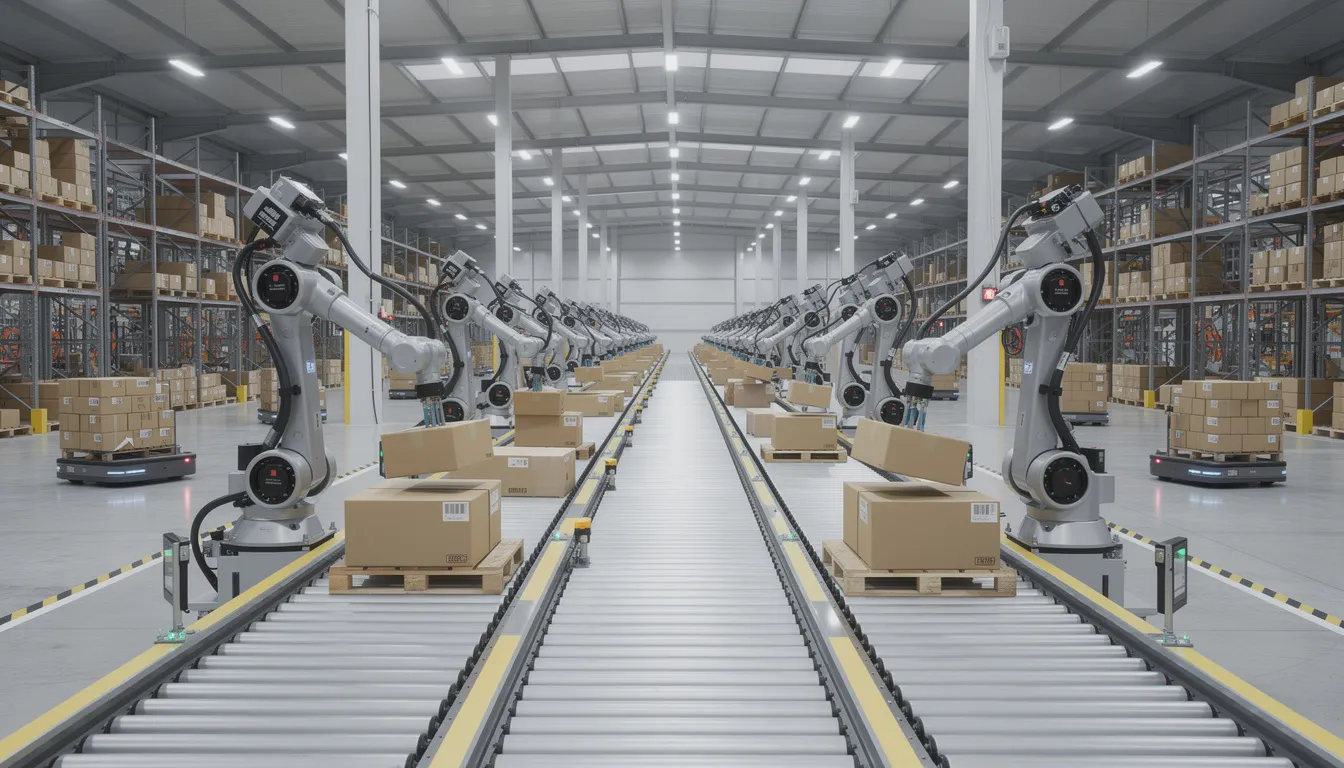
Picture automated fulfillment centers using robotics and machine vision to pick, sort, and pack goods for e-commerce orders. Major retailers and logistics companies have been expanding robotics fleets between 2018–2025 to trim labor costs and increase throughput.
The riskiest tasks are repetitive line work and simple picking. Jobs that combine machine oversight, maintenance, and problem-solving are considerably safer. By 2030, a smaller number of higher-skilled technicians will likely manage larger fleets of robots, with about 2 million manufacturing jobs at risk in the U.S. alone.
Pathways forward: Consider mechatronics training, maintenance certification, safety oversight roles, or warehouse IT for existing blue collar workers in these environments.
Financial Traders and Routine Finance Roles
Algorithmic trading and AI risk models already dominate many markets, shrinking demand for human floor traders since the 2010s. LLMs now assist in reading earnings reports, news, and filings at scale, further eroding advantages of junior analyst roles.
Basic reconciliation, report generation, and compliance checks in finance and insurance are also becoming automated. Roles combining client trust, regulatory expertise, and complex product design are more resilient than pure execution traders.
Skill up: Focus on quantitative methods, AI oversight capabilities, and financial regulation rather than execution-focused skills alone.
Travel Advisor and Traditional Sales Roles
Modern travel platforms and recommendation engines can plan entire trips without human agents. Dynamic pricing, AI-based personalization, and automated itinerary builders have grown rapidly from pre-COVID through 2024.
Similar AI personalization is hitting other sales areas: targeted ads, recommendation systems, and automated outreach are reducing demand for generic, script-based sales jobs. However, consultative, high-stakes, or complex B2B sales remain resilient because they require relationship-building and judgment.
Specialization matters: Focus on niche travel, high-end experiences, or roles that blend human touch with AI-enhanced research.
Content Writer and Basic Marketing Roles
Generative AI writing tools have exploded since 2022, capable of drafting blog posts, emails, product descriptions, and social captions in seconds. Low-cost, keyword-stuffed content and simple ad copy are the most exposed segments of the market.
Brands now expect one human to supervise many AI drafts instead of writing everything from scratch. But humans still shine in original research, strong viewpoints, brand voice development, and deep audience understanding.
The shift: Content writers should become AI editors, strategists, and subject-matter experts instead of pure word-producers. The value is in what AI can’t do-genuine insight and authentic voice.
Graphic Designer and Basic Visual Production
DALL·E, Midjourney, Stable Diffusion, and similar tools have made concept art and simple graphics accessible to non-designers since 2022. Quick-turn, low-budget graphics (thumbnails, simple social posts, draft logos) are heavily commoditized by AI.
Design rooted in brand strategy, user research, and complex systems (full product identities, sophisticated UX) remains in human hands. Designers who learn to art-direct AI and build multi-step creative pipelines can multiply their output.
Where to focus: UX design, product design, motion graphics, and brand systems-areas where AI is a tool, not the complete solution.
Data Entry and Routine Administrative Roles
OCR, RPA (robotic process automation, which automates repetitive digital tasks), and LLM-based “digital assistants” now automate form filling, email triage, and record updates. McKinsey estimates that more than a third of time in clerical and data entry jobs could be automated by current technologies.
This threatens jobs centered mostly on transcription, repetitive form processing, and basic scheduling. Office roles blending coordination, stakeholder management, and exception-handling are more durable.
Next steps: Consider upskilling into operations coordination, project management, or AI workflow supervision from purely transactional administrative assistants work.
Next, we’ll explore which jobs are least likely to be replaced by AI and why.
9 Jobs AI Is Unlikely to Fully Replace
Jobs that blend empathy, ethics, complex physical interaction, or high-stakes judgment are hardest to automate. “AI-proof” doesn’t mean zero impact-tools will still reshape these professions-but full substitution is unlikely through the 2030s.
History provides guidance here. New technology has consistently augmented professionals (doctors, teachers, lawyers) rather than eliminating them entirely. Roles that require building trust, navigating messy human situations, or handling unpredictable physical environments tend to endure across technological transitions, including the industrial revolution.
Each section below explains why the job is resilient and how AI will realistically integrate into it.
Teachers and Educators
AI tutors and adaptive learning systems can personalize drills and practice exercises, but they cannot fully replace human guidance and motivation. Classroom management, conflict resolution, inspiring students, and working with parents and communities remain fundamentally human tasks.
By 2030, teachers are likely to use AI for lesson prep, grading, and tutoring support, but will remain central to learning. Educators who embrace AI tools will have more time for high-value human contact with students.
Focus areas: Pedagogy, counseling skills, and technology integration rather than purely content delivery.
Nurses and Frontline Healthcare Workers
AI serves as a support system: diagnosis decision aids, monitoring tools, and scheduling optimization. It’s not a bedside replacement. Emotional support, interpreting nuanced symptoms, coordinating with families, and hands-on care require the human touch that machines cannot replicate.
Aging populations in many countries (Europe, East Asia) are driving up demand for human caregivers through 2030 and beyond. AI may reduce paperwork and improve triage, making nursing more sustainable if implemented thoughtfully.
Advice for nurses: Gain familiarity with health technology to influence how tools are deployed in practice.
Social Workers, Therapists, and Mental Health Professionals
Mental health work involves deep empathy, trust-building, cultural context, and ethical judgment that current AI cannot match. AI chatbots and apps can provide basic support or triage, but they’re framed as supplements, not full therapy.
Rising demand for human therapists and counselors, especially post-pandemic, likely outstrips any AI substitution through 2030. Professionals may use AI for notes, risk-flagging, or resource suggestions while keeping humans in the core therapeutic role.
Deepen your value: Focus on trauma-informed care, cross-cultural competence, and specialized modalities.
Tradespeople and Field Technicians
Electricians, plumbers, handypeople, and HVAC technicians combine problem-solving, dexterity, and on-site improvisation. Physical robots capable of cheap, general-purpose field work are still far behind software-level AI in 2024–2025.
The variety and unpredictability of jobs in older buildings, homes, and small businesses creates significant barriers to full automation. AI will assist via diagnostics, digital twins, and remote guidance, but a human will still drive, inspect, and repair in most cases.
Competitive advantage: Tradespeople who adopt AI tools early may outcompete peers on speed, cost estimates, and preventative maintenance.
Lawyers and High-Stakes Legal Professionals
While AI chips away at research and drafting, core legal work involves strategy, negotiation, ethics, and persuasion. Regulatory and liability constraints limit fully AI-driven legal representation in most jurisdictions.
The likely 2030s reality: lawyers supported by AI “co-counsels” that draft and analyze, but humans remain decision-makers and client-facing leads. Growth areas include AI regulation, data protection, and platform liability where human expertise will be in high demand.
Stay relevant: Become fluent in AI capabilities and limits to advise clients credibly.
HR Leaders and People Managers
AI supports resume screening, performance analytics, and workforce planning, but cannot own sensitive conversations. Layoffs, conflict resolution, culture-building, and DEI work require nuance, trust, and accountability that algorithms cannot provide.
Legal and ethical concerns around biased AI algorithms make human oversight non-negotiable in hiring and promotion. HR roles may become more strategic as administrative tasks are automated away.
Development path: Learn AI-in-HR tools, ethics frameworks, and change management to guide organizations responsibly.
Writers, UX Communicators, and Creators at the Top End
There’s a crucial difference between commodity content and high-level writing: strategy documents, UX microcopy, technical documentation for complex systems, and investigative pieces. While AI drafts quickly, it often lacks judgment, original reporting, and deep audience understanding.
Companies increasingly need humans to define voice, verify facts, and integrate content into products and experiences. Genuine originality, humor, and lived experience remain hard for AI to synthesize convincingly.
Career direction: Grow into roles like content strategist, documentation architect, or UX writer supervising AI assistants.
Artists and Cultural Creators
AI art can mimic styles and generate images on demand, shifting economics for stock imagery and some commissions. But long-term cultural influence comes from artists who originate styles, movements, and narratives-not only from image production.
Collectors, galleries, and audiences still value human intention, story, and identity behind creative work. The likely future is hybrid: artists using AI as a medium, collaborator, or tool in larger creative projects.
Lean into: Curation, performance, live experiences, and communities where human presence is central.
Next, we’ll examine the potential benefits of AI in the workplace-if we use it wisely.
Benefits of AI in the Workplace (If We Use It Well)
AI is not only a threat. Used carefully, it can reduce drudgery, shorten workweeks, and improve decision-making. McKinsey projects AI could add around $13 trillion to global output by 2030 and raise labor productivity substantially.
Whether workers feel these benefits depends on policy and company choices-distribution of gains is not automatic. This section highlights concrete, optimistic but realistic scenarios to balance the fear narrative.

Less Repetitive Work, More Meaningful Tasks
Think about the tedious tasks that fill your day: manual reporting, data entry, status emails, low-level paperwork. AI can automate or semi-automate these, freeing time for problem-solving, design, and human interaction.
Real examples are emerging:
AI drafting first versions of reports or code, which humans then refine and approve
Automated email triage that surfaces only messages requiring human judgment
Data cleaning and formatting handled by algorithms instead of analysts
Early case studies show teams reporting higher job satisfaction after automating the most boring 10–20% of their workload. But this only works if employers intentionally redesign roles rather than simply piling on more work.
Potential for Shorter Workweeks
Historical patterns show that productivity gains eventually enable shorter hours. The five-day workweek emerged in the 20th century as increased innovation and efficiency made it economically viable.
AI-driven productivity could make four-day weeks or six-hour days realistic in some sectors by the 2030s. Policy, unions, and corporate decisions will determine whether time, money, or both are shared with workers.
Companies are already experimenting. Several firms running four-day week trials have combined reduced hours with automation and AI tools to maintain output. AI becomes leverage in discussions about workload and flexibility, not just a threat to employment.
Better Decisions With Data and Simulation
AI can surface patterns in operations, customer behavior, or risk that humans would miss or see too late. Consider:
Demand forecasting in retail that reduces waste and stockouts
Predictive maintenance in manufacturing that prevents costly breakdowns
Triage scores in hospitals that help staff prioritize urgent cases
Human oversight remains crucial to avoid blindly trusting biased or flawed models. Professionals who can question, interpret, and communicate AI-driven insights become more valuable, not less.
Decision support tools-not full automation-are likely the dominant pattern in many white collar jobs.
Faster Innovation and Problem-Solving
Generative AI speeds up brainstorming, prototyping, and iteration in product, design, and research teams. Examples include:
Quickly generating user interface variations for testing
Testing messaging approaches across different audience segments
Simulating different business scenarios before committing resources
This can compress months of work into weeks, if teams know how to prompt and evaluate AI output effectively. Innovation remains human-directed: deciding what to build, for whom, and why still requires judgment that AI cannot replace.
More Personalized Customer and Employee Experiences
AI tailors recommendations, support scripts, and learning content at scale for customers and staff. Practical scenarios include:
AI suggesting training modules to employees based on their role and goals
Products adjusting interfaces to individual user behavior
Personalized onboarding experiences that adapt to learning pace
Personalization can improve satisfaction and outcomes when done transparently and respectfully. Privacy and surveillance risks require careful governance and opt-out options. Workers with ethics, UX, and communication skills will be needed to design humane personalization systems.
Next, we’ll answer the big question: Will AI take over jobs, and what do the numbers say about jobs lost and created by 2030?
How Many Jobs Will AI Replace vs Create by 2030?
Will AI take over jobs? AI is expected to replace a significant number of jobs-up to 85 million by 2026 and potentially 300 million globally-but is also projected to create more jobs than it replaces, especially in tech-related fields, with a net increase of 170 million new jobs by 2030. While many task-based roles in retail, manual manufacturing, and entry-level positions are most at risk, the overall effect is a shift in the types of work available, not a net loss. AI is transforming the workforce, eliminating various jobs while creating new ones, and is expected to deliver additional global economic activity of around $13 trillion by 2030.
Forecasts vary widely based on assumptions about adoption speed, regulation, and task automation levels. But the major research institutions converge on some key patterns.
The displacement numbers:
World Economic Forum: approximately 85–92 million jobs displaced by 2030
Goldman Sachs: 300 million full-time positions exposed to automation globally (about 18% of work)
McKinsey: 400–800 million global displacements by 2030 under broader automation scenarios, with 75–375 million workers needing occupational shifts
The creation numbers:
World Economic Forum: around 170 million new jobs created, yielding a net gain of approximately 78 million globally
SSRN analysis: 97 million new roles by 2025, offsetting 85 million displacements
These same reports predict large job growth in new roles, especially in technology, healthcare, green energy, and human-centered services. What matters most for individuals is understanding where the flows are: which sectors are shrinking, which are growing, and at what pay levels.
Where the Biggest Losses Are Expected
Key exposed areas include:
Routine office support and administrative assistants
Basic customer service and call center roles
Data entry and clerical positions
Some manufacturing and retail tasks
Entry-level knowledge work in finance and legal support
Geographic patterns matter: advanced economies with high wages and high digitization often automate earlier. North America leads at 70% automation adoption by 2025.
Gender and age aspects are significant. Clerical and administrative roles (often female-dominated) face near-term risk-women hold 58.87 million high-exposure U.S. jobs versus 48.62 million for men. Manual jobs (often male-dominated) face longer-term automation timelines.
Workers in mid-career may find transitions hardest without structured support and reskilling programs. The unemployment rate impact will depend heavily on how quickly displaced workers can be retrained and redeployed.
Where AI-Driven Job Growth Will Likely Happen
Growing sectors include:
AI and data engineering
Cybersecurity
Healthcare and eldercare
Education and training
Green infrastructure and sustainability
Robotics maintenance
Human services and social support
Many new roles are hybrids: domain experts who can work with AI tools rather than pure coders. Growth is coming in areas like AI safety, compliance, model operations, and AI literacy training.
Early movers who build skills in these spaces before 2030 are likely to see outsized opportunities as overall employment patterns shift toward AI-augmented work.
Next, we’ll look at the specific new jobs and roles that AI is expected to create or expand.
What Jobs Will AI Create or Expand?
Most of the 2030 jobs don’t look like today’s “prompt engineer” hype. They’re steady roles managing, governing, and applying AI in real institutions. Many reward people who understand both a domain (healthcare, law, logistics) and AI tools.
These aren’t exotic titles-they’re directions to steer existing careers.
AI and Machine Learning Engineers
Core work: designing, training, and deploying models for specific products and internal tools. Demand has grown sharply since the late 2010s, with continued hiring by big tech, startups, and non-tech enterprises.
The bar is rising. Roles now often require strong foundations in statistics, software engineering, and MLOps. As off-the-shelf models improve, some coding work shifts from building from scratch to integrating and fine-tuning.
Learning paths: Online courses in machine learning, hands-on projects, and experience deploying models in production environments.
Prompt Engineers and AI Workflow Designers
What prompt engineers actually do in 2024–2026: designing robust, testable prompt chains and evaluation strategies for LLM (large language model) applications. The job may evolve into more general “AI interaction designer” or “AI application specialist” as tools mature.
Typical employers include SaaS companies, agencies building internal copilots, and content and marketing firms. Strong writing, domain knowledge, and testing skills often matter more than exotic math.
Practice now: Build small automations and documented prompt systems in your current role. (Prompt engineering is the process of optimizing inputs for AI systems to achieve desired outputs.)
AI Ethics, Safety, and Governance Specialists
Responsibilities: setting policies on data use, bias, transparency, and safety across AI projects. Regulators in the EU, U.S., and elsewhere are drafting or passing AI-related rules, driving demand for compliance roles.
Backgrounds vary: law, public policy, risk management, sociology, or technical fields with an ethics focus. These roles sit at the intersection of technology, law, and organizational governance.
Career pivot: Professionals in compliance, legal, or policy can retrain toward AI-specific oversight.
AI Implementation and Adoption Specialists
Roles like “AI implementation specialist” or “AI product deployment lead” work inside hospitals, banks, factories, and government agencies. They translate vendor promises into working systems: integration, training, change management, and measurement.
These jobs resemble product management and solutions architecture but with a strong AI component. Domain expertise (healthcare workflows, logistics operations) is a major advantage.
Position yourself: If you’re already in operations or IT, become the AI adoption champion in your organization.
AI Literacy Trainers and “Human in the Loop” Operators
As AI spreads, organizations need trainers who teach non-technical staff how to use tools safely and effectively. Human-in-the-loop roles involve moderating outputs, labeling data, reviewing edge cases, and providing feedback to model teams.
These roles emerge first in customer service, content operations, and safety review teams. Good communicators and teachers can move into AI literacy roles without deep programming skills.
Get started: Build internal workshops, guides, or office hours around AI tools as a way to grow into these positions.
Next, we’ll cover practical steps you can take to prepare your career for the AI era.
How to Prepare Your Career for AI: Practical Steps
The goal is not to guess one perfect job, but to become adaptable, AI-fluent, and resilient. The 2024–2028 window is critical for building skills before automation pressure intensifies in many sectors.
Preparation isn’t only about learning to code. It’s also about deepening human strengths and domain expertise.
Build AI Literacy (Even If You’re Not Technical)
AI literacy means understanding what current systems can and cannot do, common failure modes, and how to use them responsibly. Start with hands-on use of mainstream tools (chatbots, code assistants, image generators) on your real work tasks.
Learn basic concepts:
Training data and its limitations
Hallucinations and when models make things up
Prompt engineering fundamentals (the process of optimizing inputs for AI systems to achieve desired outputs)
Evaluation methods for AI output
Privacy and security risks
Take short, reputable online courses or company trainings instead of chasing dozens of random tutorials. Document how AI changes your productivity-useful stories for future job interviews and internal promotions.
Double Down on Human Skills AI Struggles With
Key capabilities that remain valuable:
Critical thinking and long-term judgment
Negotiation and persuasion
Storytelling and communication
Leadership and team coordination
Emotional intelligence and empathy
These skills appear across the “AI-resilient” jobs listed earlier. Develop them by leading small projects, mentoring juniors, practicing writing and presenting, and actively seeking feedback.
These capabilities compound over years and transfer across industries and job titles. AI often amplifies both good and bad decisions-strong human judgment becomes more important, not less.
Learn to Work With AI, Not Compete Against It
Treat AI as a collaborator. Always ask: “How can I get this system to do 60–80% of the grunt work?”
Useful workflows include:
Draft-then-edit (AI creates first version, you refine)
Idea generation and brainstorming
Code scaffolding and debugging assistance
Translation and localization
Quick research summaries
Verification is essential: check facts, test outputs, and maintain accountability for final work product. Workers who can design and maintain AI-augmented workflows become hard to replace.
Build a small personal “AI stack” of tools tailored to your role and document your best practices.
Reskill or Pivot Into More Resilient Paths Early
Be honest with yourself: if you’re in a heavily exposed job (pure data entry, low-level support, basic content production), start exploring alternatives now, not in 2030.
Short reskilling options (6–18 months) include:
Data analysis and business intelligence
Product operations and coordination
Cloud platforms and infrastructure
Healthcare support and administration
Technical writing and documentation
Stack new skills on top of your current domain knowledge instead of discarding your experience. Network inside your organization for lateral moves into more future-proof teams. Most successful transitions are incremental, not overnight career overhauls.
Stay Informed Without Burning Out
Daily AI headlines are noisy and often contradictory, making it hard to prioritize what matters for your job. A lightweight information diet works better: 1–2 high-quality weekly digests instead of a dozen daily feeds.
Focus on what actually affects your career and industry:
Major model releases from leading AI companies
Regulatory changes and policy developments
Credible economic data and research findings
Periodic “career check-ins” every 6–12 months informed by this curated signal help you adjust course without reactive panic. At KeepSanity, this is exactly what we deliver-one email per week with only the major AI news that actually happened, so you can stay informed without letting newsletters steal your sanity.
Next, we’ll answer some of the most common questions workers have about AI and jobs.
FAQ: Common Questions About AI Taking Over Jobs
This FAQ tackles practical worries not fully covered in the main sections, focusing on timelines, personal risk, retraining, and preparing children for an AI-shaped labor market.
When will AI start causing noticeable job losses for most people?
In many countries, 2024–2026 is the “early friction” phase-pilot layoffs, hiring slowdowns, and task automation within existing roles. More visible shifts are likely between 2027–2035 as tools mature and organizations fully re-architect their workflows.
Impact comes in waves by sector. Customer service and back-office functions face earlier pressure, followed by specialized knowledge work. The acceleration point that many researchers identify falls around 2027–2028, making the next few years critical for preparation.
How do I know if my specific job is at high risk from AI?
A practical heuristic: if 70–80% of your time is spent on repetitive, screen-based, rules-driven tasks, your role is more exposed. Map your daily work into three categories-“routine digital,” “physical/manual,” and “human interaction/judgment”-to gauge your personal risk level.
Roles heavy on the first category face the most pressure. Those dominated by the second and third are more durable through the 2030s.
Is learning to code still worth it if AI can write code?
Yes, but the nature of the work is changing. You’ll spend less time typing boilerplate and more time designing systems, integrating tools, and reasoning about trade-offs. Learning enough programming to understand and supervise AI-generated code is valuable even if you’re not competing on raw output speed.
The developers who thrive will be those who can evaluate what AI produces, catch errors, and make the architectural and contextual decisions that AI systems cannot handle reliably.
What should I tell my kids to study in an AI-dominated future?
Recommend a balanced foundation: quantitative literacy (math, data analysis), digital fluency (basic coding, AI tool familiarity), and human-centric skills (communication, ethics, teamwork, creative expression).
Steer them toward fields that combine technology with real-world domains-health, environment, education, infrastructure. The most resilient careers will require both technical capability and the judgment to apply it wisely in complex human contexts.
Can government policy really soften the blow of AI job losses?
Policy can make a major difference through reskilling programs, safety nets, tax and incentive structures, and labor regulations. Countries that invest early in training and transition support will likely see smoother adjustments than those that don’t.
The society-wide outcomes will differ significantly based on these choices. Historically, major technological transitions like the industrial revolution went better in places with stronger institutions for worker support and education. The same pattern will likely hold for AI.
The window for preparation is open now. Whether AI affects your job in 2026 or 2032, the professionals who thrive will be those who built AI fluency early, deepened their uniquely human skills, and stayed informed without drowning in hype.
Start small: pick one AI tool relevant to your work this week and learn to use it well. Map your current role for AI exposure. Block time every quarter to reassess your skills against market trends.
And if you want to stay current on what’s actually happening in AI-without the daily newsletter pile-up-KeepSanity delivers one email per week with only the major developments that matter. Lower your shoulders. The noise is gone. Here is your signal.