AI Intelligence Companies: The 2026 Landscape and Who Actually Matters
Introduction
This guide is for decision-makers, CTOs, and business leaders seeking clarity on the most important AI intelligence companies in 2026. As artificial intelligence becomes nearly universal in business operations, choosing the right AI partners is critical for competitive advantage. Understanding the landscape of AI intelligence companies-who leads, what they offer, and how to evaluate them-will determine which organizations thrive as AI adoption accelerates.
The target keyword for this page is AI intelligence companies. Here, you’ll find a comprehensive overview of the leading AI intelligence companies, their core roles, and a practical framework for evaluating and selecting the right partners in 2026. As of 2025, 78 percent of organizations have adopted AI technologies, making it essential to distinguish between hype and genuine innovation.
Key Takeaways
A handful of foundational AI intelligence companies are setting the technical pace with large language models, GPUs, and platforms that power almost everything downstream. These include:
OpenAI
Google
Anthropic
Meta
Nvidia
Microsoft
Applied AI companies in key sectors are turning general models into sector-specific workflows that deliver meaningful outcomes, such as:
Tempus (healthcare)
Anduril, True Anomaly (defense)
Hudson River Trading (finance)
Klaviyo, Jasper (marketing)
By 2026, over 75% of enterprises are using AI somewhere in their stack, but competitive advantage comes from choosing the right partners-not chasing every startup announcement.
Capital is concentrating around fewer, higher-conviction bets: full-stack AI intelligence companies that own data pipelines, models, and application layers are attracting the most serious funding.
For decision-makers who value time efficiency, following a curated signal source like KeepSanity AI filters this crowded ecosystem down to what genuinely matters each week.
What Are “AI Intelligence Companies” in 2026?
AI intelligence companies are organizations whose core value is built on artificial intelligence models, data, and automation-not just “AI features” bolted onto legacy products. This distinction matters because every software vendor now claims AI capabilities, but only a subset are genuinely AI-native.
In 2026, the AI landscape consists of hyperscale infrastructure providers, foundational model developers, and enterprise solutions specialists.
This category includes both foundational model builders and vertical specialists, such as:
OpenAI’s ChatGPT
Anthropic’s Claude
Google’s Gemini
Meta’s Llama
Tempus in healthcare technology
CrowdStrike as a monitoring and security platform
As of 2025, 78 percent of organizations have adopted AI technologies. Analyst estimates put AI adoption in organizations above 75–80%, but the real differentiation is in how deeply AI is embedded into operations, products, and decision-making workflows.
The modern AI intelligence stack combines generative AI (text, code, images, speech) with classic machine learning capabilities (forecasting, anomaly detection, classification). Together, these technologies power everything from customer service chatbots to autonomous spacecraft.
This article maps the landscape for you: core model players, infrastructure giants, applied vertical leaders, regional hubs, and funding trends-written for decision-makers who value time efficiency over exhaustive lists.

Foundational AI Intelligence Companies and Their Flagship Models
The companies in this section shape almost every downstream AI intelligence company. Their models serve as the foundation upon which thousands of applications, startups, and enterprise deployments are built.
Summary Table: Leading Foundational AI Intelligence Companies
Company | Core AI Product/Platform | Core Offering/Role |
|---|---|---|
OpenAI | ChatGPT, GPT-4 | General-purpose language models, AI research, human-like virtual interactions |
Gemini, DeepMind | Foundational models, generative AI, AI research, cloud-based AI services | |
Anthropic | Claude API | Generative AI tools, focus on AI safety and constitutional AI |
Meta | Llama models | Open-source language models, community-driven AI development |
Microsoft | Azure AI, Copilot | AI integration in 365 apps, cloud-based AI services for enterprises |
AWS | Amazon Bedrock, SageMaker | Foundational AI models, generative services, custom AI development |
NVIDIA | H100/B200 GPUs, AI Enterprise Suite | AI hardware, GPUs, software for AI-enabled devices |
IBM | Watson, Watson Orchestrate | Enterprise AI applications, workflow automation, quantum computing research |
Palantir | Foundry, AIP | AI platforms for data integration and generative AI solutions |
Mistral AI | Mistral 7B, Mixtral 8x7B, Le Chat | Compact, efficient foundational models, European data-sovereignty focus |
xAI | Grok | Real-time data integration, live information stream models |
OpenAI
OpenAI (San Francisco, founded 2015) transformed from a research lab into an enterprise platform when ChatGPT launched in November 2022. That moment marked the beginning of mainstream generative AI adoption. GPT-4 and subsequent releases like GPT-4.1 now power copilots and AI agents across industries-from legal document review to software development teams building code at scale. OpenAI’s shift toward enterprise pricing and platform capabilities reflects a maturing business model focused on recurring revenue rather than pure research.
Google DeepMind and Google AI
Google DeepMind and Google AI represent the global leader in embedding AI across consumer products. Search, YouTube recommendations, Gmail, and the Gemini model family (announced December 2023) all run on Google’s infrastructure. Vertex AI on Google Cloud provides the foundation for government, research, and enterprise workloads. Alphabet reported over $100 billion in total revenue in 2025, with Google Cloud contributing more than $15 billion-largely from AI-powered services and enterprise solutions.
Anthropic
Anthropic focuses on AI safety and constitutional AI, positioning itself as the “responsible” alternative to OpenAI. The Claude 3 model family (Opus, Sonnet, Haiku, released 2024) powers tools in legal, customer support, and data analysis sectors where accuracy and safety matter. For enterprises concerned about AI governance and explainability, Anthropic offers a distinct value proposition built around alignment research.
Meta
Meta has taken a fundamentally different approach with its open-weights strategy. Llama 2 (July 2023) and Llama 3 (2024) enable a massive ecosystem of startups and enterprise deployments without full vendor lock-in. Unlike closed APIs, open-weights models let organizations customize, fine-tune, and deploy on their own infrastructure. Meta reported tens of billions in quarterly revenue in 2025, driven by advertising optimized with AI-based algorithms, while investing $64–72 billion in capital expenditures for next-generation models and infrastructure.
Mistral AI
Mistral AI (Paris, founded 2023) represents Europe’s strongest entry into foundational models. Its compact, performant models (Mistral 7B, Mixtral 8x7B) and “Le Chat” assistant focus on efficiency and European data-sovereignty concerns. For organizations navigating GDPR and EU AI Act requirements, Mistral offers a compelling alternative to US-based providers.
xAI
xAI (founded 2023 by Elon Musk) builds Grok, an assistant designed for real-time data integration from X and other Musk-ecosystem products. While still emerging, xAI represents an ambitious attempt to build models tightly coupled with live information streams-a different approach than the static training data used by competitors.
AI Infrastructure Giants: Hardware, Cloud, and Observability
Foundational models only matter because a hardware and cloud layer makes them usable at scale. Without GPUs, storage, and sophisticated computing environments, even the most capable AI models remain laboratory curiosities.
Summary Table: Leading AI Infrastructure Companies
Company | Core AI Product/Platform | Core Offering/Role |
|---|---|---|
NVIDIA | H100/B200 GPUs, AI Enterprise Suite | AI hardware, GPUs, software for AI-enabled devices |
Microsoft | Azure AI, Copilot | AI integration in 365 apps, cloud-based AI services for enterprises |
AWS | Amazon Bedrock, SageMaker | Foundational AI models, generative services, custom AI development |
IBM | Watson, Watson Orchestrate | Enterprise AI applications, workflow automation, quantum computing research |
Oracle | Oracle Cloud Infrastructure | Pre-trained language models, vector databases, industry-specific AI |
Databricks | Data Lakehouse Platform | Unified data engineering, analytics, and machine learning |
Palantir | Foundry, AIP | AI platforms for data integration and generative AI solutions |
Datadog | Observability Platform | AI-powered monitoring and anomaly detection |
Dynatrace | Observability Platform | AI-powered monitoring and automation |
NVIDIA
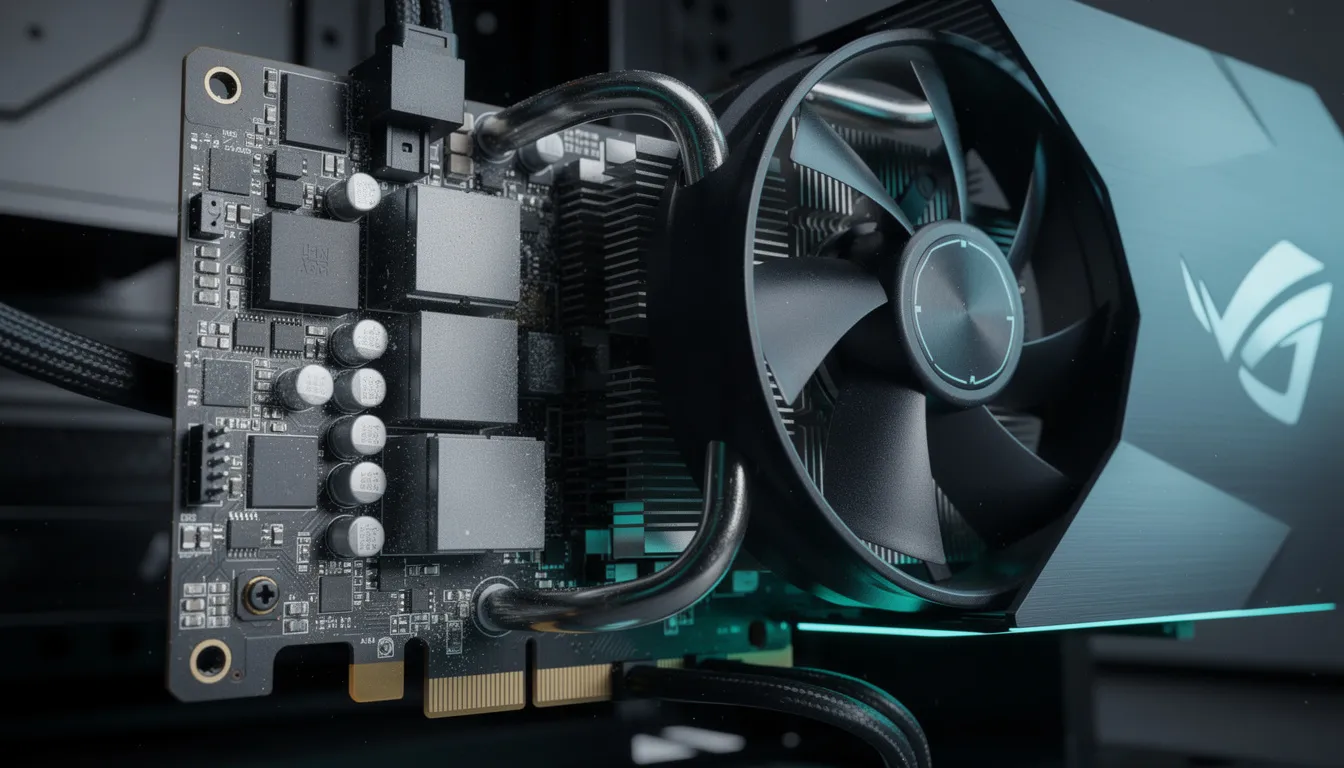
NVIDIA is the dominant AI hardware company-essentially the engine behind modern AI. Its H100 and B200 GPUs are foundational to model training and inference across the industry. The CUDA ecosystem creates a powerful moat: developers build on NVIDIA’s software stack, making it difficult to switch to competitors. NVIDIA powers everything from robotics and self-driving vehicles to the world’s largest data centers. The company has become so central that AI infrastructure buildout effectively translates into NVIDIA revenue.
Microsoft
Microsoft has embedded AI into almost everything it touches. Microsoft 365 Copilot makes Word, Excel, and Outlook smarter. GitHub Copilot helps software development teams increase developer productivity. Azure AI gives enterprises tools to build, deploy, and manage models at scale. The company’s cloud business generated over $75 billion in annual revenue, anchoring its AI and cloud strategy. Deep partnerships with OpenAI mean Microsoft can offer cutting-edge generative AI capabilities across its entire product suite.
Amazon Web Services (AWS)
Amazon Web Services (AWS) dominates global cloud infrastructure with roughly 30% market share, translating to over $100 billion in annual cloud revenue. Services like Amazon Bedrock, SageMaker, Lex, and Polly let developers build and deploy AI models in the cloud. Custom AI chips (Trainium for training, Inferentia for inference) offer cost advantages for large-scale deployments. On the consumer side, Alexa brings voice-activated AI into millions of homes, creating a dual revenue model across enterprise and consumer AI.
Oracle Cloud Infrastructure
Oracle Cloud Infrastructure is pushing into AI with pre-trained language models, vector databases, and industry-specific AI for finance, retail, and government workloads. For organizations already invested in Oracle’s ecosystem, these capabilities enable digital transformation without switching cloud providers.
IBM
IBM continues to carve out a niche with its Watsonx platform, designed for enterprise AI workloads with emphasis on model training, governance, and explainability. Watsonx integrates with data services and helps clients in regulated industries like healthcare and finance build, manage, and oversee machine learning and generative AI systems. IBM pairs AI with its hybrid cloud strategy, offering solutions that blend on-premises and cloud deployments. In 2025, IBM reported quarterly revenue above $16 billion, with AI-related business expanding.
Databricks
Databricks operates the leading unified platform for data lakehouses, bringing data engineering, analytics, and machine learning together. As of 2025, Databricks surpassed $4.8 billion in annual revenue run rate, with over $1 billion coming specifically from AI-related products. This platform represents the data foundation upon which AI models operate-a critical infrastructure layer for any enterprise serious about AI.
Palantir
Palantir serves government, defense, and commercial clients with powerful data analytics and integration platforms (Gotham and Foundry). In 2025, Palantir raised its full-year revenue guidance to $4.1–4.4 billion, with record quarterly performances topping $1 billion. For organizations needing to make sense of massive datasets and operationalize machine learning at scale, Palantir offers deep business expertise in complex environments.
Datadog and Dynatrace
Datadog and Dynatrace represent AI-powered observability platforms that use machine learning and automation to monitor complex cloud environments. These tools help organizations detect anomalies, reduce downtime, and maintain visibility across customers' entire technology stacks. As AI deployments grow more complex, infrastructure monitoring becomes essential for reliability.
Applied AI Intelligence Companies by Sector
This section is for readers who care about concrete industry applications. These companies turn general AI capabilities into sector-specific workflows: diagnostics, trading, logistics, compliance, and more. Each represents a technology company using AI to solve domain-specific problems rather than building general-purpose models.
Healthcare and Life Sciences AI
Tempus
Tempus (founded 2015, Chicago) is a global leader in analyzing clinical and molecular data to support oncology decisions, clinical trials, and personalized treatment recommendations. The company combines business intelligence with deep scientific expertise to help oncologists make data-driven treatment choices.
SOPHiA GENETICS
SOPHiA GENETICS operates a cloud-based SaaS platform applying machine learning to genomics and radiomics. The platform enables hospitals worldwide to collaborate on data-driven medicine, turning raw genetic data into actionable clinical insights through AI-assisted data exchange.
Artera
Artera uses natural language processing for automating patient outreach and communication. The platform improves scheduling, reminders, and administrative workflows-eliminating manual data entry and freeing clinical staff to focus on patient care.
Laudio
Laudio is an intelligent platform helping healthcare leaders monitor team engagement and burnout signals. By analyzing patterns across frontline staff, the platform enables earlier interventions that improve retention and care quality.
Defense, Space, and National Security AI
Anduril
Anduril builds advanced systems for defense including autonomous platforms, sensor fusion, and command-and-control software for land, sea, and air domains. As a defense company focused exclusively on mission software engineered for modern warfare, Anduril represents a new generation of defense contractors built on AI-first principles.
True Anomaly
True Anomaly is a space defense company founded by ex-Space Force members building agile spacecraft and AI mission software for space situational awareness. The company creates powerful spacecraft platforms designed for space superiority-a capability increasingly critical as space becomes contested territory.
STR
STR is a national security–focused AI firm using data science and machine learning for online threat detection, signals intelligence, and mission planning. The company helps defense and intelligence organizations make sense of massive data streams in real time.
Air Space Intelligence
Air Space Intelligence uses predictive AI and simulations to optimize airspace operations for defense and large-scale aviation environments. The platform demonstrates how AI can solve complexity in domains where human operators face overwhelming information loads.
Finance, Insurance, and Trading AI
Hudson River Trading
Hudson River Trading is a quantitative trading firm where sophisticated computing and machine learning algorithms power the pricing and trading financial products. Hudson River Trading brings together computer scientists, mathematicians, and engineers in a global community focused on market-making across asset classes.
Gradient AI
Gradient AI serves the insurance industry with ML models that predict risk and reduce loss ratios in workers’ comp and commercial insurance. The platform transforms underwriting and claims through data-driven decision-making.
Northwestern Mutual
Northwestern Mutual represents an established financial services institution embedding AI into underwriting, financial advice, and customer experience flows. The company demonstrates how legacy institutions can achieve digital transformation through strategic AI adoption.
Hi Marley
Hi Marley is an AI-powered conversational platform for P&C insurers, streamlining claims communication via SMS and chat. By improving human connection during stressful claims experiences, the platform helps insurers build meaningful relationships with policyholders.
Enterprise Software, Data, and Developer Tools
Domino Data Lab
Domino Data Lab powers model-driven businesses with an enterprise AI platform trusted by over 20% of the Fortune 100. The platform accelerates development and deployment of data science work while increasing collaboration and governance. Domino enables enterprises to create enterprise scale AI deployments across regulated industries.
Flatfile
Flatfile provides an API-first platform for AI-assisted data import, turning messy customer spreadsheets into API-ready data for SaaS applications. The platform eliminates the friction of data onboarding-a critical bottleneck for any global SaaS business.
Boomi
Boomi offers an integration platform using AI agents to connect technologies, data, and workflows. The platform helps business users accelerate cloud migration and digital transformation without excessive custom code, serving global manufacturers and service organizations.
Superblocks
Superblocks is a full-code internal tools platform enhanced with AI assistance. Engineers can quickly build dashboards, workflows, and admin apps-the kind of internal tooling that traditionally consumed weeks of development time.
Atlassian
Atlassian has embedded AI across Jira, Confluence, and other tools to summarize content, recommend actions, and automate routine project work. These capabilities help teams overcome critical skill gaps in project management and documentation.
Marketing, Sales, and Customer Experience AI
Klaviyo
Klaviyo uses generative AI and machine learning to power targeted email and SMS campaigns, predictive analytics, and marketing automations for e-commerce brands. The platform helps brands build meaningful outcomes from customer data.
Jasper
Jasper is a generative AI platform helping marketing teams draft copy, plan campaigns, and maintain brand voice across channels. For corporate digital learning about AI in marketing, Jasper represents enterprise learning solutions designed for creative teams.
Kustomer and Regal.ai
Kustomer and Regal.ai provide AI agents and copilots for customer service and outbound engagement. These platforms blend automation with human agents, transforming how companies manage the consumer web experience.
Smartly and System1
Smartly and System1 are advertising-focused AI companies using optimization algorithms and predictive budgeting to improve ROI on digital ad spend. These platforms help advertisers solve complexity in media buying across fragmented channels.
Robotics, Manufacturing, and Mobility AI
Machina Labs
Machina Labs combines robotics and AI to deliver on-demand metal forming and rapid manufacturing without traditional tooling. The company demonstrates how AI can transform today’s workforce in manufacturing, enabling rapid prototyping previously impossible.
Graymatter Robotics
Graymatter Robotics builds AI-powered robotic cells for surface finishing and other manufacturing tasks. The platform improves throughput and quality while helping manufacturers prepare organizations for automated production.
Motive and Samsara
Motive and Samsara operate as fleet and operations intelligence platforms using computer vision and ML to monitor driver behavior, vehicle health, and logistics efficiency. These unified platform solutions help logistics companies maintain visibility across distributed operations.
Metropolis
Metropolis applies AI to parking infrastructure, enabling frictionless payments and access control. The platform demonstrates how AI solutions foster better experiences in everyday urban infrastructure.
Sonatus
Sonatus focuses on software-defined vehicles, enabling on-the-fly feature updates and advanced vehicle capabilities. As automotive companies embrace virtual first model development, platforms like Sonatus become essential infrastructure.

Cybersecurity, Compliance, and Risk AI
CrowdStrike
CrowdStrike operates Falcon, a security platform using AI to correlate signals from endpoints and cloud workloads. The platform spots malware and nation-state attacks in real time, protecting customers across sophisticated computing environments.
Drata
Drata uses automation and AI to continuously monitor controls for SOC 2, ISO 27001, and other frameworks. The platform shrinks audit preparation from months to days, helping organizations maintain compliance without dedicated professional services teams.
Riskified
Riskified provides transaction-level AI that reduces e-commerce fraud by evaluating billions of purchases and chargebacks across merchants. The platform helps online retailers protect revenue while maintaining positive customer experiences.
Credal
Credal builds multi-agent AI assistants with strong governance and data controls tailored for sensitive enterprise environments. For organizations concerned about AI safety and data handling, Credal offers a comprehensive suite of protective measures.
Regional Hubs of AI Intelligence Companies
While AI feels global, certain cities have dense clusters of high-impact AI intelligence firms. Understanding these hubs helps with recruiting, partnerships, and investment decisions.
San Francisco and the Bay Area: Remain the epicenter for foundational models and infrastructure. OpenAI, Anthropic, Meta’s AI teams, xAI, and major cloud offices are all concentrated here. The density of talent, capital, and company formation creates network effects that reinforce the region’s dominance.
Boston: Has emerged as a hub for healthcare AI, robotics, and deeptech security firms. Companies like MORSE Corp and STR operate here, along with organizations serving life sciences and clinical applications.
Los Angeles: Is growing as a center for applied AI in mobility and space. Metropolis, GrayMatter Robotics, True Anomaly, and Turion Space all have significant presence here.
Colorado (Denver/Boulder region): Hosts companies like AMP Robotics and True Anomaly operations, combining AI with physical infrastructure and defense.
Europe (Paris, London, Berlin): Is rising with companies like Mistral and major research labs. EU regulation and data-sovereignty priorities are creating demand for AI solutions that meet European compliance requirements.
Newly Funded AI Intelligence Companies and Funding Trends
2023–2025 saw record funding for AI intelligence companies, but capital is now concentrating around a smaller number of high-conviction bets. The AI boom has matured from speculative frenzy to focused investment.
ElevenLabs: Voice-AI pioneer, hit roughly $200 million in annual recurring revenue in 2025 while tripling its valuation to over $6.6 billion.
Synthesia: Global generative video leader, powering studio-quality AI video creation for thousands of organizations and surpassing $100 million in ARR.
Reflexivity (formerly Toggle AI): Raised a $30 million Series B for its AI-powered investment research platform.
The trend favors “full-stack” AI intelligence companies that own data pipelines, models, and application layers-not thin wrappers around public APIs. Companies with genuine data moats, distribution advantages, or regulatory barriers attract the most serious capital.
For evaluating newly funded companies, focus on moat rather than novelty. A startup with a creative idea matters less than one with defensible data advantage, strong distribution, or regulatory positioning that competitors cannot easily replicate.
AI Startup | 2025 ARR | Valuation | Key Differentiator |
|---|---|---|---|
ElevenLabs | ~$200M | $6.6B+ | Voice AI / audio synthesis |
Synthesia | $100M+ | Undisclosed | AI video generation |
Reflexivity | Early stage | $30M Series B | Investment research AI |
How to Evaluate and Choose an AI Intelligence Partner
For CTOs, heads of data, and founders who must choose which AI intelligence companies to build with or buy from, here’s a practical evaluation framework:
Assess technical fit first.
Evaluate model performance on domain-specific tasks that matter to your business.
Consider latency requirements, multimodal capabilities (text, image, audio), and integration into existing stacks via APIs and SDKs.
Don’t choose based on benchmarks that don’t reflect your actual use cases.
Prioritize data security and governance.
Understand where data is stored, how it may be used for training, and what regulatory coverage the vendor provides (HIPAA, GDPR, SOC 2, FedRAMP where relevant).
For sensitive workloads, on-premises or private cloud deployment options may be essential.
Check vendor resilience.
Evaluate funding runway, revenue base, and dependency on upstream providers.
A startup using only OpenAI’s API faces different risks than one with proprietary model capabilities.
Look for roadmap clarity beyond marketing buzzwords-ask for concrete product timelines.
Start with constrained pilots.
Test one workflow in one business unit before scaling AI across an organization.
Define clear metrics: time saved, error reduction, revenue lift, or cost savings.
Pilots that succeed with measurable outcomes justify broader investment.
Information hygiene is critical. Follow a small set of trusted sources instead of reacting to every press release or funding announcement.
The companies that matter will surface through genuine adoption and results-not through the loudest marketing.
Where KeepSanity AI Fits in This Ecosystem
KeepSanity AI exists because most AI news and newsletter content is optimized for ad impressions, not reader sanity. Daily newsletters need to justify sponsor relationships, so they pad content with minor updates and noise that burns your focus and energy.
We track major AI intelligence companies across models, infrastructure, and verticals, but only surface material events: landmark model releases, paradigm-shifting tools, significant funding moves, and meaningful regulatory changes. If it doesn’t genuinely matter for practitioners, it doesn’t make our newsletter.
KeepSanity sends one weekly email-no daily filler-covering categories like business, product updates, models, tools, robotics, and trending research papers. We include smart links (papers linked to alphaXiv for easy reading) and scannable sections so you can absorb everything in minutes rather than hours.
Our readers include practitioners in leading AI teams at companies like Bards.ai, Surfer, and Adobe. These are people who cannot afford inbox overload but need to know which companies, models, and trends actually matter. Not just a workplace curiosity-strategic necessity.
If you want to follow AI intelligence companies without burning your attention, subscribe at keepsanity.ai. Lower your shoulders. The noise is gone. Here is your signal.

FAQ
What is the difference between a foundational AI company and an applied AI company?
Foundational AI companies like OpenAI, Anthropic, Google, Meta, and Mistral primarily build general-purpose models and core platforms used by many others. They invest billions in research, training infrastructure, and model development. Applied AI companies focus on specific domains-healthcare, finance, logistics, security-and embed those foundational models into targeted workflows and products. Think of foundational companies as building the engines, while applied companies build the vehicles that use those engines for specific purposes.
How many AI intelligence companies do I actually need to follow?
Most professionals only need to closely track a dozen or so core players:
Major model labs (OpenAI, Anthropic, Google, Meta)
Key infrastructure providers (NVIDIA, Microsoft, AWS)
Leaders in their own industry vertical
Trying to follow hundreds of AI startups creates information overload without proportional insight. Curated sources like KeepSanity AI help surface new entrants that genuinely change the landscape-so you can maintain a start up mindset about emerging opportunities without drowning in noise.
Are open-source models like Llama and Mistral enough for serious enterprise use?
Many enterprises successfully deploy open-source models when they need customization, on-premises control, or cost savings at scale. Open-weights models eliminate vendor lock-in and allow deep fine-tuning for specific use cases. However, organizations must invest in their own evaluation, deployment infrastructure, and governance frameworks. For high-stakes use cases requiring SLAs, regulatory compliance, or minimal operational overhead, managed proprietary APIs may still be preferable. The choice depends on internal capabilities and risk tolerance.
How will regulation affect AI intelligence companies in the next few years?
Emerging frameworks like the EU AI Act and sector-specific guidance in the US will push companies toward greater transparency, risk assessments, and auditability. High-risk applications (healthcare, finance, hiring) will face stricter requirements. This increases the value of vendors that already build in compliance, explainability, and robust data governance. Companies that treat regulation as a feature rather than a burden-offering audit trails, bias detection, and clear documentation-will gain competitive advantage. Human progress in AI depends on building trust through accountability.
What’s the most time-efficient way to stay updated on AI intelligence companies?
Adopt a simple routine:
Follow one or two model labs directly for major announcements
Subscribe to a single high-signal newsletter like KeepSanity AI for weekly summaries
Maintain a short watchlist of companies in your specific sector
Avoid daily feeds and social media overload-they optimize for engagement, not your productivity. The global network of AI development generates endless news, but only a fraction represents genuine paradigm shifts worth your attention. Create job alert settings for key companies if recruiting matters, but otherwise protect your focus for building rather than consuming.