AI Changes: How Artificial Intelligence Is Reshaping Work, Industry, and Human Behavior
The way organizations work, compete, and make decisions is shifting faster than most leaders can track. This guide is designed for business leaders, professionals, and decision-makers who need to understand how AI changes are impacting their organizations and industries. This article explores the most important AI changes affecting organizations, industries, and human behavior. Since ChatGPT launched in November 2022, artificial intelligence has moved from experimental pilots to widespread deployment across nearly every industry. But the reality is messier than the headlines suggest-while adoption is broad, genuine impact remains concentrated among a minority of prepared organizations.
Understanding these AI changes is crucial for leaders and professionals who must navigate new risks, opportunities, and workforce dynamics. The majority of organizations are still in the experimenting or piloting stages of AI adoption, with only about one-third having begun to scale their AI programs (<fact>1</fact>). The AI skills gap is seen as the biggest barrier to integrating AI into existing workflows (<fact>2</fact>). AI high performers are more likely to report that their organizations have fundamentally redesigned workflows to integrate AI (<fact>6</fact>). The AI assessment effect is driven by the lay belief that AI prioritizes analytical characteristics in its assessment (<fact>3</fact>, <fact>4</fact>).
Summary of Key AI Changes
Below is a summary of the main types of AI changes currently shaping organizations, industries, and human behavior. These points address the most relevant facts and search intent for business leaders and professionals:
Adoption Trends: The majority of organizations are still in the experimenting or piloting stages of AI adoption, with only about one-third having begun to scale their AI programs (<fact>1</fact>). AI adoption is expected to double in the number of companies with at least 40% of projects in production within six months (<fact>17</fact>).
AI Skills Gap: The AI skills gap is seen as the biggest barrier to integrating AI into existing workflows (<fact>2</fact>). AI is set to spur upskilling efforts at both the individual and company level as workers need to learn new tools or adapt to changes in their roles (<fact>3</fact>).
Workforce Impact: While AI may displace certain jobs, it will also create opportunities in AI development, data analysis, and cybersecurity (<fact>5</fact>). The rise of AI-driven automation will inevitably lead to job displacement, particularly in roles such as data entry and routine customer service (<fact>8</fact>).
AI-Driven Role Creation: Organizations are increasingly hiring for AI-related roles, such as software engineers and data engineers, to meet the demand created by AI integration (<fact>4</fact>).
Incremental vs. Transformative Impact: AI high performers are more likely to report that their organizations have fundamentally redesigned workflows to integrate AI (<fact>6</fact>). Organizations that have scaled AI technologies are more likely to report improvements in productivity and efficiency (<fact>18</fact>).
Sector-Specific Applications: AI helps identify diseases more quickly and accurately in healthcare, speeds up drug discovery, and monitors patients through virtual nursing assistants (<fact>9</fact>). Banks, insurers, and financial institutions leverage AI for applications like detecting fraud, conducting audits, and evaluating customers for loans (<fact>10</fact>). AI in education tailors the learning experience to students' individual needs using machine learning, natural language processing, and facial recognition (<fact>11</fact>).
Customer Service and Decision-Making: AI is transforming customer service by providing data-driven tools that bring meaningful insights to both customers and providers (<fact>12</fact>). AI's ability to analyze massive amounts of data can accelerate the decision-making process for company leaders (<fact>15</fact>).
Regulatory Shifts and Ethics: Concerns over companies collecting consumers' personal data have led to investigations into whether AI companies have violated data protection laws (<fact>22</fact>). The EU AI Act is a key development that aims to create rigorous risk management systems for AI (<fact>25</fact>). Ethical considerations will shape regulations, including bans on systems that pose unacceptable risks, such as social scoring and remote biometric identification (<fact>26</fact>).
Transparency and Assessment: Organizations are increasingly required to disclose the use of AI assessment tools, which raises concerns about transparency and the potential for bias (<fact>27</fact>). The AI assessment effect is driven by the lay belief that AI prioritizes analytical characteristics in its assessment (<fact>3</fact>).
Economic and Environmental Impact: AI is projected to add USD 4.4 trillion to the global economy through continued exploration and optimization (<fact>14</fact>). AI is expected to play a major role in sustainability and climate change by optimizing energy usage and improving climate modeling (<fact>13</fact>).
Key Takeaways
AI has moved from niche pilots in 2022–2023 to broad but uneven adoption by 2025–2026. Roughly 93% of companies now use AI in some capacity, with 88% deploying it in at least one business function. However, only about 7% have scaled generative AI across their entire enterprise, creating a massive gap between experimentation and meaningful impact.
Approximately 90% of large organizations use AI in at least one function, yet only about one third have AI scaled across the enterprise. This “pilot vs. impact” gap defines the current moment-most companies are stuck running dozens of proofs-of-concept that never reach production.
Generative AI and agentic AI are the main drivers of change in 2024–2026, reshaping productivity, decision making, and job structures. But they also amplify risks around bias, misinformation, and privacy breaches that require new governance frameworks. Agentic AI refers to systems where agents can plan tasks, access tools, and take actions with limited human prompting.
Organizations with clear AI strategy, governance, and skills-the “high performers”-achieve 3x higher ROI and are pulling ahead in EBIT impact and innovation. AI high performers are more likely to report that their organizations have fundamentally redesigned workflows to integrate AI (<fact>6</fact>). They extract 5%+ EBIT through business model changes, not just cost savings, while others remain stuck experimenting.
Staying informed doesn’t mean following every daily announcement. KeepSanity AI provides a weekly, no-ads signal-only source that filters out minor noise and sponsored fluff, helping leaders focus on the handful of AI changes that actually shift strategy, risk, or opportunity.
From Hype to Habits: How AI Adoption Has Changed Since 2022
The “ChatGPT shock” of late 2022 feels like ancient history now. When OpenAI released ChatGPT in November 2022, it sparked widespread experimentation among knowledge workers who had never directly interacted with AI capabilities before. GPT-4 followed in March 2023, Meta released Llama 3 in April 2024, and Google launched Gemini 1.5 the same year-each release normalizing generative AI models further and accelerating enterprise interest.
By 2025–2026, the landscape looks dramatically different:
78% of organizations use AI in at least one business function, up from 55% a year prior
40–45% of enterprises have deployed AI at scale in at least one area
Generative AI usage surged from 33% in 2023 to 71% in 2024
92% of companies plan further generative AI investments over the next three years
While generative models made AI feel “visible” to knowledge workers for the first time, much of the real impact still comes from less flashy uses: forecasting models, recommendation systems, and automation in back-office workflows. Data analysis improvements, predictive maintenance, and knowledge management systems drive efficiency gains that rarely make headlines but compound over time.
Weekly AI news volume exploded after 2023, creating a new problem: information overload. Senior leaders cannot realistically follow daily streams of model releases, regulatory updates, and tool announcements. This is precisely why curated, low-frequency overviews-like KeepSanity’s weekly format-became essential for executives who need signal, not noise.

With this context, let's examine how AI is currently being deployed across organizations.
Where AI Is Today: From Pilots to Agentic Systems
Three years after mainstream generative AI tools arrived, AI use is both widespread and shallow. Most organizations run dozens of proofs-of-concept-customer support copilots, sales enablement tools, internal knowledge search systems-but hit barriers when trying to scale. Data quality issues, governance gaps, and change management resistance stall progress from pilot to production. The AI skills gap is seen as the biggest barrier to integrating AI into existing workflows (<fact>2</fact>).
Scaling Challenges and Adoption Patterns
The scaling challenge is real:
Organization Size | AI Projects in Production (2026) |
|---|---|
Revenue > $5 billion | 40%+ of projects |
Mid-sized firms | Significantly lower |
Small businesses | Quadrupled adoption rates, but from a low base |
Job posting data from Indeed underscores the concentration: the share of firms mentioning AI in postings rose from 2% in 2018 to 5.7% by November 2025. But 90% of such postings came from just 1% of hiring firms-primarily the largest ones. Half of the top 1% of firms adopted AI, versus only 1.3% of the smallest third.
The contrast between “classic” AI-predictive models and rules-based automation-and modern generative and agentic AI grows sharper by the day. Agentic AI refers to systems where agents can plan tasks, access tools, and take actions with limited human prompting. AI systems that can create content, call APIs, and autonomously chain tasks represent a fundamentally different capability than older AI technologies. 2024–2026 marks when early agentic workflows started leaving the lab and entering real production environments.
Sectors leading in deployment include technology, media, telecom, and healthcare. These industries tend to deploy AI agents for IT operations, documentation, and knowledge management at higher rates than others.
The Rise of Agentic AI in Real Workflows
Agentic AI refers to AI systems where agents can plan tasks, access tools (APIs, databases, SaaS apps), and take actions with limited human prompting. Unlike a chatbot that answers questions, an AI agent can orchestrate multi-step workflows autonomously.
Concrete 2025–2026 use cases include:
IT support triage: AI agents categorizing and routing tickets, resolving simple issues without human intervention
RFP response drafting: Agents pulling from knowledge bases to auto-generate proposal responses
Executive dashboards: Agents orchestrating data pulls from multiple systems for weekly leadership reports
Invoice matching: Agents running back-office reconciliation workflows across accounting systems
Gartner forecasts that 40% of enterprise apps will embed task-specific AI agents by 2026, up from under 5% in 2025. CB Insights tracked over 400 agent startups across 16 categories by November 2025.
Adoption indicators from 2025 surveys show roughly 20–25% of large organizations experimenting with or scaling AI agents in at least one function, with plans to expand sharply by 2027. Customer service and eCommerce lead due to clear ROI metrics.
The governance gap is concerning: fewer than one in five enterprises report having mature oversight frameworks for autonomous agents. Without clear policies on what agents can access, which actions require human approval, and how logs are audited, organizations face operational, legal, and reputational risks.
Effective agentic AI deployment prioritizes governed, task-specific agents with human-in-the-loop review rather than fully autonomous systems operating without guardrails.
Physical AI: Robots, Drones, and Autonomous Systems
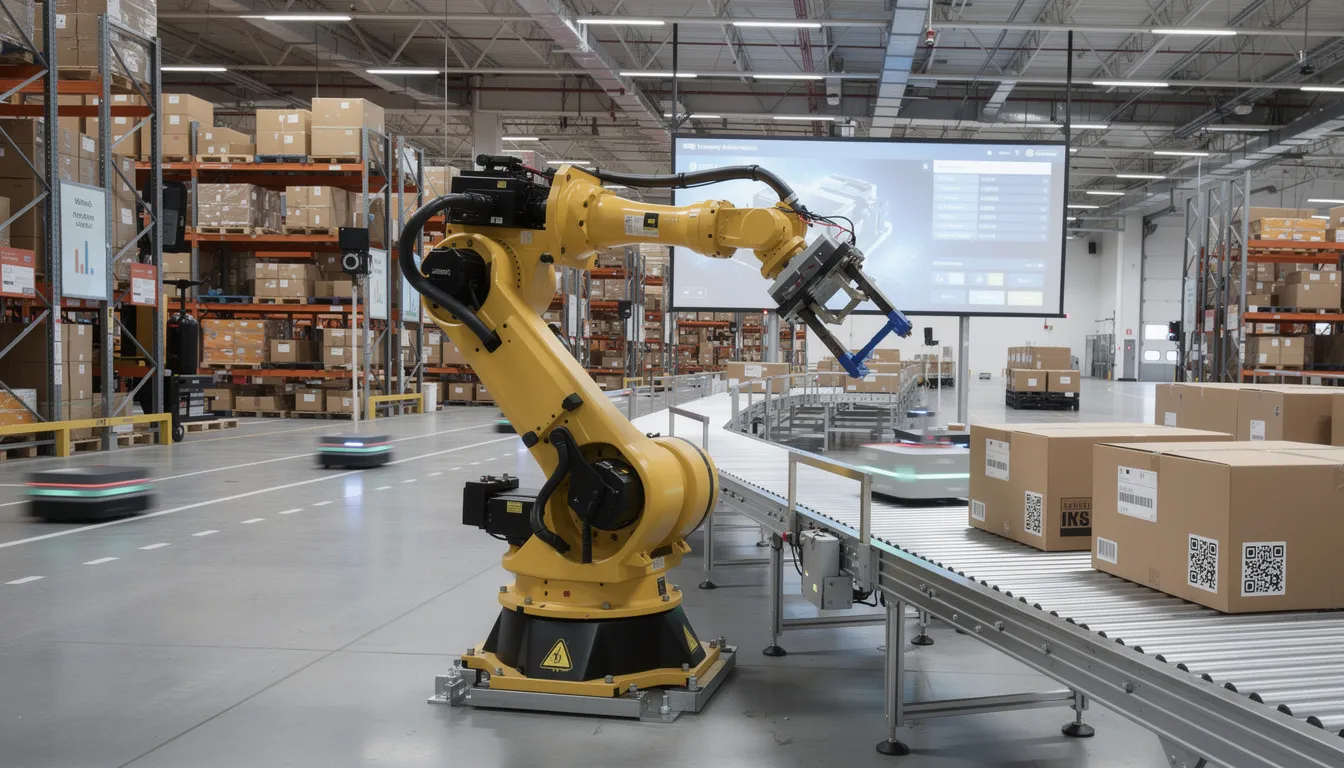
Physical AI refers to AI embedded in robots, autonomous vehicles, drones, and industrial equipment-systems making decisions in the physical world rather than just processing data. The adoption curve looks different from digital AI: slower due to safety regulation and hardware costs, but with potentially higher per-deployment impact.
Concrete 2024–2026 examples across industries:
Manufacturing: Warehouse robots using vision models for picking and packing; by 2026, over half of large manufacturers deploy AI-enabled robotics or predictive maintenance
Energy and utilities: Commercial drone inspections replacing manual infrastructure checks, with AI-powered analysis of captured imagery
Automotive: Level-2 and level-3 driver-assist systems using onboard AI for lane-keeping and collision avoidance in autonomous vehicles
Asia-Pacific leads deployment of physical AI in logistics and factory applications, driven by labor costs and manufacturing scale. The technology continues to advance rapidly, though regulatory frameworks and hardware integration remain constraints.
As AI adoption matures, the focus shifts from experimentation to measurable business impact and competitive advantage.
How AI Is Changing Business Performance and Competition
Incremental vs. Transformative Impact
The performance impact of AI is diverging sharply. A small share of “AI high performers” extract 5%+ EBIT impact, while most organizations see only incremental efficiency gains. AI high performers are more likely to report that their organizations have fundamentally redesigned workflows to integrate AI (<fact>6</fact>). The difference isn’t just about technology-it’s about strategy.
AI high performers treat AI as a lever for business model change, not just cost savings. They’re more likely to:
Redesign workflows around AI capabilities rather than just automating existing processes
Launch AI-native products and services that weren’t possible before
Invest in internal platforms and data infrastructure that enable scaling AI across functions
Build dedicated AI teams (52% of large organizations have them, versus 23% of small ones)
Common benefits observed by 2025–2026 include:
Improved software engineering productivity
Faster product experimentation
Better personalization in marketing
More accurate risk assessment in finance
These AI initiatives deliver real business value when properly executed.
Comparison Table:
AI for Optimization | AI for Reimagination |
|---|---|
Automating existing tasks | New AI-native offerings |
Trimming operational costs | New customer journeys |
Improving current workflows | Dynamic pricing models |
Faster report generation | AI-assisted strategy simulations |
Only about one third of firms genuinely reconfigure their business with AI. The rest remain in optimization mode-capturing incremental gains but missing transformative opportunities.
From Productivity Gains to Full Reimagination
Early gains in 2023–2024 came from obvious low-hanging fruit. Code copilots helped developers write faster. Email drafting tools reduced time on routine correspondence. Summarization features condensed long documents. These applications typically delivered 10–30% time savings for individual roles.
By 2025–2026, reimagination plays look different:
Fully AI-mediated customer service delivery journeys where humans handle only escalations
AI-designed product variants tested weekly, with market feedback incorporated automatically
Dynamic pricing models updated with generative market analysis in real-time
AI-assisted strategy simulations in the C-suite for M&A screening and scenario planning
Surveys in 2025 show roughly two thirds of companies reporting measurable productivity improvements from AI. But only about one third claim significant changes to products, services, or business models. The gap reflects the investment required: reimagination demands heavy upfront spending on data infrastructure, platform teams, and change management that most organizations haven’t committed to.
Human workers remain essential in these reimagined workflows-not as task executors, but as orchestrators, validators, and relationship managers who leverage AI capabilities to create value.
AI in the C-Suite: Strategy, Simulation, and Decision Support
By 2025–2026, AI has moved from “nice-to-have dashboards” to acting as a strategic copilot for executives. CEOs use AI to synthesize thousands of pages of internal reports before board meetings. CFOs run revenue and cost scenarios with AI models. CHROs explore workforce skill gaps under different automation timelines.
Several Fortune 500 companies publicly discussed “AI copilots for executives” in 2024–2025, signaling a shift toward systematic AI-assisted governance and strategy. This isn’t just operational analytics-it’s AI informing informed decisions at the highest levels.
Effective executive use of AI is tightly coupled with:
High-quality, well-governed data that feeds accurate analysis
Strong internal security to avoid leaking sensitive information into public data models
Clear processes for validating AI outputs before acting on them
Training for senior leaders on AI capabilities and limitations
Deloitte notes that 42% of organizations feel strategically ready for AI but operationally unsure-they see the potential but struggle to execute.

As business models and leadership practices evolve, the impact of AI on work, skills, and human behavior becomes even more pronounced.
How AI Is Changing Work, Skills, and Human Behavior
Job Disruption, New Roles, and the Skills Race
AI’s impact on jobs is uneven. Some roles see tasks automate away, while others gain augmentation and entirely new responsibilities around AI oversight and orchestration. The future of work isn’t simply “AI replaces humans”-it’s more complex.
Forecasts suggest that between 2023 and 2030, a large share of workers-often cited around 40% or more-will see their core skills reshaped by AI. Repetitive cognitive tasks face the highest exposure. But in the short term through approximately 2026, most companies report limited net headcount changes from AI, even as expectations of future workforce reductions or redeployments increase.
The AI skills gap is seen as the biggest barrier to integrating AI into existing workflows (<fact>2</fact>). AI is set to spur upskilling efforts at both the individual and company level as workers need to learn new tools or adapt to changes in their roles (<fact>3</fact>). Organizations are increasingly hiring for AI-related roles, such as software engineers and data engineers, to meet the demand created by AI integration (<fact>4</fact>).
AI-Driven Role Creation
Roles most at risk by 2026 include:
Routine back-office processing
Basic data entry and document handling
Simple customer support scripting with predictable queries
Low-complexity content generation
New or expanded roles emerging in response:
AI product managers who translate business needs into AI solutions
Prompt engineering specialists optimizing AI system outputs
AIOps specialists managing AI operations and infrastructure
AI governance and risk officers ensuring compliance and ethical issues are addressed
Domain validators who bring expertise to judge and improve AI outputs
In surveys from 2024–2025, leaders consistently reported AI fluency and data literacy as the single largest barriers to scaling AI. The skills gap isn’t about coding-it’s about employees who can work alongside AI tools effectively.
Most organizations currently favor “education first” strategies-training and upskilling programs-over radical role redesign. Major companies launched internal AI academies between 2024–2026 to prepare non-technical staff for AI-augmented roles.
Behavioral Shifts Under AI Assessment
When people know they’re being assessed by AI rather than a human, they strategically change how they present themselves. The AI assessment effect is driven by the lay belief that AI prioritizes analytical characteristics in its assessment (<fact>3</fact>). People under AI assessment tend to emphasize their analytical characteristics and downplay their intuitive and emotional ones (<fact>4</fact>). This research finding has significant implications for hiring, performance evaluation, and workplace dynamics.
Studies from 2022–2025 documented this shift:
Upwork postings where one ad mentioned AI assessment saw different candidate self-descriptions
Lab experiments where participants believed responses would be scored by AI versus humans showed measurable behavior changes
Multi-stage studies tracked how people altered self-descriptions based on perceived assessor type
The risk is clear: if everyone shifts their self-presentation the same way under AI assessment, hiring decisions and performance evaluations can become biased and less valid. Organizations relying on AI for talent decisions need to account for this behavioral shift.
As the workforce adapts, organizations must also address the risks, regulations, and ethical considerations that come with AI ubiquity.
Risks, Regulation, and the Push for Responsible AI
As AI becomes embedded in critical decisions-from credit scoring to healthcare triage and hiring-the costs of failure rise. Inaccuracies, bias, privacy breaches, and misinformation events are no longer hypothetical risks but documented realities.
Common Negative Consequences
The most commonly reported negative consequences by 2024–2026 include:
Inaccurate outputs: “Hallucinations” where AI confidently produces false information
Biased decisions: Discriminatory outcomes in hiring, lending, and other high-stakes applications
Security incidents: Model misuse, prompt injection attacks, and data leaks
Trust damage: Deepfake-driven misinformation campaigns undermining organizational credibility
Organizations are progressively expanding their risk management portfolios. The rudimentary checks common in 2022 have evolved into multi-risk frameworks covering bias, robustness, security, compliance, and reputational risk by mid-decade.
“AI high performers” often encounter more incidents simply because they deploy more AI. But they also invest more heavily in safeguards, monitoring, and human-in-the-loop review. The organizations doing the most with AI are also doing the most to manage its risks.
Data Privacy, Deepfakes, and Misinformation
Generative AI’s hunger for training data has intensified privacy debates since 2023. Investigations and lawsuits emerged over scraping public content, training on personal data without consent, and exposing confidential information through careless prompts.
By 2024–2025, regulatory pressure increased significantly:
The FTC and European data protection authorities formally questioned leading AI labs about data handling
Companies internally banned feeding sensitive data into public tools
New policies emerged around what data could flow to external AI systems
Deepfakes and synthetic media exploded in quality and accessibility after 2023. Real cases included:
Political disinformation using fabricated video during elections
CEO voice spoofing for corporate fraud, with attackers using AI-generated voices to authorize wire transfers
Reputational attacks using fake videos of executives
Detection tools, authenticity standards (provenance metadata, watermarking), and new legal frameworks targeting malicious synthetic media are developing in parallel. But effectiveness remains uneven, with creation tools often outpacing detection capabilities.
Regulation, Governance, and “Sovereign AI”
“Sovereign AI” describes the trend of countries and regions building AI infrastructure and models under their own laws, data centers, and cultural context. Rather than depending fully on foreign-hosted systems, governments invest in domestic AI development capacity.
Major regulatory milestones include:
European Union AI Act: Risk-based framework with special obligations for high-risk and foundation models
US executive orders: Addressing AI safety, security, and federal agency use
National AI strategies: More than 60 countries have published formal AI strategies, fostering innovation while managing risks
Inside organizations, governance lags technology. Many firms still lack:
Clear lines of ownership for AI risk
Comprehensive model inventories
Standardized human-in-the-loop practices for high-stakes decisions
Defined approval processes for autonomous agents
Autonomous agents are outpacing governance in many enterprises. Only a minority report mature policies for what agents can access, which actions require human approval, and how logs are audited. This gap creates operational, legal, and reputational exposure.
Governance basics every organization should establish:
Data inventories documenting what AI systems can access
Model registries tracking deployed AI
Human oversight requirements for critical decisions
Incident reporting channels
Periodic audits of AI system performance and compliance
As organizations strengthen their governance, they must also consider the environmental and infrastructure implications of AI at scale.
Environmental, Infrastructure, and Data Limitations
AI serves as both a tool for tackling climate and infrastructure challenges and a contributor to them through high energy use and data demands. The picture is complex.
Training frontier models-GPT-4-class systems in 2023–2024 and their successors-consumed substantial electricity and water. Cumulative AI deployments may raise emissions if powered by fossil-heavy grids. Research suggests some large training runs have carbon footprints comparable to hundreds of transatlantic flights.
But AI simultaneously enables:
Smarter energy optimization and grid balancing
Supply chain efficiency improvements reducing waste
Improved climate modeling for better predictions
Industrial process optimization lowering resource consumption
The net impact depends on how AI is deployed and what energy sources power it.
The emerging challenge of “running out of data” surfaced by mid-decade. Several current research groups warned that high-quality human-generated text and image data might not scale indefinitely. This pushes the field toward synthetic data, more efficient models, and new architectures.
Investments in alternative computing paradigms aim to break the trade-off between capability, cost, and environmental impact: efficient transformers, ternary/Bitnet models, specialized silicon, and early quantum AI research all target this challenge.
Data Usage, Synthetic Data, and Shadow AI
Synthetic data-artificially generated data that mimics real-world patterns-became mainstream by 2024–2026. It’s particularly valuable for:
Augmenting scarce datasets in finance and healthcare
Training autonomous driving systems where real crash data is (thankfully) limited
Generating privacy-safe alternatives to sensitive personal data
Customized, domain-specific models trained on proprietary data increasingly outperform general LLMs for specific tasks. A legal firm’s contract analysis model trained on its own documents often beats a general-purpose tool. But these models raise new concerns about data leakage and internal access control.
“Shadow AI” emerged as a significant challenge: the use of unapproved AI tools and unsanctioned data flows by employees. Often driven by productivity pressure and curiosity rather than malice, shadow AI creates risks when confidential information enters public models or when unapproved AI solutions affect business decisions.
Organizations respond with:
Stricter data governance policies
Access controls on external AI platforms
Clear internal AI guidelines distinguishing approved tools from prohibited ones
Enterprise AI platforms offering internal sandboxes with logging and guardrails
The contrast is stark: controlled use through internal platforms with monitoring versus uncontrolled use of public chatbots where data may be retained and used for training.
With these challenges in mind, leaders must develop strategies to stay informed and make sound decisions amid rapid AI change.
Staying Sane Amid AI Changes: How Decision-Makers Should Track the Space
By 2025–2026, AI information overload is a serious problem. Dozens of new model releases, regulatory updates, and tools appear every week. No busy leader can realistically follow all of them-and attempting to do so often creates more confusion than clarity.
KeepSanity AI exists precisely for this moment. One no-ads, once-per-week email filters out minor noise and sponsored fluff, focusing only on the handful of AI changes that actually shift strategy, risk, or opportunity. No daily filler to impress sponsors. Just signal.
A curated, weekly cadence helps teams avoid “FOMO-driven thrashing”-the pattern where organizations constantly pivot to chase each daily announcement instead of building compounding capabilities. Reacting piecemeal to every headline wastes resources and fragments focus.
A practical process for staying informed:
Weekly: Skim curated updates like KeepSanity to spot real trend shifts
Monthly: Discuss implications with a small internal AI working group
Quarterly: Adjust strategy based on only the most material shifts
Depth beats volume. Understanding a few major shifts-a new regulation, a frontier model capability, or a breakthrough use case-is more valuable than skimming hundreds of minor tool launches that don’t affect your business.
The world moves fast. Your information diet doesn’t have to match that speed. It just has to surface what matters.
FAQ
This FAQ addresses common questions not fully covered in the main sections, with concrete, actionable answers grounded in current practice around 2024–2026.
How should individual professionals adapt their skills to ongoing AI changes?
Focus on three pillars: AI literacy (understanding capabilities and limits of tools like ChatGPT, Gemini, and Claude), data literacy (basic statistics and data reasoning to evaluate AI outputs), and domain depth (becoming the expert who can judge whether AI outputs are accurate and useful in your field). Rather than collecting course certificates, build a small portfolio of real AI-assisted projects-automating a report, building a simple internal chatbot, or using AI to solve a genuine work problem. Employers increasingly seek people who combine judgment, communication, and AI tooling rather than pure technical specialization.
What practical steps can a company take in 6–12 months to move from pilots to scaled AI impact?
Start by selecting 2–3 high-value use cases rather than scattering experiments across every department. Centralize data access and security for those workflows, define clear KPIs to measure success, and formalize human-in-the-loop review processes. Form a small cross-functional AI team-IT, data, legal, and business owners-to own those use cases end-to-end. Document governance clearly: who approves deployments, how incidents are handled, and what training frontline staff need before working with AI tools daily.
How worried should we be about AI replacing large portions of the workforce?
Through approximately 2030, the more realistic pattern is task-level automation and role reshaping rather than instant, wholesale job displacement in most white-collar fields. Roles combining human relationship skills, creative problem-solving, and AI tooling are likely to grow. Narrow, repetitive tasks will shrink or move into hybrid human-AI workflows. The organizations and individuals who treat AI as a catalyst for upskilling and role redesign now-rather than waiting for disruptive cuts forced by late adoption-will fare best in this shift.
What can organizations do to reduce AI risks around bias, privacy, and misinformation?
Implement a formal AI risk framework: identify high-impact use cases, require bias and robustness testing for models in critical decisions, and maintain strong access controls around sensitive data. Establish human review checkpoints for high-risk outputs like credit decisions, medical triage, and hiring. Create clear channels for employees or customers to report problematic AI behavior. Stay aligned with emerging regulations like the European Union AI Act. Use internal training to correct misconceptions about AI capabilities-misunderstanding what AI can do often drives risky behavior.
How can leaders stay informed about AI changes without drowning in daily news and noise?
Pick a small, trusted set of sources rather than monitoring every blog, social feed, and vendor announcement. A weekly, no-ads summary like KeepSanity AI filters signal from noise effectively. Establish a rhythm: skim curated updates once a week, discuss implications with a small internal AI working group once a month, and adjust strategy quarterly based on only the most material shifts. Depth beats volume-understanding a few major developments thoroughly serves you better than superficial awareness of hundreds of minor launches.