AI Business Ideas: 25 Practical Paths From First Client to Real Revenue
Introduction
AI business ideas are at the forefront of innovation, offering solo founders, small teams, and aspiring entrepreneurs practical ways to launch and grow impactful ventures in 2025–2026. This article is designed specifically for those looking to capitalize on the rapidly evolving AI landscape, providing a comprehensive guide to identifying, validating, and scaling AI-driven businesses. Understanding AI business ideas for 2025–2026 is crucial now because AI is transforming industries, opening doors for innovative startups to make a real impact. Whether you’re a solo founder, part of a small team, or an aspiring entrepreneur, knowing how to leverage AI can help you solve real-world problems, reach your first client quickly, and build sustainable revenue streams.
AI-driven business opportunities in 2026 emphasize niche automation, personalization, and productivity enhancement. The development of AI solutions typically involves several steps, including conceptualization, data collection, model development, software integration, testing, and deployment. By understanding these processes and the current market context, you can position yourself to take advantage of the new wave of AI-powered business models.
This guide will walk you through 25 actionable AI business ideas, organized by how quickly you can land your first client, the startup costs involved, and the skills required. You’ll also find concrete pricing, revenue targets, and tool recommendations tailored to 2025–2026 market conditions. AI is transforming industries, opening doors for innovative startups to make a real impact-now is the time to seize these opportunities.
What Counts as a “Good” AI Business Idea in 2025–2026?
The AI landscape has fundamentally shifted. In 2023–2024, the market rewarded impressive demos and hype-driven pitches. Investors threw money at anything with “AI” in the name. That era is over.
By 2025–2026, artificial intelligence has become infrastructure, not novelty. Your customers don’t care that you’re using machine learning under the hood-they care whether you solve their specific problem and deliver measurable ROI. This is actually good news for founders: the barrier to entry has dropped, but success now depends on execution rather than technical wizardry.
Definition: Innovative AI business ideas focus on automation, personalization, and predictive analytics to drive efficiency. In this context:
Niche automation refers to using AI to automate highly specific, often repetitive tasks within a particular industry or workflow, freeing up human time and reducing errors.
Personalization means leveraging AI to tailor products, services, or communications to individual users or customer segments, increasing engagement and conversion rates.
AI-driven business opportunities in 2026 emphasize niche automation, personalization, and productivity enhancement. A “good” AI business idea in this environment solves a specific problem, reaches first revenue fast, and compounds into retainers or recurring revenue. Here’s what to look for:
Time-to-first-dollar: Can you land a paying client within 4–8 weeks of starting outreach?
Low startup cost: Can you launch with under $5,000 for service businesses, or under $30,000 for light SaaS?
Clear ROI for clients: Can you show hours saved, revenue gained, or risk reduced within 30–60 days?
Defensibility through niche, data, or expertise: Generic chatbots are commoditized; workflow-specific solutions are not.
Low ongoing maintenance: Does this create operational headaches, or can you serve 5–10 clients without burning out?
Foundation model leverage: You can now build on top of GPT-4.1, Claude 3.5, Gemini 2.0, and open-source Llama variants instead of training from scratch.
Now that you understand what makes a strong AI business idea, let’s look at the key takeaways and how to put these insights into action.
Key Takeaways
This guide focuses on realistic AI business ideas you can launch in 2025–2026, organized by time-to-first-client, startup cost, and required skills for solo founders and small teams.
Ideas are grouped into three tiers: “launch this month” service businesses (under $2,000 startup), “launch this quarter” productized services ($5,000–$30,000), and “build over a year” deeper-tech ventures.
You don’t need to train custom AI models-foundation models like ChatGPT, Claude, and Gemini let you build powerful services using existing AI tools and no-code platforms.
Concrete pricing, realistic revenue targets, and tool recommendations are included for each idea, with references to 2025–2026 market conditions.
Staying informed matters, but information overload kills momentum. A weekly AI briefing like KeepSanity AI helps you spot new niches without drowning in daily newsletters.
How AI Businesses Are Built
The development of AI solutions typically involves several steps:
Conceptualization: Identify a specific problem or opportunity where AI can add value.
Data Collection: Gather relevant data needed to train or fine-tune AI models.
Model Development: Use existing foundation models or develop custom models as needed.
Software Integration: Integrate AI models into user-facing applications or business workflows.
Testing: Validate the solution’s performance, accuracy, and reliability.
Deployment: Launch the solution for real users, monitor results, and iterate as needed.
Understanding this process helps founders and small teams plan their approach, allocate resources, and set realistic timelines for launching AI-powered businesses.
Tier 1: AI Service Businesses You Can Launch This Month
These business ideas are ideal if you have under $2,000 runway and need paying clients within 4–8 weeks. They require minimal upfront investment and rely entirely on existing AI tools rather than custom development.
All ideas in this tier use tools you can sign up for today: ChatGPT, Claude, Zapier, Make, Notion, Google Workspace, and Shopify apps. You’re not building new technology-you’re packaging and applying existing capabilities to solve specific problems for real customers.
This section covers six concrete ideas:
AI automation micro-agency for local and niche businesses
AI-powered lead management and instant response service
AI content repurposing studio for creators and B2B brands
AI newsletter and knowledge curation micro-agency
AI SOP and onboarding assistant for small teams
AI-assisted social media posting and calendar management
For each idea, you’ll find what you actually do, who pays, realistic 6–12 month revenue ranges, and minimum skills required.

AI Automation Micro-Agency for Local and Niche Businesses
You package tools like ChatGPT, Claude, Zapier, Make, and Google Sheets to eliminate repetitive tasks for small businesses. Your target audience includes dental practices, law firms, gyms, local service businesses, and niche e-commerce brands-companies drowning in manual data entry but lacking the budget or expertise for full-time operations staff.
Typical projects include:
Automated intake forms that push directly to CRMs
AI email triage that categorizes and prioritizes incoming messages
Meeting-note summarization with action item extraction
Basic lead qualification chatbots on WordPress or Wix sites
Purchase history analysis for repeat customer targeting
Item | Range |
|---|---|
Startup costs | $1,000–$3,000 (tools, simple website, outreach) |
Project setup fees | $1,500–$5,000 |
Monthly retainers | $300–$1,000 |
First-year solo revenue target | $6,000–$15,000/month with 5–10 retainer clients |
You can realistically close one small project every 4–6 weeks through consistent outreach. The key is becoming fluent in your clients’ workflows, not just the technology.
Required skills:
No-code automation (Zapier, Make)
Prompt design for ChatGPT and Claude
Basic API thinking (understanding when tools can communicate)
Comfort interviewing non-technical business owners about their workflows
AI-Powered Lead Management & Instant Response Service
The core promise is simple: “We make sure you never miss a lead again.” Your target audience includes real estate agents, home service businesses (HVAC, plumbing, roofing), clinics, and coaching businesses-anyone whose revenue depends on responding to inquiries before competitors do.
Services you provide:
Configuring AI chat widgets for websites
WhatsApp and SMS bots for after-hours inquiries
Email auto-replies with intelligent routing
Calendar integrations to book appointments 24/7
FAQ handling that feels conversational, not robotic
Service | Price Range |
|---|---|
Setup per location | $500–$2,000 |
Monthly retainer | $300–$1,500 |
Recommended tech stack:
Intercom, Tidio, or Manychat for chat widgets
Twilio for SMS integration
GPT-4.1 or Claude 3.5 for natural conversations
No-code integrations via Zapier or Make
Proving ROI: Track response time improvements (e.g., from hours to under 60 seconds) and conversion lift on booked consultations within the first 30–60 days. These metrics make renewals straightforward.
AI Content Repurposing Studio for Creators and B2B Brands
One hour of content (podcast, webinar, YouTube video) can become 20–50 distributable assets. Most creators and B2B brands produce long-form content but lack the operational muscle to turn it into platform-native posts, shorts, and email recaps. That’s your opportunity.
Core deliverables:
Auto-transcription of raw content
Highlight extraction and clipping
Vertical short-form videos with captions
Platform-native posts for LinkedIn, X, and Instagram
Email recaps and newsletter drafts
Simple social graphics
Package | Monthly Price | Deliverables |
|---|---|---|
Starter | $500–$1,500 | 4–8 assets per week |
Advanced | $2,000–$5,000 | Strategy, analytics, higher volume |
Practical tools (circa 2025):
Descript for transcription and video editing
CapCut or Runway for video generation
Canva for graphics
ChatGPT or Claude for captions, posts, and email drafts
Realistic milestone: 5 clients at $1,000/month by mid-2026 as a solo founder, with minimal hard costs (under $200/month in software). Gross margins often exceed 80%.
AI Newsletter and Knowledge Curation Micro-Agency
Instead of noisy, sponsor-heavy newsletters that pad content to impress advertisers, you create focused weekly updates for specific teams: a sales team’s competitor briefing, an investor’s AI developments summary, or an industry-specific digest.
This is the antithesis of what most AI newsletters do. While others send daily emails stuffed with minor updates and sponsored headlines, you deliver signal without noise-one focused email per week summarizing only what matters for your client’s specific context.
Workflow:
Use Gemini for Workspace, Gmail plugins, and RSS aggregators to collect relevant data
Apply custom prompts to summarize research, competitor updates, and product news
Deliver a skimmable internal newsletter that takes 5–10 minutes to read
Provide valuable insights curated from high-quality sources
Complexity | Monthly Price |
|---|---|
Consumer apps focus | $750–$1,500 |
Cybersecurity or regulated industries | $2,000–$3,000 |
This business venture is ideal for founders with strong editorial judgment who genuinely enjoy staying on top of AI news. KeepSanity AI is one example of this model-one email per week with only major news, zero ads, curated from the finest AI sources. You can use similar principles for B2B clients.
AI SOP and Onboarding Assistant for Small Teams
As startups scale from 5–30 employees, they need structured processes but lack bandwidth to codify them. You ingest existing how-to videos, scattered documentation, and chat transcripts, then use LLMs to extract data and structure it into usable onboarding flows.
The service:
Ingest Loom recordings, Notion docs, Slack threads, and other scattered content
Use LLMs to extract steps and create logical sequences
Build checklists, quizzes, and interactive flows
Host everything in Notion, Confluence, or a lightweight LMS
Service | Price Range |
|---|---|
Per project (onboarding/SOP) | $2,000–$8,000 |
Monthly retainer for updates | $300–$800 |
Target sectors: Marketing agencies, small SaaS companies, and remote-first firms scaling past 10–20 employees in 2025–2026.
Tool stack: Loom, Notion, Scribe-like tools for process documentation, ChatGPT or Claude for drafting SOPs, and light automation for reminders and review cycles.
AI-Assisted Social Media Posting and Calendar Management
This “done-with-you” service appeals to busy founders and local business owners who want better social presence but lack capacity. You use AI to batch-create branded posts, captions, and visuals, then schedule everything on a 30–90 day calendar.
Deliverables:
Monthly social calendar
20–40 AI-drafted posts
Branded visuals (using Canva or similar)
Basic analytics summaries with AI-generated insights on what resonated
Scope | Monthly Price |
|---|---|
2–3 platforms, moderate volume | $600–$1,200 |
4+ platforms, high volume | $1,500–$2,000 |
Positioning matters: Emphasize that AI is used for drafts and speed, but human review ensures brand voice and avoids off-brand content. Clients want efficiency, not generic robo-posts.
Upsells for ad copy variants and landing page copy can increase average client value by 20–40% without proportional extra work. This combines well with the content repurposing studio-if you’re already creating assets from long-form content, adding social posting is a natural extension.
Now that we've covered service businesses you can launch quickly, let's explore productized services and SaaS opportunities.
Tier 2: Productized AI Services and Light SaaS
This tier suits founders who can invest 3–9 months and more capital ($5,000–$30,000) in exchange for greater leverage and partial software products. Instead of pure consulting, these ideas lean into repeatable “packages” and simple apps built on existing AI APIs.
The key insight: many of these can start as a spreadsheet plus Zapier plus LLM prototype before becoming a proper app. You validate demand with manual effort, then automate once you have paying customers.
Business types covered:
AI-driven e-commerce personalization agency and toolkit
AI-enhanced lead scoring and sales assistant for B2B teams
AI-powered HR screening and interview assistant
Vertical AI research copilot for legal, finance, and healthcare-adjacent roles
AI analytics dashboards and predictive forecasting for SMEs
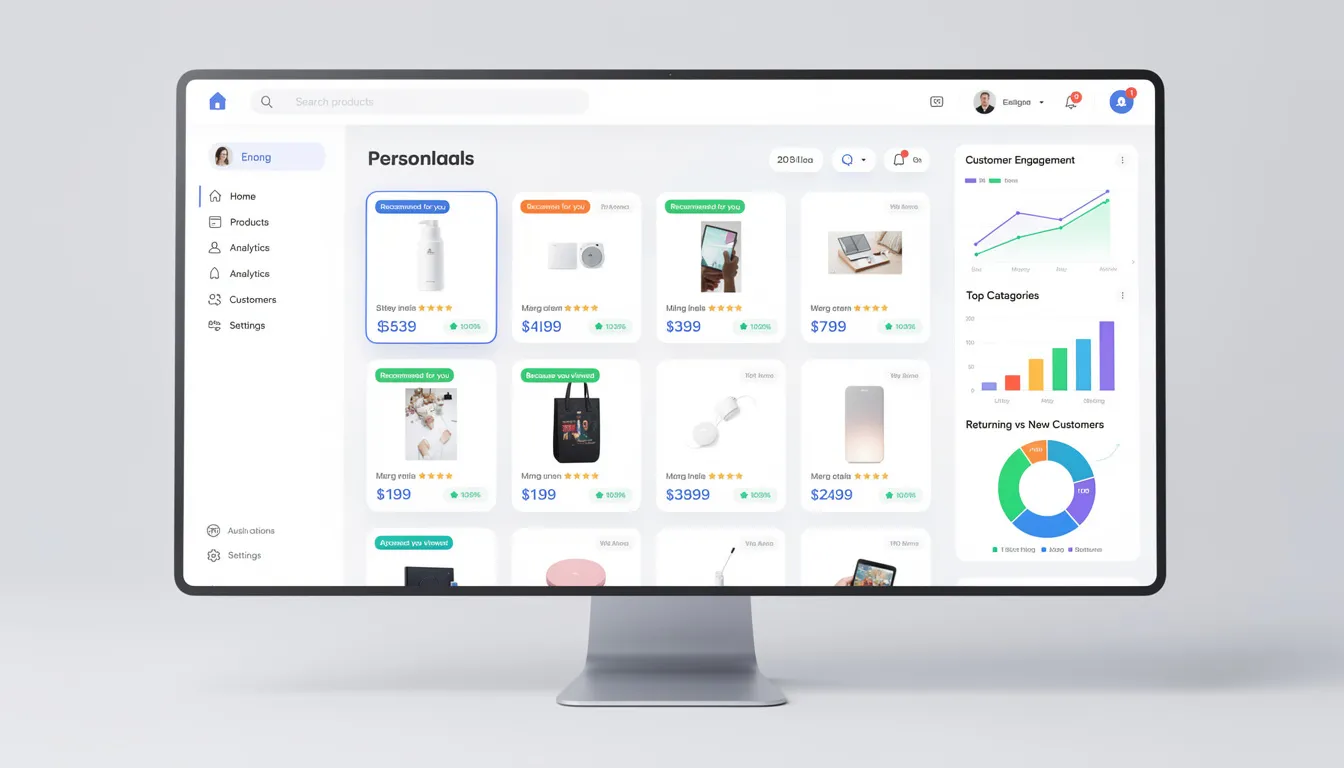
AI-Driven E-commerce Personalization Agency + Toolkit
You help Shopify, WooCommerce, and BigCommerce stores increase average order value and conversion using AI personalization features. Major retail reports expect approximately 80% of mid-sized online retailers to adopt AI-driven personalized recommendations by 2025-which means demand is high but many stores need help implementing properly.
Services:
Tuning product recommendation widgets
Configuring AI search that understands user preferences
Building personalized homepages based on browsing behavior
Setting up email recommendations using purchase history
Offering | Price Range |
|---|---|
Consulting retainers | $2,000–$8,000/month |
Personalization playbook (template) | $99–$299/month |
Once you’ve completed 3–5 similar implementations, you can productize a lightweight “personalization playbook” or script library as a micro-SaaS offering. This creates long-tail recurring revenue from smaller stores that can’t afford full-service engagements.
Required skills: Understanding of Shopify ecosystems, event tracking, A/B testing methodologies, and configuring off-the-shelf recommendation tools rather than building systems from scratch.
AI-Enhanced Lead Scoring and Sales Assistant for B2B Teams
You layer AI over existing CRMs (HubSpot, Pipedrive, Salesforce) to improve sales operations through scoring, drafting, and summarization.
Components:
LLM-powered email drafting directly within the CRM interface
Meeting transcription and call summaries (using tools like Fireflies or Gong)
Simple scoring models that prioritize accounts based on behavioral analytics and firmographic data
Service | Price Range |
|---|---|
Implementation packages | $3,000–$15,000 per sales team |
Ongoing support | $1,000–$4,000/month |
After completing 3–5 similar projects, you can spin out a small SaaS layer-typically a Chrome extension or sidebar app-with a $49–$199/month per-seat model.
Ideal clients: B2B SaaS companies, agencies, and professional services firms with 5–30 sales reps, starting pilots in late 2025. The ROI is clearest in time saved per rep and quality of AI-personalized outreach.
AI-Powered HR Screening and Interview Assistant
Small HR teams are drowning in resumes and scheduling. You use LLMs to summarize applications, map them against job descriptions, auto-generate screening questions, and integrate with calendar systems for interview scheduling.
Critical compliance caveat: You must keep humans in the loop for final hiring decisions. U.S. and EU markets in 2025–2026 have increasing regulatory scrutiny of automated hiring. Position your tool as a productivity enhancer for HR teams, not a replacement for human judgment.
Model | Price Range |
|---|---|
Per-role setup fees | $1,000–$3,000 |
Monthly access | $300–$1,500 |
Per-candidate pricing | Variable (for high-volume hiring) |
Technical stack: ATS integrations (Greenhouse, Lever), Calendly, Google Calendar, GPT-4.1 or Claude 3.5 for summarization and question generation.
Vertical AI Research Copilot (Legal, Finance, Healthcare Adjacent)
You build a research copilot trained on domain-specific public data-SEC filings, case law summaries, clinical guidelines-but positioned carefully as a drafting and research helper, not legal or medical advice.
Use cases:
Law firm associates summarizing case bundles
Financial advisors reviewing earnings calls
Clinical ops teams digesting new guidelines for healthcare provider organizations
Researchers conducting market analysis on industry trends
Phased approach:
Start as a consulting service building custom research workflows for specific firms
Productize into a web app with document upload, tagging, and AI summaries
Scale through per-seat SaaS pricing
Tier | Price Range |
|---|---|
Per-seat SaaS (SMBs) | $79–$299/month |
Enterprise implementation | $10,000–$50,000 |
Important warning: Heavy regulatory and accuracy requirements apply. Start in “adjacent” roles like internal knowledge management or training, not automated decision-making. This gives you room to prove the model while avoiding legal ops complications.
AI Analytics Dashboards and Predictive Forecasting for SMEs
This “fractional data + AI” service targets small and mid-sized businesses that lack in-house analysts but need data analysis to make informed decisions.
Deliverables:
Cleaning historical data and identifying trends
Creating dashboards in Looker Studio, Power BI, or Metabase
Building simple predictive models for churn, demand, or cash-flow forecasting using predictive analytics
Presenting insights in plain language to non-technical stakeholders
Service | Price Range |
|---|---|
Project fees | $5,000–$40,000 |
Monthly retainers | $1,000–$5,000 |
2025 analyst reports expect AI-native SaaS companies to grow approximately 30–40% faster than traditional SaaS. These dashboards help non-tech firms capture similar advantages using real time data.
Skill requirements: SQL, basic Python or R, understanding of cloud warehouses like BigQuery or Snowflake, and the ability to explain insights clearly. Technical skills matter here, but communication skills matter more.
Now that you’ve seen how productized services and light SaaS can scale your impact, let’s move on to higher-moat, deeper-tech AI ventures for founders with longer runways and technical depth.
Tier 3: Higher-Moat, Deeper-Tech AI Ventures
These ideas suit founders with longer runways (12–36 months), technical depth, or access to capital and industry partners. They’re not weekend projects-they often require data partnerships, compliance work, and robust infrastructure beyond off-the-shelf tools.
Think of these as “second business” options after you’ve gained experience and cash flow from Tier 1 or Tier 2 ventures. The payoff is higher, but so is the risk and timeline.
Categories covered:
AI cybersecurity and identity risk boutique
AI observability, evaluation, and safety platform
AI-powered energy and building optimization consultancy
AI platforms for regulated industries (healthcare, pharma, public sector)

AI Cybersecurity and Identity Risk Boutique
You focus on AI-driven threats that emerged prominently in 2025: deepfake fraud, prompt injection attacks, account takeover via social engineering, and identity spoofing in AI-powered systems.
Services:
Threat modeling for AI applications
Phishing simulation using LLMs
Evaluation of AI agent permissions and guardrails
Advisory on MFA and zero-trust architectures
Risk analysis for AI deployment decisions
Service | Price Range |
|---|---|
Audits | $10,000–$50,000 |
Monthly retainers | $5,000–$20,000 |
Necessary background: Security certifications (CISSP, OSCP), hands-on experience with cloud security platforms, and comfort communicating with both technical teams and executives.
AI Observability, Evaluation, and Safety Platform
Companies deploying multiple LLM-powered applications in 2025 need dashboards for latency, cost, hallucination rates, and policy compliance. This is the unsexy but essential infrastructure that makes AI deployments sustainable.
Core features:
Logging prompts and outputs for quality control
Red-team testing tools
Bias and toxicity checks
Versioning of prompt templates
Alerting when key metrics drift
Path to market: Start by offering manual audits and reports, then build a multi-tenant SaaS platform that integrates with popular stacks (GKE, AWS ECS, Vercel).
Monetization: Usage-based pricing plus enterprise tiers ranging from $1,000–$10,000/month depending on number of apps, token volume, and compliance features.
Critical consideration: This AI platform handles sensitive data and logs. Data privacy and regional compliance (GDPR, U.S. state laws, sector-specific rules) are non-negotiable features, not nice-to-haves.
AI-Powered Energy and Building Optimization Consultancy
You work with small commercial buildings, multi-family housing, or light industry to reduce energy bills using AI predictions and automation. This addresses both operational costs and sustainability mandates.
Projects include:
Installing or integrating IoT sensors for data collection
Configuring smart thermostats
Building predictive models for HVAC loads based on weather and occupancy
Automating schedules to reduce peak-usage periods
Presenting savings clearly to non-technical owners
Service | Price Range |
|---|---|
Energy audits | $5,000–$25,000 |
Performance-based contracts | 10–30% of measured savings over 12–36 months |
Performance-based pricing aligns incentives and de-risks the investment for building owners-a significant unfair advantage in sales conversations.
AI Platforms for Regulated Industries (Healthcare, Pharma, Public Sector)
While these verticals are lucrative, they require patience, domain expertise, and tight compliance with regulations like HIPAA, GDPR, and local health requirements.
Example concepts:
AI-assisted radiology report drafting
Triage summarization for nurses
Pharmacovigilance document summarization
Grant-application copilots for nonprofits
Document processing for government agencies
Recommended path:
Partner with a single clinic, lab, or organization in 2025 to co-develop a narrowly scoped workflow tool
Complete pilot projects in the $30,000–$150,000 range
Expand to multi-year contracts or licenses across larger networks in 2026–2028
Critical design principle: Maintain strong human-in-the-loop workflows and plan for clinical validation and audits from the start. Start with administrative and documentation workflows rather than diagnostics-the regulatory barriers are lower, and the value is still substantial.
With these higher-moat, deeper-tech ventures in mind, let’s look at how to leverage LLMs as the engine for your AI business.
Using LLMs (ChatGPT, Claude, Gemini) as Your AI Business Engine
General-purpose LLMs in 2025 let solo founders build powerful services without training custom AI models. This is the fundamental shift that makes the business opportunities in this article possible: you’re leveraging billions of dollars of R&D through API access.
The key is thinking of these models as engines you wrap with your unique value-customer understanding, workflow expertise, and operational reliability-rather than as products you resell directly.
Core uses for your business:
Drafting content, proposals, and marketing materials
Summarizing documents and extracting key points
Building AI chat interfaces and customer-facing bots
Creating prototypes to test with customers before building “real” products
Internal copilots for your own operations (SOPs, outreach scripts, feature requests)
No-code and low-code patterns:
Tools like Bubble, Softr, and Zapier Webhooks let you wrap LLMs into simple web apps and internal tools without deep engineering expertise. Most Tier 1 and Tier 2 ideas can be built this way.
Practical advice:
Track token costs and latency carefully-these affect your margins
Design fallbacks (canned replies, human handoff) for when models fail or APIs go down
Diversify across models (OpenAI, Anthropic, Google) to reduce vendor lock-in risk
Consider open-source alternatives like Llama for on-premise deployments or cost optimization
KeepSanity AI can surface weekly updates on new LLM features, pricing changes, and key platform shifts so you don’t have to monitor everything yourself. One email per week is enough to stay informed without losing focus on execution.
Now that you know how to leverage LLMs, let’s discuss how to choose the right AI business idea for your unique situation.
How to Choose the Right AI Business Idea for You
If you’re feeling overwhelmed by options, that’s normal. The goal is to narrow to one idea you can test in 4–8 weeks, not to evaluate all 25 simultaneously.
Simple 3-step filter:
Runway and risk tolerance: How much can you invest before needing revenue? This determines your tier.
Existing skills and domain knowledge: What do you already know that gives you a competitive edge? Play to your strengths.
Preferred customer type: Do you want to work with local businesses, online creators, B2B SaaS companies, or enterprises?
Tag each idea for yourself:
Startup cost band (under $2K, $2K–$10K, $10K+)
Time-to-first-dollar estimate (4 weeks, 3 months, 12+ months)
Tech requirements (no-code, low-code, requires developers)
Your interest level (critical for sustained effort)
Create a 1-page “idea scorecard” and rank 3–5 options before committing to a single pilot for at least 6–12 weeks. Switching ideas every two weeks is a recipe for zero progress.
Information diet: Reading one good weekly AI briefing is sufficient to catch business opportunities and new ideas. More inputs risk information overload and paralysis. Subscribe to KeepSanity AI for signal without noise-your entrepreneurial spirit needs focus, not more browser tabs.
Once you’ve chosen your idea, the next step is to design a paid pilot to validate it quickly.
Designing a 4–8 Week Paid Pilot for Your AI Idea
You don’t need full products to earn your first $1,000–$5,000. You need a clear, time-boxed pilot with measurable outcomes. This is the fastest path to idea validation with real money.
A pilot proves three things simultaneously:
Customers will pay for this.
You can actually deliver it.
The results justify ongoing work.
Core elements of a pilot:
Element | Details |
|---|---|
Problem statement | One specific problem you’re solving |
Scope | 1–2 workflows, not the whole business |
Timeline | Fixed (e.g., 6 weeks) |
Success metrics | 2–3 measurable outcomes |
Pricing | Discounted but paid (e.g., $1,000–$3,000) |
Typical one time setup fees for pilots: $1,000–$3,000 for a small automation or content project, in exchange for a testimonial and case study if successful.
Metrics to track:
Hours saved per week
Response time improvements
Conversion lift
Error rate reduction
Customer loyalty indicators
Debrief with the client at the end to decide on an ongoing retainer, scope expansion, or productization opportunity. A successful pilot often leads directly to tens of thousands in annual contract value.
With your pilot designed, it’s important to be aware of common mistakes and how to avoid them.
Common Mistakes When Starting an AI Business (and How to Avoid Them)
The 2023–2025 AI startup waves produced plenty of cautionary tales. Learning from others’ mistakes is cheaper than making them yourself.
Mistakes to avoid:
Chasing hype: Every new model release creates FOMO. Pick one niche; ignore unrelated announcements.
Building another generic chatbot: Seems easy; market is crowded. Solve specific workflow problems instead.
Underestimating sales work: Founders want to build, not sell. Budget 50%+ of early time for outreach.
Ignoring data quality: Garbage in, garbage out. Validate training data before promising results. Quality data is essential for the success of AI solutions, as AI models are only as good as the data they are trained on.
Skipping contracts: “We’ll figure it out later.” Use written scopes of work from day one.
Single-vendor dependence: Convenient until pricing changes. Test with 2–3 LLM providers.
Legal and ethical blind spots:
Not clarifying how client data will be used
Training on client data without explicit consent
Making unqualified claims in regulated fields (medicine, law, finance)
Handling sensitive data without proper security measures
Simple safeguards:
Written scopes of work
Clear privacy language
Documented human review points
Conservative claims in marketing material
These protect you and build customer feedback loops based on trust.
Keep a once-a-week “strategy review hour” with a short AI news digest. This prevents random pivots driven by every new headline while ensuring you don’t miss genuinely important shifts.
Now, let’s address some of the most common questions founders have about starting and growing an AI business.
FAQ: Starting and Growing Your AI Business
This section addresses practical questions not fully covered above, focused on 2025–2026 realities. Answers are based on current tools and market conditions rather than speculation.
Which AI business idea is best if I have under $2,000 runway?
Tier 1 ideas are your best bet:
AI content repurposing studios
Lead response services
Simple automation micro-agencies
These need minimal tools-typically under $200/month in software subscriptions-and can land paid pilots within 4–8 weeks of consistent outreach.
With limited runway, avoid:
Heavy R&D projects
Complex SaaS builds
Regulated-industry platforms
Your goal is reaching revenue before your runway runs out, not building the perfect product. Start with services, prove demand, then consider productizing later.
How quickly can I realistically get my first paying client?
Many founders land their first pilot within 4–8 weeks if they:
Narrow to one idea
Pitch 30–50 prospects
Offer a clear fixed-scope pilot
The key word is “if”-most people who fail to land clients simply don’t do enough outreach.
Outbound outreach (cold email, LinkedIn, local networking) plus a simple landing page matters more than perfect technical setups at the beginning.
Your first client probably won’t come from inbound marketing; they’ll come from directly asking people if they have a problem you can solve.
Do I need to know how to code to start an AI business?
No-code and low-code tools let non-developers build powerful services, especially in Tier 1 and Tier 2. Tools like Zapier, Make, Bubble, and Softr handle most technical requirements for service-based AI-driven solutions. Many successful AI agency founders have zero coding background.
That said, coding becomes more valuable for deeper-tech Tier 3 ventures. A practical approach:
Learn basic automation and API concepts
Partner with or contract developers once you validate demand
Don’t let lack of coding skills stop you from starting; let market validation guide when to invest in technical capabilities.
How do I stay updated on AI without getting overwhelmed?
Adopt a low-noise information diet:
One solid weekly AI briefing (such as KeepSanity AI)
A couple of founder-focused sources
Most daily AI newsletters are designed to maximize sponsor impressions, not your productivity.
Curate your own internal “AI change log” once per week.
Track new model releases, pricing changes, regulatory shifts, and new tool capabilities that could affect your specific niche.
Fifteen minutes weekly is enough. The goal is staying informed enough to spot opportunities, not becoming an AI news expert at the cost of actually building your business.
Is it still worth starting an AI business in 2025–2026, or is it too late?
It’s not too late-but the game has changed. Generic AI tools are commoditizing rapidly. The opportunity has shifted from “AI is novel” to “AI is infrastructure, and most businesses still don’t know how to use it well.”
Differentiation now comes from:
Knowing a specific problem and customer extremely well
Combining existing AI tools effectively
You don’t need to invent new base models. You need to understand that job seekers in a specific industry have a specific problem, or that college students need a specific type of assistance, or that multilingual support is critical for a particular market segment. The great ideas are in the specifics, not the generics.
The founders winning in 2025–2026 are the ones who stopped waiting for permission and started solving real problems with existing tools. That opportunity remains wide open.
AI is transforming industries, opening doors for innovative startups to make a real impact. By understanding the landscape, focusing on real problems, and leveraging the right tools, solo founders and small teams can build sustainable, high-impact businesses in the AI era.