Advantages and Disadvantages of Artificial Intelligence
Key Takeaways
AI Market Growth: The global AI market has exploded since 2017, with ChatGPT reaching 100 million users within two months of its 2022 launch and projections forecasting over $537 billion in market value by 2028.
Top Advantages: Higher efficiency through automation, fewer errors in analytical tasks, 24/7 operational capability, improved decision-making from pattern discovery, and personalization across tools used in everyday life.
Major Disadvantages: Job disruption, algorithmic bias, data privacy concerns, security risks like deepfakes, and significant environmental impact from training large models.
Widespread Adoption: Over 75-80% of organizations now report using AI in at least one function, making understanding both sides of AI increasingly significant for business leaders and professionals.
KeepSanity AI: Tracks these developments through weekly curated summaries covering only major AI news-no daily filler, no sponsors, just signal.
Introduction
You’ve already used artificial intelligence today. Gmail’s spam filter quietly sorted your inbox. Netflix recommended a show based on your viewing history. If you asked ChatGPT, Claude, or Gemini a question, you interacted with generative AI tools that barely existed before late 2022.
By 2025, surveys indicate that over 75-80% of organizations report using AI in at least one function. This isn’t a future scenario-it’s the current reality reshaping how we work, shop, learn, and make decisions.
AI refers to systems designed to perform tasks requiring human-like intelligence: learning from data, recognizing patterns, reasoning through problems, and understanding or generating natural language. But here’s where confusion starts-not all AI is the same. Narrow AI powers your recommendation engines. Generative AI creates text, images, and code. Autonomous systems guide robots and vehicles. Lumping them together muddles the real conversation about risks and benefits.
This article offers a balanced, practical look at AI’s advantages and disadvantages, then how to balance them. Written from a “keep your sanity, cut the hype” perspective-the same approach behind KeepSanity AI’s weekly newsletter.
What Is Artificial Intelligence?
Artificial intelligence (AI) refers to the convergent fields of computer and data science focused on building machines with human intelligence to perform tasks that would previously have required a human being.
Artificial intelligence is a field of computer science focused on building systems that learn from data, recognize patterns, and make decisions with minimal human intervention. Rather than following rigid, pre-programmed rules, AI systems improve through experience on data-finding statistical relationships that inform predictions and outputs.
Core techniques powering modern AI include:
Technique | What It Does | Example |
|---|---|---|
Machine learning | Algorithms improve through data without explicit programming | Fraud detection in banking |
Deep learning | Multi-layered neural networks process unstructured data | Medical image analysis |
Natural language processing | Understands and generates human language | Chatbots, translation tools |
Computer vision | Interprets visual information | Facial recognition systems |
Robotics | Integrates AI with physical actuators | Warehouse automation |
Understanding the categories matters for practical decisions:
Narrow AI: Task-specific systems like recommendation engines in Netflix, spam filters in Gmail, or predictive text on your phone. This is what most “AI” actually is today.
General AI: Hypothetical human-level intelligence across diverse tasks. Still unrealized and likely decades away, if achievable at all.
Generative AI: Models like ChatGPT, Midjourney, Claude, and Gemini that create new content-text, images, audio, code-via techniques like transformers and diffusion models.
AI models are trained on vast historical datasets, optimizing parameters through mathematical processes to minimize prediction errors. The outputs are statistical approximations based on patterns, not genuine understanding. This distinction explains why AI can be remarkably useful while still producing “hallucinations” when data is flawed or contexts are unfamiliar.
While true human-level general intelligence remains speculative, narrow AI and generative AI are already reshaping industries-from healthcare diagnostics to logistics forecasting to content creation.

Main Advantages of Artificial Intelligence
AI’s benefits cluster around efficiency, accuracy, scale, and capabilities that weren’t previously possible. Below are the main advantages of artificial intelligence, each with a dedicated subheading for easier navigation and scanability:
Increased Efficiency and Productivity
AI automates repetitive tasks and data-heavy work that previously consumed hours of human effort.
Data entry, document classification, and basic customer queries are now handled by AI systems running in the background.
Concrete scenario: A finance team using tools like UiPath extracts invoice data and reconciles accounts in minutes instead of hours. Support teams triage tickets automatically, routing complex issues to humans while resolving routine tasks instantly.
Since 2022, AI-powered tools have transformed knowledge work:
GitHub Copilot accelerates coding by 55% according to GitHub’s own studies
Writing assistants draft emails and reports in seconds
Design generators create visuals from text prompts
The scalability advantage is crucial. AI can process vast data in parallel, handling workloads that would require hiring dozens of additional staff.
Reducing Human Error and Improving Accuracy
AI algorithms trained on high-quality data produce more consistent outputs than humans in repetitive analytical tasks.
Fatigue, distraction, and calculation mistakes don’t affect AI models running the same analysis at 3 AM as they did at 9 AM.
Healthcare example: In hospital trials between 2019-2024, AI-assisted radiologists identified breast cancers with 11.5% higher sensitivity than radiologists working alone.
Financial example: Anomaly detection systems like Feedzai identify fraud patterns in payment data that humans overlook-catching suspicious transactions across millions of daily interactions.
Important caveat: AI reduces certain categories of human error but can fail systematically if trained badly. Garbage in, garbage out.
24/7 Availability and Scalability
AI tools don’t take breaks, need sleep, or call in sick. Chatbots, monitoring tools, and recommendation engines operate continuously without degradation in performance.
Practical examples:
Online retailers use AI chatbots to resolve 70-80% of customer queries at any hour, handling Black Friday traffic spikes without proportional staffing increases.
Cloud monitoring from services like Datadog analyzes thousands of servers in real-time across time zones, alerting teams to issues before they cascade.
This availability is particularly valuable for:
Global companies serving multiple time zones
Critical infrastructure requiring constant oversight
Customer satisfaction demands for instant responses
Enhanced Decision-Making and Pattern Discovery
AI excels at analyzing data through massive datasets to uncover non-obvious patterns, correlations, and trends.
Processing data at this scale simply isn’t possible for human analysts working manually.
Industry applications:
Retail: Demand forecasting (Walmart reduced stockouts by 30%, overstock by 25%)
Airlines: Dynamic pricing (Real-time fare optimization via reinforcement learning)
Finance: Risk scoring (Faster, more accurate credit decisions)
Manufacturing: Predictive maintenance (Equipment failures predicted 50% earlier)
The pattern: AI provides ranked options or predictions from multidimensional datasets. Best outcomes happen when human judgment interprets these insights rather than blindly following them.
Personalization and Better User Experiences
AI personalizes content, recommendations, and interfaces based on user behavior, preferences, and context.
Examples in daily lives:
Netflix algorithms drive 80% of viewed content
Spotify tailors playlists, retaining users 30% longer
TikTok’s “For You” feed uses multimodal models to boost engagement
Adaptive learning platforms adjust difficulty based on student performance
Personalized learning extends to AI copilots in Office tools, which suggest context-aware edits based on your documents and habits.
Responsible personalization requires user consent and clear controls.
Improved Accessibility and Safety
AI plays an increasingly significant role in making technology accessible to more people:
Real-time translation: Google Translate enables cross-language remote teams
Live captions: Zoom transcription assists hearing-impaired participants
Text to speech: Screen readers with natural voice synthesis
Document summarization: Dense reports condensed for quick understanding
Safety benefits are equally tangible. AI powered robots and drones operate in hazardous environments-mines, disaster zones, space-reducing human lives put at risk.
In industrial sites, AI monitors sensor data to anticipate dangerous conditions before humans could detect them.
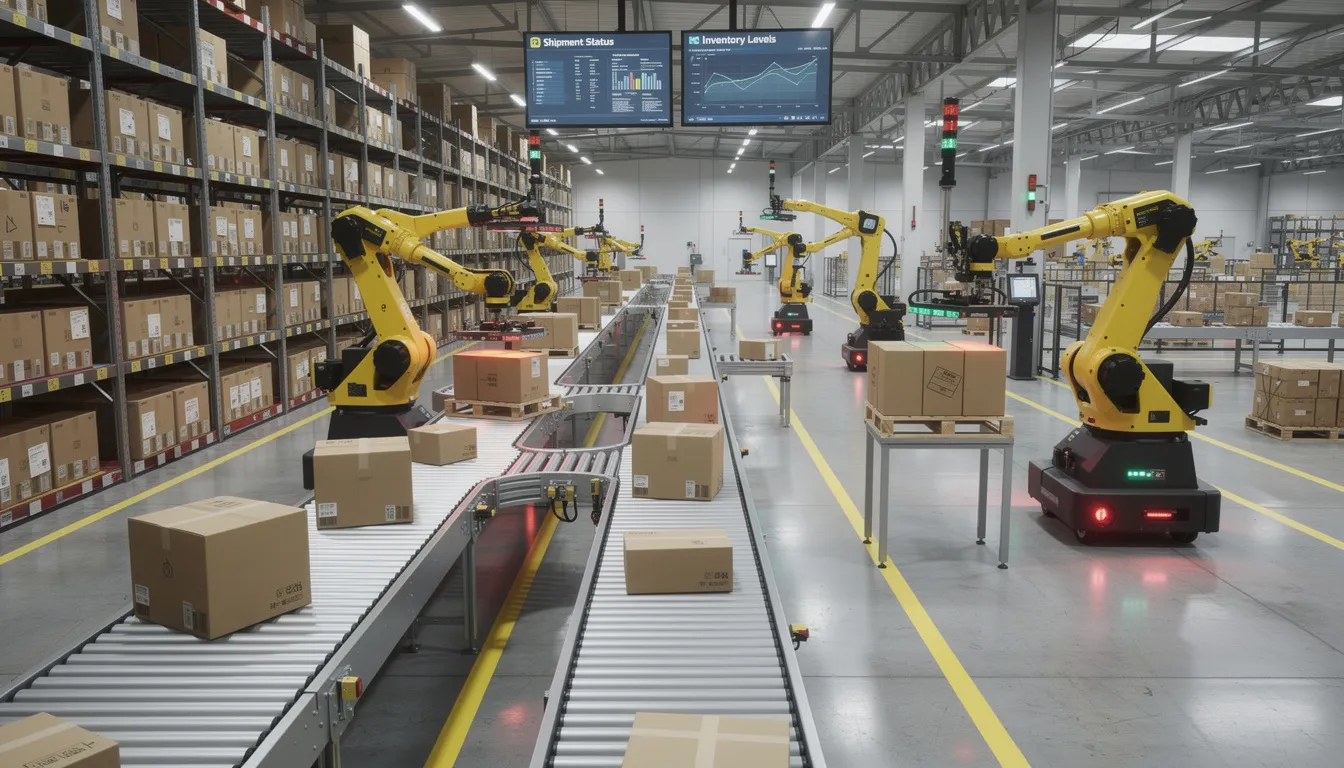
Summary Table: Main Advantages of Artificial Intelligence
Advantage | Description |
|---|---|
Increased Efficiency and Productivity | Automates repetitive tasks, accelerates workflows, and scales operations |
Reducing Human Error and Improving Accuracy | Produces consistent outputs, reduces mistakes in analytical tasks |
24/7 Availability and Scalability | Operates continuously, handles large workloads without breaks |
Enhanced Decision-Making and Pattern Discovery | Analyzes massive datasets to uncover patterns and inform better decisions |
Personalization and Better User Experiences | Tailors content and recommendations to individual users |
Improved Accessibility and Safety | Makes technology more accessible and operates in hazardous environments |
Main Disadvantages of Artificial Intelligence
The same capabilities that make AI powerful create significant risks when misused or poorly governed. Below are the main disadvantages of artificial intelligence, each with a dedicated subheading for easier navigation and scanability:
Bias and Fairness Issues
AI systems learn from historical training data, which often reflects existing biases and inequalities.
Models can perpetuate or amplify these patterns at scale.
Documented examples:
Amazon’s 2018 hiring tool favored male candidates because it trained on resumes from a male-dominated workforce.
Facial recognition systems misidentified darker-skinned individuals at 35% higher rates by 2019.
Credit scoring models perpetuated racial disparities hidden behind apparently “objective” algorithms.
The problem: bias hides behind high aggregate accuracy. A model might be 95% accurate overall while systematically failing for specific demographic groups.
Privacy and Surveillance Risks
Many AI systems require large volumes of personal data-behavioral logs, location data, biometric information-raising serious data privacy concerns.
Concrete examples:
Targeted advertising systems profile users across websites.
AI-powered CCTV with facial recognition tracks individuals in public spaces.
Education tools log detailed student activity and learning process data.
The risks multiply with data breaches, unauthorized sharing, and function creep.
Job Disruption and Workforce Challenges
AI and automation can displace routine tasks and roles, particularly repetitive jobs in manufacturing, customer service, back-office operations, and transport.
The World Economic Forum’s 2023 projections estimate 85 million jobs displaced by 2025-but also 97 million created.
Current trends in job displacement:
Warehouses using AI-guided robots (Amazon’s systems handle 75% of picks)
Chatbots managing 40% of first-line customer interactions
AI reducing demand for basic data entry roles
The stress of transition is real. Workers need reskilling, and inequality risk rises if only some groups access new AI-era roles.
Security Threats and Malicious Use
AI can be weaponized for cyberattacks, fraud, and disinformation, amplifying attackers’ reach and speed.
Documented incidents:
2020 deepfake scam: AI voice cloning impersonated a CFO for a $25 million fraudulent transfer.
Post-2022 phishing: Generative AI crafts hyper-personalized phishing emails at scale.
Vulnerability scanning: Automated tools probe infrastructure faster than human defenders can respond.
Systemic risks include AI controlling or influencing critical infrastructure-power grids, financial markets, supply chains-becoming high-value targets.

Over-Reliance, Explainability, and Accountability
The risk of over reliance: people and organizations trust AI outputs too much, turning human experts into passive button-pushers who rubber-stamp AI decisions without human control.
The “black box” problem compounds this. Many complex models-like deep neural networks-resist interpretation.
Examples in human lives:
Unexplained credit denials affecting financial access
Opaque recommendation systems shaping news feeds and discourse
Risk scores in insurance or criminal justice lacking transparency
Accountability gaps persist. When AI goes wrong, who bears responsibility? Developers? Deployers? Regulators? End users?
Cost, Complexity, and Environmental Impact
Serious AI projects aren’t cheap. Costs include data collection and cleaning, cloud compute, specialized hardware, and scarce AI skills.
For SMEs, AI implementation ranges from a few thousand dollars for SaaS tools to well over $100,000 for custom deployments.
Operational challenges include integrating AI into legacy systems, avoiding “pilot purgatory,” and quality control for AI outputs.
Environmental impact is increasingly significant. Training GPT-4 equivalents consumed approximately 1,287 MWh-energy sufficient for 120 U.S. households annually-plus massive water for cooling.
Summary Table: Main Disadvantages of Artificial Intelligence
Disadvantage | Description |
|---|---|
Bias and Fairness Issues | AI can perpetuate or amplify existing biases and inequalities |
Privacy and Surveillance Risks | Large data requirements raise privacy and surveillance concerns |
Job Disruption and Workforce Challenges | Automation can displace jobs and create workforce transition stress |
Security Threats and Malicious Use | AI can be weaponized for cyberattacks, fraud, and disinformation |
Over-Reliance, Explainability, and Accountability | Over-trusting AI, lack of transparency, and unclear responsibility for errors |
Cost, Complexity, and Environmental Impact | High implementation costs, integration challenges, and significant environmental footprint |
Balancing the Pros and Cons of Artificial Intelligence
AI technology isn’t inherently good or bad. Impact depends on goals, design choices, governance, and how humans use it. The advantages and disadvantages play out differently in every context.
Practical steps for balanced AI implementation:
Start with small, well-scoped pilots with clear success metrics (e.g., ROI >20% in efficiency trials)
Involve cross-functional teams: engineering, legal, ethics, operations, and affected stakeholders
Test for bias using tools like Fairlearn before deployment
Define failure modes and establish human escalation paths
Document everything: training data sources, model decisions, audit trails
Regulations are pushing organizations toward formalization. The EU AI Act’s 2024-2026 phased risk tiers-prohibited, high-risk requiring audits-create compliance requirements. U.S. executive orders and China’s 2024 guidelines add additional frameworks.
KeepSanity AI tracks major regulatory shifts, breakthrough models, and real-world AI successes or failures weekly-so decision-makers can stay informed without sifting through daily noise.
Ethical and Societal Considerations
Beyond technical pros and cons, AI raises deep questions about fairness, autonomy, democracy, and power distribution. Ethical considerations extend beyond any single organization’s policies.
Areas of concern:
Surveillance amplification: AI-powered monitoring extending authoritarian control
Algorithmic discourse control: Recommendation algorithms shaping political discourse and creating echo chambers
Warfare applications: Autonomous weapons systems raising accountability questions
From 2023 onward, major labs began releasing safety frameworks and guardrails. The debate on “alignment” and “safety” for increasingly capable models intensified, with labs like Anthropic focusing on preventing rogue behaviors in advanced systems.
Inclusive design matters. Diverse communities and stakeholders must participate in deciding where AI is appropriate-and where human judgment must remain central. Human creativity, emotional intelligence, and human emotion aren’t simply automatable.
Ethical AI is an ongoing process, not a one-time checklist. Public awareness and AI literacy are crucial defenses against misuse and manipulation.
The Future of AI: Trends to Watch
Where is AI heading between 2025 and 2030? Several directions emerge from current research and product development:
Multimodal models: Systems integrating text, image, audio, and video (e.g., GPT-4o, Gemini 2.0) enable richer interactions and applications.
AI copilots everywhere: IDC projects AI copilots in 90% of productivity suites by 2028, fundamentally changing teaching strategies and business workflows.
Embodied AI: Integration with physical systems-Boston Dynamics’ 2025+ robotics work demonstrates AI moving beyond screens into the physical world.
Open-source tensions: Models like Llama democratize access but increase misuse risks. The balance between equal access and safety remains contested.
Regulatory acceleration: 2024-2025 marks an inflection point for AI policy worldwide, with frameworks addressing high-risk systems, scientific research applications, and consumer protections.
Staying current doesn’t require daily doomscrolling. Curated weekly summaries-like those from KeepSanity AI-keep teams informed without burnout, covering business, product updates, models, tools, resources, community developments, robotics, and trending papers.

Conclusion
Artificial intelligence delivers real advantages: efficiency gains that save hours of work, accuracy improvements that catch what humans miss, personalization that makes tools genuinely useful, and capabilities-from real-time translation to hazard detection-that weren’t possible before.
The disadvantages of artificial are equally real: bias baked into automated systems, privacy risks from data hunger, security threats from weaponized AI, job disruption affecting millions, and environmental costs from training massive models.
The decisive factor isn’t the technology itself-it’s how organizations and societies choose to design, deploy, and govern AI. Business growth and cost savings from AI adoption mean little if they come at the expense of trust, fairness, or safety.
Build basic AI literacy. Ask critical questions about data, goals, and safeguards whenever adopting AI systems. Understand that analyzing data and processing data through AI doesn’t eliminate the need for human teachers, human control, and human judgment.
Ready to stay informed without the overwhelm? Subscribe to KeepSanity AI’s weekly digest for major AI news, policy changes, and practical resources. One email per week. Zero ads. Just signal, no noise.
FAQ
This FAQ addresses common practical questions not fully covered in the main sections, focused on real-world implementation concerns for business readers and professionals.
How can a small business start using AI without huge costs or risks?
Start with low-risk, off-the-shelf tools rather than custom models. AI chatbots, document summarizers, and sales forecasting add-ons in existing CRM systems offer immediate value with minimal investment-often starting from $20-100 per month.
Pilot one or two use cases with clear metrics: reducing response time, cutting manual data entry hours, or improving customer satisfaction scores. Focus on data hygiene first-cleaning up existing customer and operations data improves AI results and reduces errors significantly.
Cloud platforms and SaaS offerings let small businesses access AI capabilities that previously required six-figure budgets. ChatGPT Enterprise, HubSpot AI forecasting, and similar tools provide 20-40% time savings without custom builds.
What skills should professionals build to stay relevant in an AI-driven workplace?
Focus on hybrid skills: domain expertise plus basic data literacy and familiarity with AI tools relevant to your field. You don’t need to become a machine learning engineer.
Key capabilities to develop:
Prompting AI systems effectively (chain-of-thought techniques can boost output quality by 30%)
Evaluating AI outputs critically-spotting errors, biases, and limitations
Interpreting dashboards and data visualizations
Framing problems in ways AI can help solve
Soft skills-critical thinking, communication, problem solving-become more valuable as routine tasks automate. These distinctly human capabilities complement AI rather than competing with it.
How do organizations make sure their use of AI is ethical and compliant with regulations?
Create clear internal AI policies covering data use, consent, risk assessment, and human oversight. Align these with emerging laws like the EU AI Act and sector-specific requirements.
Form a cross-functional responsible AI committee-including legal, security, product, and operations-to review higher-risk projects before deployment. Regular model audits for bias, privacy impact assessments, and documentation of training data sources should become standard practice.
Compliance is ongoing. Monitoring major regulatory updates through trusted weekly sources prevents surprises as frameworks evolve through 2025 and beyond.
Can individuals protect themselves from harmful uses of AI, like deepfakes and surveillance?
Practice basic digital hygiene: verify sources of videos and audio before sharing, be skeptical of “urgent” instructions received via email or messaging, and use multi-factor authentication on financial accounts.
Review privacy settings regularly. Submit data access requests where available. Opt out of tracking when possible.
Many platforms are introducing authenticity indicators and watermarking for AI-generated content, but these remain early and imperfect. Media literacy-understanding AI’s capabilities and limitations-is currently your best defense until regulations and detection tools mature.
Where can I follow the most important AI news without getting overwhelmed?
Use curated, low-frequency sources that filter noise. Most daily AI newsletters exist to maximize “time spent” for sponsors, padding content with minor updates that don’t matter.
KeepSanity AI offers one email per week covering only major developments-no ads, no filler. Categories include models, products, business, robotics, policy, and resources, organized for fast scanning.
Combine a weekly “signal” source with occasional deep dives on topics directly affecting your work. This approach keeps you informed without the piling inbox, rising FOMO, and endless catch-up that daily newsletters create.